Harvester ants are the large, seed-collecting ants you’ll spot around bare-ground mounds in Utah’s open spaces and dryland yards. They’re not aggressive without provocation, but their sting is genuinely painful, which makes them a real concern when colonies set up near play areas, walkways, or pet runs. If you’ve got mounds within close range of foot traffic, it’s worth calling a pro.
Identification
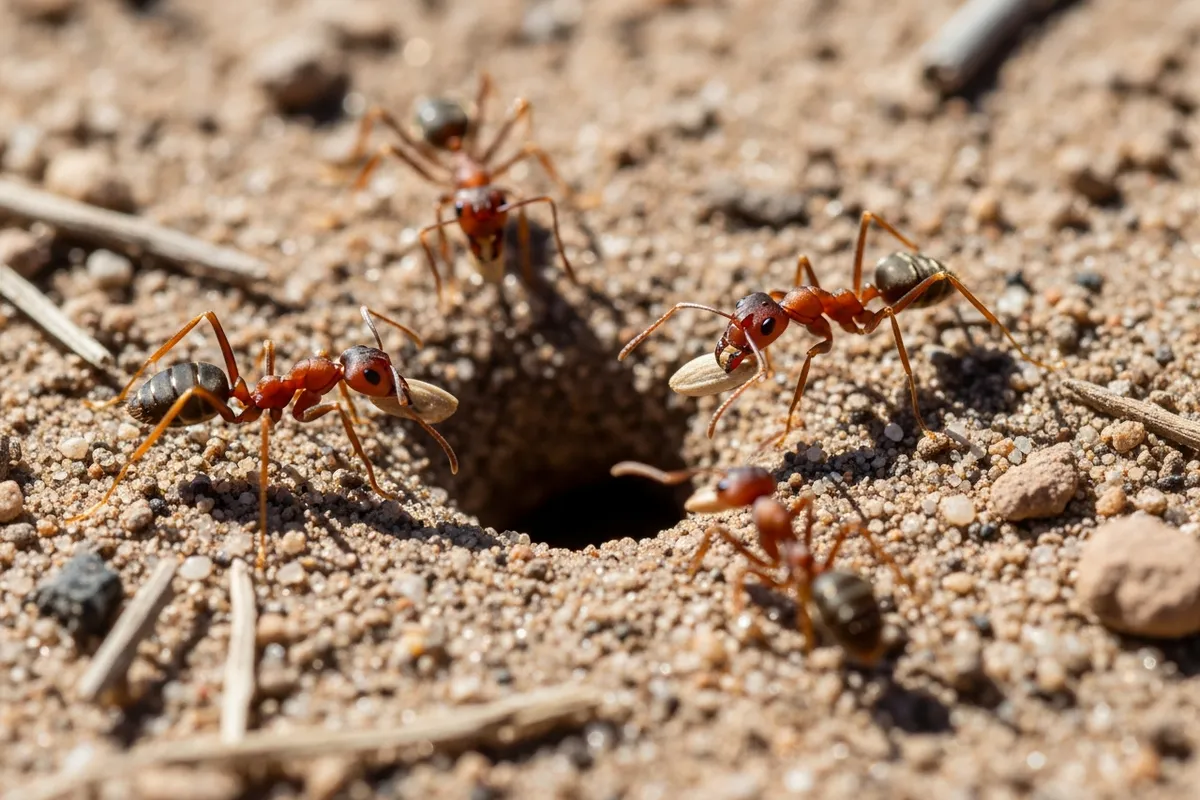
Western harvester ants (Pogonomyrmex spp.) are noticeably bigger than the typical kitchen ant, often a quarter-inch or longer, with reddish-brown to dark red coloring and a slightly fuzzy look thanks to fine hairs along the body. Their heads are large and squarish, built for cracking seeds, and workers have a prominent stinger they’re willing to use. The dead giveaway is the nest itself: a wide, cleared circle of bare dirt, sometimes a few feet across, with a central mound and a single entrance hole. Look-alikes include red imported fire ants (not established in Utah) and field ants, which build less tidy mounds and don’t clear vegetation in the same dramatic way.
Where Harvester Ants Live in Utah
Harvester ants thrive in Utah’s dry, sunny landscapes. You’ll find them across southern Utah’s desert scrub and red rock country, throughout the Great Basin, and in the open foothills and pasture edges of northern Utah. They prefer well-drained sandy or rocky soil with full sun exposure, which is why mounds tend to pop up in xeriscape yards, gravel pads, vacant lots, the edges of dirt roads, and along the perimeter of irrigated turf. Because the colonies can persist for years, the same mound location often returns season after season unless treated. They’re typically active April through October, with the busiest foraging happening mid-morning and again in the late afternoon.
Why They Get Into Homes / What Attracts Them
Harvester ants don’t really invade homes the way pavement ants or odorous house ants do. Their interest is seeds, not crumbs, so kitchen attractants aren’t the issue. What pulls them onto your property is open, sunlit ground with loose soil, plus a steady supply of grass seed, weed seed, or birdseed scattered around feeders. Drought-stressed lawns and bare patches in xeriscape make ideal nesting real estate. Spilled birdseed under feeders, unswept garage corners with stored grain, and gardens with weedy seed heads all give a colony reasons to stick around. The bigger your property’s bare-ground footprint, the more likely you’ll see them establish.
Signs You Have a Harvester Ant Problem
These ants are visual rather than sneaky, so you’ll usually see the nest before you see the ants:
- A circular patch of bare dirt where vegetation has been deliberately cleared
- A central mound with a single, well-defined entrance hole
- Trails of large reddish ants carrying seeds back to the nest
- Small piles of seed husks and chaff near the entrance
- Painful stings while walking barefoot in the yard
- Pets favoring a paw after wandering near a mound
- Multiple satellite mounds appearing along property edges
Health Risks: Honest Assessment
Here’s the honest version: harvester ant stings hurt. They rank among the more painful insect stings in North America, and the burning sensation can linger for hours. For most healthy adults, a sting is unpleasant but not dangerous, leaving a red welt that fades over a day or two. The real concern is small children, pets stepping into a mound, and anyone with a known insect-sting allergy. Severe allergic reactions including anaphylaxis are rare but possible, so multiple stings or any swelling beyond the sting site warrants medical attention. Mounds near sandboxes, play sets, or dog runs deserve prompt treatment.
How to Prevent Harvester Ants Around Your Home
You can make your yard less inviting with consistent habitat management:
- Keep birdseed contained and clean up spillage under feeders
- Maintain healthy turf density to limit bare-ground nesting sites
- Pull weeds before they go to seed
- Rake up grass clippings and seed heads from open areas
- Store grain, pet food, and birdseed in sealed containers
- Address bare patches in xeriscape with mulch or ground cover
- Walk your property periodically to spot new mounds early
- Avoid disturbing established mounds without protective footwear
When to Call a Professional
DIY mound treatments are hit-or-miss because the queen sits well below the surface, and a half-treated colony often relocates a few feet away. If you’ve got mounds near a play area, walkway, patio, or pet run, or if you’re seeing satellite colonies appear, that’s the point to bring in help. Our team handles harvester ant colonies with targeted baits and direct mound treatments built for Utah’s dryland conditions. Learn more about our pest control services or request a free quote.