
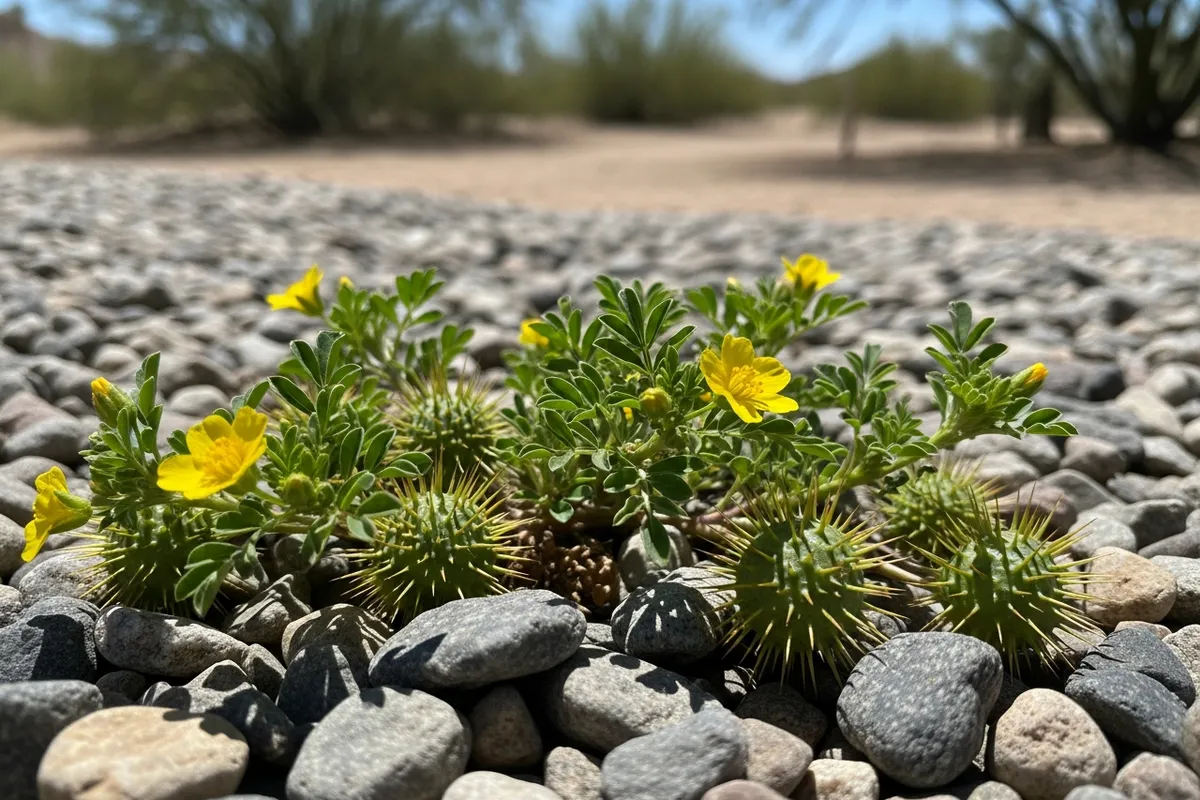
Puncturevine, better known as goathead, is the low-creeping summer weed behind those wickedly spiked seed pods that flatten bike tires and stab bare feet across Utah. The plant itself is easy enough to pull, but each pod can drop seeds that stay viable for years, which is why a single missed season can mean a multi-year cleanup. A coordinated control program is what actually breaks the cycle.
Identification
Puncturevine (Tribulus terrestris) is a sprawling annual that grows flat against the ground in mat-like circles, often reaching three to six feet across. The stems are reddish, branching out from a central taproot, with small opposite leaves divided into pairs of leaflets that look a little like tiny mimosa fronds. Tiny yellow five-petaled flowers appear in summer, followed by the unmistakable seed pods: hard, spiny burs that split into segments, each armed with stout spikes sharp enough to puncture skin and bicycle tires. Common look-alikes include prostrate spurge and certain native legumes, but the spiked seed pods are diagnostic. Once you’ve stepped on one, you don’t forget what the plant looks like.
Where Puncturevine Lives in Utah
Goatheads love hot, dry, disturbed ground, which means Utah is excellent territory. They thrive across southern Utah communities like St. George and Hurricane, and they’re equally at home along the dryland edges of northern Utah neighborhoods. Look for them in gravel driveways, vacant lots, alleys, sidewalk cracks, fence lines, roadside shoulders, neglected garden corners, and the bare strips between landscape and pavement. Anywhere the soil is loose, sunny, and not actively planted with something else, puncturevine is happy to colonize. Seeds typically germinate when soil temperatures climb in May and June, with seedlings maturing fast enough to produce burs by mid to late summer. The plant dies with the first hard frost, but the seeds it left behind keep the cycle going.
Why It Spreads So Easily
Goathead’s whole strategy is hitchhiking. The barbed seed pods latch onto shoes, tires, dog paws, livestock, and anything else passing by, which is how a single plant on a vacant lot becomes a neighborhood-wide problem. The plant produces an enormous number of seeds per season, and those seeds can stay dormant in the soil for several years before sprouting. That’s why a yard that looked clean last summer can suddenly have plants everywhere this summer. Disturbed soil, drought-stressed turf, thin xeriscape, and bare gravel are all open invitations. Once a population is established, foot traffic and tires keep distributing it across the property.
Signs You Have a Goathead Problem
Goathead announces itself in unforgettable ways:
- Flat-spreading mats of small green leaves with reddish stems
- Tiny yellow flowers followed by hard spiked burs
- Bike or stroller tires going flat in your driveway
- Painful spikes pulled from bare feet, sandals, or shoe soles
- Dogs licking or limping after a walk in the yard
- Burs collecting in welcome mats and garage thresholds
- New seedlings appearing in the same spots year after year
What’s the Damage?
The injuries are real. Goathead spikes can pierce shoe soles, draw blood from bare feet, and lodge in dog paws where they cause limping and sometimes infection. They flatten bike tires, strollers, and wheelbarrows, and they’re a chronic frustration for anyone trying to enjoy a backyard or use a paved trail. For livestock and pets, ingested burs can cause mouth and digestive irritation. The plant itself doesn’t poison soil or destroy structures, but the spread risk and the injury risk together make it one of the more disruptive weeds in Utah landscapes.
How to Prevent Goatheads Around Your Home
Breaking the seed cycle is the whole game:
- Pull young plants by hand before flowers and burs form
- Bag and trash pulled plants – don’t compost them
- Apply a pre-emergent herbicide in early spring before germination
- Treat post-emergent escapes promptly with a labeled herbicide
- Maintain dense, healthy turf to crowd out seedlings
- Mulch ornamental beds to suppress germination
- Sweep driveways and walkways to collect dropped burs
- Repeat the program for several consecutive years to deplete the seed bank
When to Call a Professional
Because goathead seeds linger in the soil for years, one-season treatments rarely finish the job. A multi-year program with timed pre-emergent applications and follow-up post-emergent control is what actually drains the seed bank and gives you a goathead-free yard. Our team builds treatment plans around Utah’s germination windows so you’re not chasing burs all summer. Learn more about our weed control services or request a free quote.