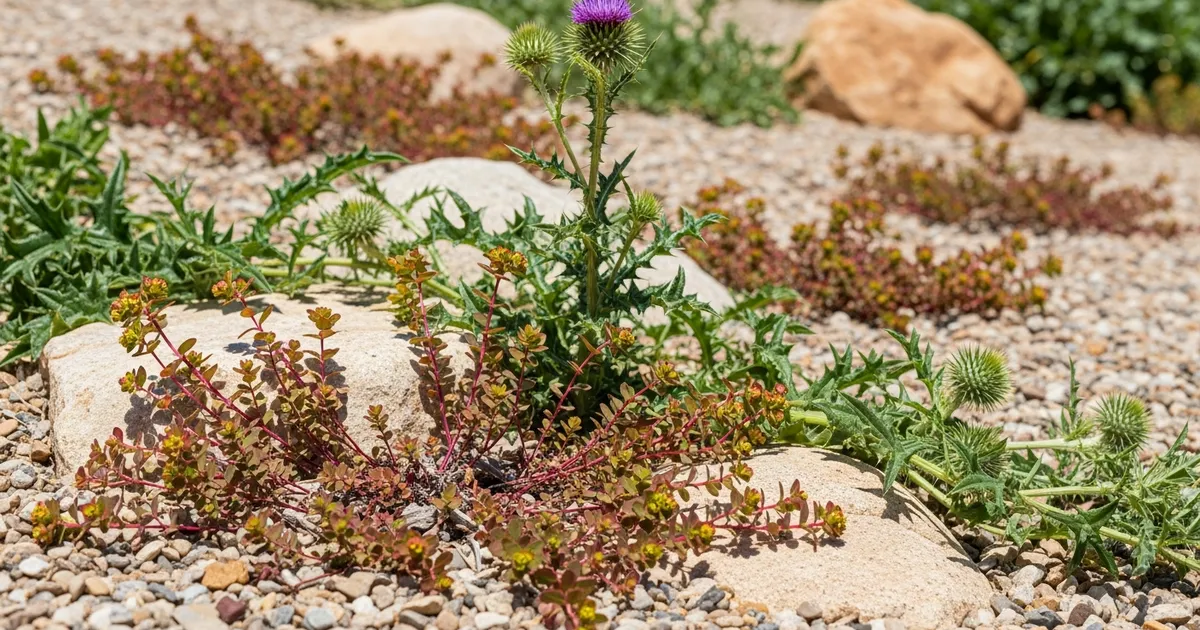
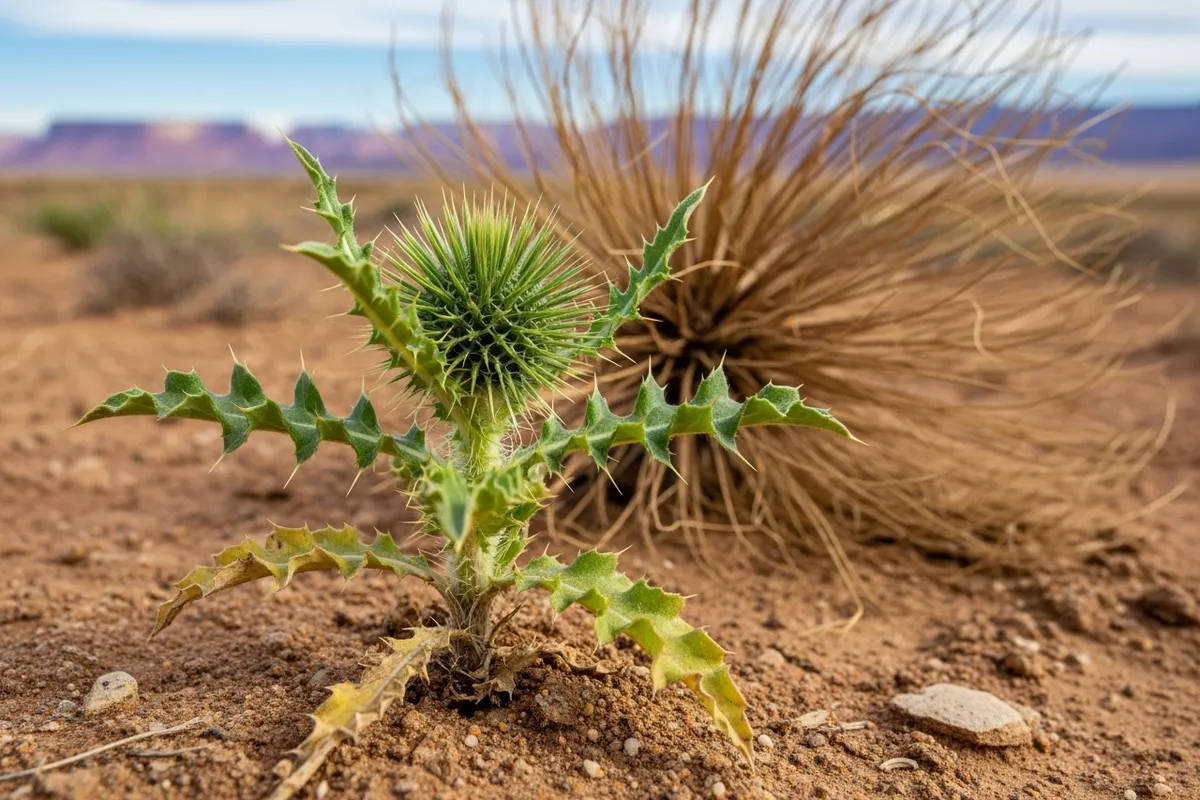
Russian thistle is the plant behind the iconic tumbleweeds rolling across Utah’s open country and stacking up against fences every fall. As young growth, it’s a manageable weed. Once it dries, breaks off, and starts traveling, it becomes a fence-clogging, seed-spreading, fire-hazard nuisance. Catching it green is the easiest path to control.
Identification
Russian thistle (Salsola tragus) starts the season as a small, bright green seedling with thin, almost grass-like leaves. As it grows, it forms a rounded, bushy shape, often two to three feet across, with branches that stiffen and become spiny. Tiny pink, white, or greenish flowers appear in late summer at leaf bases, tucked behind small bracts. Once it matures and dries, the entire plant turns straw-colored, the stem snaps off at the base, and wind takes it from there – that’s the classic tumbleweed. Look-alikes include kochia and certain saltbushes, but the combination of spiny mature growth, rounded form, and the break-and-tumble behavior is hard to miss.
Where Russian Thistle Lives in Utah
Russian thistle is everywhere across Utah’s drier landscapes. It dominates disturbed ground, vacant lots, fence lines, dirt road shoulders, agricultural margins, and overgrazed pasture. You’ll see it heavily across southern Utah’s desert and dryland areas as well as throughout the Great Basin. Anywhere the native vegetation has been cleared or stressed and the soil left bare, Russian thistle is one of the first plants to move in. It tolerates drought, salt, and poor soil better than almost anything else, which is why it persists through Utah’s hottest, driest summers. Seedlings emerge in spring, grow through the heat of summer, mature and dry in fall, and then break free to scatter seeds wherever the wind takes them.
Why It Spreads So Easily
The whole plant is a seed-dispersal machine. A mature Russian thistle can carry tens of thousands of seeds, and when the dried plant tumbles, it deposits seeds along its entire path – sometimes for miles. Wind does the work, fence lines collect the result, and the next season starts with fresh germination wherever those seeds landed. Disturbed soil from construction, grading, off-road tires, and grazing accelerates the cycle. Once a property has even a few mature plants, every windy fall day spreads them further unless they’re removed before they break loose.
Signs You Have a Russian Thistle Problem
The signs are visual and seasonal:
- Bushy, rounded green plants appearing on disturbed soil in summer
- Spiny, stiff branches that catch on clothing
- Plants drying to straw color and turning gray-tan in fall
- Tumbleweeds stacked against fences, gates, and outbuildings
- New seedlings emerging along the same fence lines next spring
- Dense growth on vacant lots and unmaintained property edges
- Tumbleweeds collecting in window wells and against garage doors
What’s the Damage?
Russian thistle isn’t toxic to humans and isn’t a structural threat, but it creates several real headaches. Stacked dried tumbleweeds against fences, structures, or vehicles are a genuine fire hazard, especially in southern Utah’s hot, dry months – they ignite fast and carry flames quickly. The spiny mature growth is unpleasant to handle without gloves and can scratch pets and livestock. Heavy infestations crowd out desirable plants, including range grasses and ornamental landscape. And once a property is a known seed source, neighboring lots often see the spread shortly after.
How to Prevent Russian Thistle Around Your Home
The best Russian thistle plan is to handle it before it tumbles:
- Pull or hoe young plants while they’re still soft and green
- Remove plants before flowers mature into seeds
- Cut and bag mature plants before they dry and break loose
- Apply pre-emergent herbicide in early spring on problem areas
- Use post-emergent herbicide on actively growing seedlings
- Establish desirable ground cover on bare or disturbed soil
- Clear stacked tumbleweeds promptly to reduce fire risk
- Maintain fence lines, alleys, and property edges through the season
When to Call a Professional
Large infestations on rural lots, dryland acreage, or neglected commercial property are tough to handle by hand once the plants have matured. A timed herbicide program targeting spring germination and follow-up summer growth keeps the population from ever reaching the tumble stage. Our team treats Russian thistle across Utah properties of all sizes. Explore our weed control services or request a free quote.