
Rock landscaping is everywhere in Southern Utah – from the red rock subdivisions in Hurricane to the desert communities around St. George and Washington. It’s practical, water-wise, and looks great against our stunning desert backdrop. But if you’ve got rock landscaping, you know the frustrating reality: weeds don’t respect your design choices.
Desert weeds are particularly stubborn. They’re adapted to thrive in harsh conditions with minimal water and poor soil – exactly what you have under that decorative rock. Wind carries seeds from the surrounding desert directly into your carefully planned landscape beds.
Most Common Weeds in Southern Utah Rock Landscaping
Not all weeds are created equal in our desert climate. Some species specifically target rock landscaping because they love the heat reflection and quick drainage these areas provide.
Spurge (Euphorbia Species)
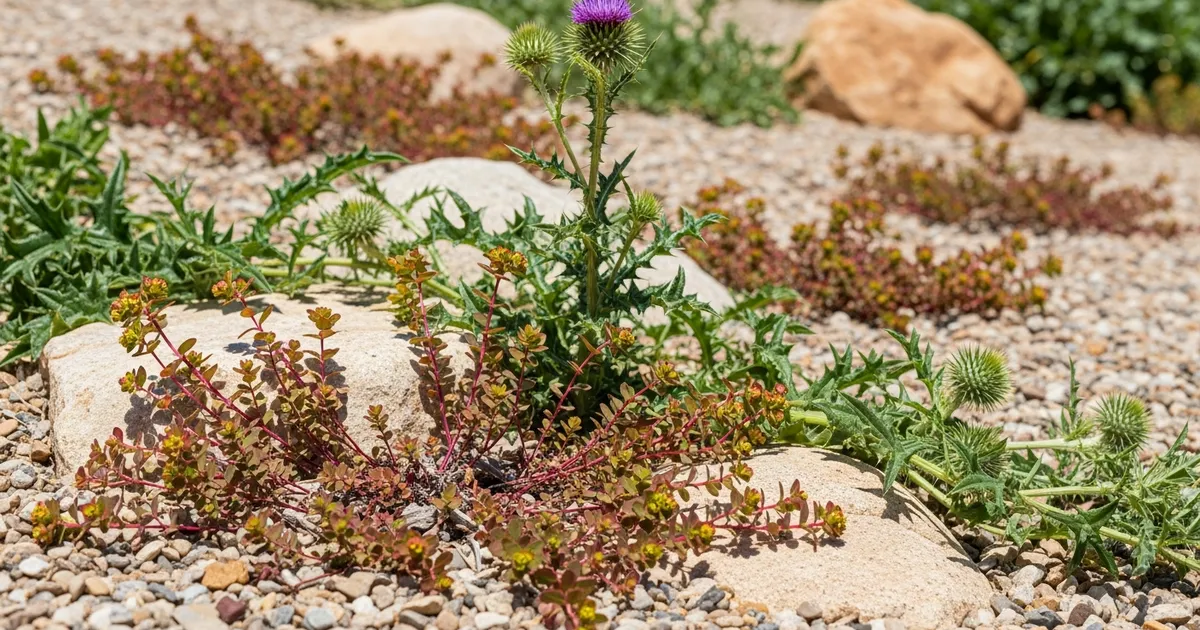
Spurge is the number one enemy of rock landscaping in Washington County. This low-growing annual produces thousands of tiny seeds and spreads rapidly through rock mulch. You’ll recognize spurge by its small, oval leaves and milky white sap when broken.
Spurge thrives in the hot conditions created by rock reflection. It germinates from March through October in our climate, with peak emergence during the summer monsoon season (July-September). A single spurge plant can produce over 5,000 seeds.
Puncturevine (Goathead)
Every Southern Utah resident knows puncturevine – those painful thorns that puncture bike tires and bare feet. This aggressive annual weed spreads in mat-like formations across rock surfaces. The thorny seed pods can remain viable in the soil for up to 5 years.
Puncturevine seeds germinate when soil temperatures reach 60°F consistently, typically starting in April in the St. George area and May in higher elevation areas like Hurricane and La Verkin.
Russian Thistle (Tumbleweed)
Russian thistle starts as small, succulent-like seedlings but grows into the classic tumbleweed. In rock landscaping, young plants wedge between rocks and establish deep taproots that are extremely difficult to remove once established.
This weed is particularly problematic along fence lines and property edges where mature tumbleweeds collect and release thousands of seeds into your rock beds.
Desert Crabgrass
While not as aggressive as its lawn-invading cousin, desert crabgrass finds perfect conditions in the spaces between rocks. It forms dense clumps that displace decorative rock and create an unkempt appearance.
Take photos of weed problems in your rock landscaping before treatment. Many weeds look similar when small, but correct identification is crucial for effective control. Send photos to your pest control professional for accurate species identification.
Why Weeds Love Rock Landscaping
Understanding why weeds target rock landscaping helps you develop better prevention strategies. Desert plants have evolved specific adaptations that make rock mulch environments ideal growing conditions.
Heat Island Effect
Rock landscaping creates microclimates 10-15°F warmer than surrounding areas. This extended growing season allows multiple weed generations per year. In St. George’s lower elevation areas, rock surfaces can reach 140°F during summer afternoons.
Perfect Drainage
Most desert weeds prefer well-draining soil conditions. Rock landscaping provides excellent drainage while still retaining enough moisture for germination during brief rain events.
Seed Collection Points
Wind patterns in Southern Utah carry seeds from surrounding desert areas directly into landscaped spaces. Rock beds act like seed traps, collecting and concentrating weed seeds in areas with minimal competition from established plants.
Degraded Weed Barriers
Southern Utah’s intense UV exposure breaks down landscape fabric within 3-5 years. Once compromised, these barriers become ineffective and may actually help weeds by providing a growing medium as they decompose.
The Reality About Weed Fabric in Desert Climates
Weed fabric degrades rapidly under Southern Utah’s intense sun and temperature extremes. UV radiation breaks down synthetic materials, creating gaps where weeds establish.
| Weed Barrier Type | Lifespan in Southern Utah | Effectiveness Rating | Best Use |
|---|---|---|---|
| Standard Landscape Fabric | 2-3 years | Poor | Temporary installations |
| Heavy-Duty Woven Fabric | 4-6 years | Fair | High-traffic areas |
| Plastic Sheeting | 6-12 months | Very Poor | Not recommended |
| Pre-emergent + Rock | 12 months per application | Excellent | Most cost-effective |
Signs Your Weed Fabric Has Failed
- Visible tears or gaps in the material
- Fabric lifting or separating from the ground
- Organic matter accumulating on top of the fabric
- Weeds growing through or around the edges
- Fabric feels brittle or crumbles when touched
Effective Prevention Strategies
The most cost-effective approach to weed control in rock landscaping combines multiple prevention methods. No single strategy provides complete control, but layered approaches can achieve 90-95% effectiveness.
Pre-Emergent Herbicide Applications
Pre-emergent herbicides prevent weed seeds from germinating and establishing. In Southern Utah’s climate, timing is critical for maximum effectiveness.
February Application: Apply pre-emergent herbicide before soil temperatures consistently reach 55°F. This typically occurs in mid to late February in St. George and early March in higher elevation areas like Hurricane and La Verkin.
August Application: A second application before monsoon season prevents late-season weed establishment. Apply in early August before summer rains begin.
Rock Depth and Type Selection
Proper rock installation significantly impacts weed pressure. Insufficient depth allows weeds to establish above the rock layer, while certain rock types provide better suppression.
Minimum Depth: 3-4 inches of rock provides effective weed suppression. Depths less than 3 inches allow sufficient light penetration for weed germination.
Rock Size: ¾-inch to 1.5-inch diameter rocks provide the best balance of coverage and weed suppression. Smaller gravel creates more growing spaces between rocks.
Choose angular rock over rounded river rock for weed control. Angular pieces lock together better, creating fewer gaps where seeds can establish. The sharp edges also make it harder for weeds to push through the rock layer.
Treatment Options for Existing Weed Problems
Once weeds establish in rock landscaping, removal becomes more challenging but not impossible. Success depends on targeting weeds at the right growth stage with appropriate methods.
Hand Removal Timing
Hand pulling is most effective during Southern Utah’s winter rainy season (December through February) when soil moisture makes root removal easier. Weeds pulled during this period are 3 times less likely to regrow compared to summer removal.
Remove the entire root system, especially for perennial weeds like Russian thistle. Broken root fragments can regenerate into new plants.
Post-Emergent Herbicide Applications
Post-emergent herbicides target actively growing weeds. Different weed species respond to different active ingredients, making proper identification crucial.
Spurge Control: Most effective when plants are actively growing but before seed production (April-June in Southern Utah).
Puncturevine Control: Best controlled in early growth stages (May-July) before spiny seed pods develop.
Russian Thistle Control: Target young plants in spring (March-May) before they develop tough, woody stems.
Never apply herbicides during windy conditions (over 10 mph) in Southern Utah. Desert winds can carry herbicide drift to desirable plants, including protected native vegetation. Check wind forecasts and apply early morning when conditions are typically calmer.
Selective vs. Non-Selective Treatments
Rock landscaping typically allows for non-selective herbicide use since there are no desirable plants to protect. However, be cautious near property boundaries where drift could affect neighbors’ landscapes.
Seasonal Maintenance Schedule
Consistent maintenance prevents small weed problems from becoming major landscape renovations. Follow this seasonal schedule adapted to Southern Utah’s unique climate.
January-February: Planning and Preparation
- Inspect rock landscaping for areas of heavy weed pressure
- Hand-pull any visible weeds while soil is soft from winter moisture
- Plan pre-emergent herbicide applications for late February
- Assess weed fabric condition and plan replacements if needed
March-April: Pre-Emergent Applications
- Apply pre-emergent herbicide before soil temperatures reach 60°F consistently
- Rake rock areas to ensure good soil contact for herbicide
- Irrigate lightly after application if no rain is forecast within 7 days
- Monitor for early germinating weeds and spot-treat as needed
May-June: Early Growing Season Monitoring
- Weekly inspections for breakthrough weeds
- Spot-treat young weeds before they establish deep roots
- Hand-pull any weeds growing through pre-emergent barrier
- Document problem areas for targeted fall treatments
July-September: Summer Management
- Minimize disturbance during extreme heat (over 105°F)
- Focus on preventing seed production in any established weeds
- Prepare for monsoon season weed emergence
- Apply second pre-emergent application in early August if budget allows
October-December: Season Wrap-Up
- Remove any weeds that produced seeds during summer
- Clean up wind-blown debris that could harbor seeds
- Plan major renovations or rock additions for winter months
- Schedule professional assessment if weed problems persist
Keep a simple log of weed problems by location and date. Many Southern Utah homeowners notice patterns – like puncturevine consistently emerging near south-facing walls or spurge concentrating along property boundaries. This data helps target future treatments more effectively.
Cost Analysis: DIY vs. Professional Treatment
Understanding the true cost of weed control includes material costs, time investment, and long-term effectiveness. Many homeowners underestimate the time and expertise required for effective weed management.
DIY Costs and Considerations
Material Costs per 1,000 sq ft:
- Pre-emergent herbicide: $40-60 annually
- Post-emergent herbicide: $25-40 per application
- Application equipment: $50-150 initial investment
- Weed fabric replacement: $200-400 every 3-5 years
Time Investment: Plan 2-4 hours per 1,000 square feet for initial treatment, plus 1-2 hours monthly for maintenance during growing season.
Learning Curve: Proper herbicide selection, timing, and application techniques require research and experience. Mistakes can be costly and may require professional intervention.
Professional Treatment Benefits
Professional weed control services provide expertise, proper equipment, and guaranteed results. Licensed applicators understand local weed species and optimal treatment timing for Southern Utah conditions.
Typical Professional Costs:
- Initial treatment: $150-300 per 1,000 sq ft
- Annual maintenance programs: $200-400 per 1,000 sq ft
- Spot treatment visits: $75-150 per visit
- Rock landscape renovation: $1,500-3,000 per 1,000 sq ft
When to Call a Professional
Some weed situations require professional intervention for effective, long-term solutions. Recognizing these situations early prevents costly landscape damage.
Signs You Need Professional Help
- Weeds covering more than 30% of rock landscaping area
- Multiple failed DIY treatment attempts
- Large established perennial weeds with deep root systems
- Weed problems affecting property value or HOA compliance
- Safety concerns with herbicide application near water features or wells
Professional Assessment Value
A professional assessment identifies specific weed species, evaluates site conditions, and develops targeted treatment strategies. This typically costs $75-125 but can save hundreds in ineffective treatments.
How Green Defense Handles Desert Rock Landscaping Weeds
At Green Defense Pest Control, we understand Southern Utah’s unique weed challenges. Our approach combines local expertise with proven treatment methods tailored to desert conditions.
Our Treatment Process
Step 1: Site Assessment
We identify specific weed species, evaluate rock depth and type, assess drainage patterns, and document problem areas with photos and GPS coordinates.
Step 2: Customized Treatment Plan
Based on your specific weed species and site conditions, we develop a treatment calendar that maximizes effectiveness while minimizing environmental impact.
Step 3: Integrated Approach
We combine pre-emergent applications, targeted post-emergent treatments, and mechanical removal as needed. Our licensed technicians understand optimal timing for Southern Utah’s climate.
Step 4: Ongoing Monitoring
Regular inspections ensure treatments remain effective and allow for quick response to new weed emergence.
Service Areas and Pricing
We serve all of Southern Utah, including St. George, Hurricane, Washington, Ivins, Santa Clara, and La Verkin. Our rock landscaping weed control programs typically range from $200-400 annually per 1,000 square feet, depending on weed pressure and site conditions.
Most clients see 85-95% weed reduction in the first year, with minimal maintenance required in subsequent years. We offer service guarantees and will return at no charge if weeds breakthrough our treatments.
Conclusion
Effective weed control in desert rock landscaping requires understanding local weed species, proper timing, and consistent maintenance. While the initial investment in professional treatment or quality DIY materials may seem significant, it’s far less expensive than renovating rock landscaping damaged by aggressive weeds.
The key is starting with prevention. Pre-emergent herbicides applied at the right time can prevent 80-90% of weed problems for a fraction of the cost of dealing with established infestations.
Remember that Southern Utah’s unique climate creates specific challenges not found in other desert regions. Local expertise makes a significant difference in treatment success and long-term landscape health.