
Hurricane’s desert climate creates perfect conditions for puncturevine, commonly called goatheads. These invasive weeds plague neighborhoods from Sand Hollow to Sky Mountain, turning beautiful desert landscapes into painful obstacle courses. The spiny seed pods can puncture bicycle tires, hiking boots, and bare feet with equal efficiency.
Understanding goathead biology is crucial for effective control. These aren’t just nuisance weeds—they’re classified as noxious weeds by the Utah Department of Agriculture. Once established, they spread aggressively and persist for years.
Identifying Goatheads in Hurricane’s Desert Environment
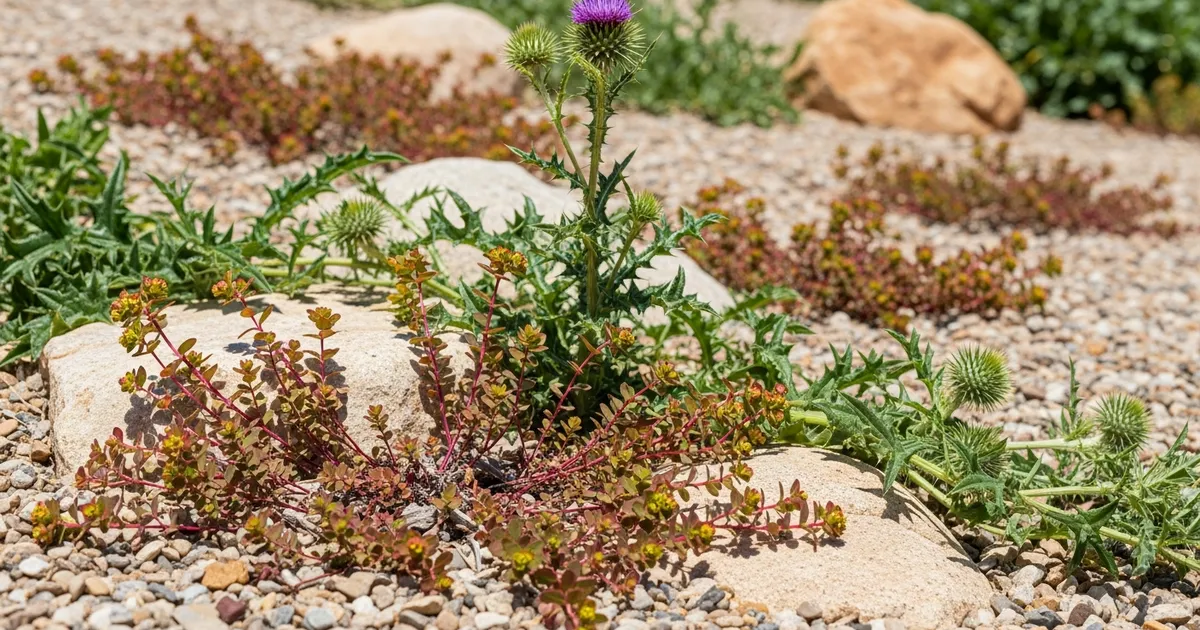
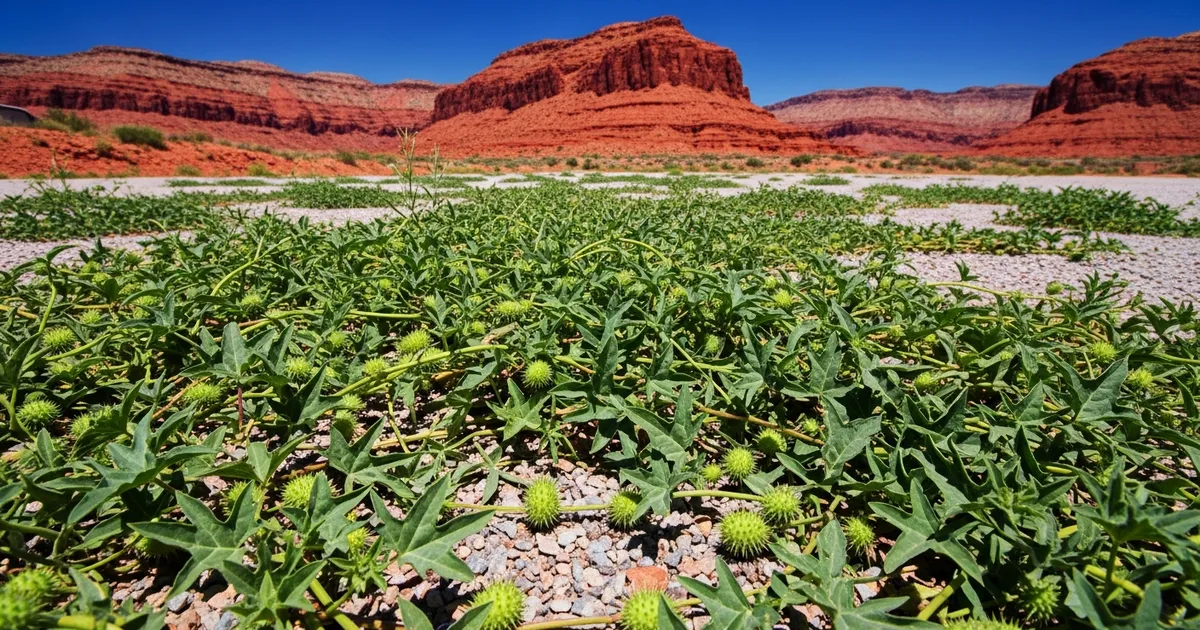
Puncturevine forms distinctive mat-like patches across Hurricane’s sandy soils. The plant produces small yellow flowers from May through October, followed by the notorious spiny seed pods.
Key identification features include:
- Prostrate growth pattern spreading up to 10 feet in diameter
- Compound leaves with 4-8 pairs of leaflets
- Five-petaled yellow flowers, about 0.5 inches across
- Woody seed pods with two sharp spines each
- Deep taproot extending 3-4 feet into Hurricane’s caliche layer
The seeds are the real problem. Each mature plant produces 200-5,000 seeds annually. These seeds survive Hurricane’s extreme temperature swings, remaining viable for 3-5 years buried in soil.
Check your property in early spring before the first flowers appear. Young goathead plants look similar to purslane but have compound leaves instead of simple ones. Early identification saves hours of removal work later.
Why Goatheads Thrive in Hurricane Utah
Hurricane’s environmental conditions create goathead paradise. Understanding these factors helps target control efforts more effectively.
Climate Advantages
Hurricane’s 300+ sunny days per year provide ideal growing conditions. The extended growing season allows multiple generations per year. Mild winters don’t kill established root systems.
Soil Conditions
The sandy, well-drained soils throughout Hurricane neighborhoods favor puncturevine over competing vegetation. Low organic matter content reduces beneficial microorganisms that might naturally suppress goathead growth.
Disturbance Factors
Construction activity in developing areas like Desert Color and Coral Canyon creates disturbed soil—prime goathead habitat. Road maintenance along SR-9 and local streets spreads seeds via vehicle tires and equipment.
Overgrazing in nearby open spaces eliminates competitive vegetation, leaving bare ground for goathead colonization. Even residential landscaping practices like excessive watering can create favorable conditions.
Prevention: Your First Line of Defense
Prevention costs significantly less than removal and provides better long-term results. A comprehensive prevention strategy addresses both seed germination and new introductions.
Pre-Emergent Herbicide Applications
Pre-emergent herbicides prevent seed germination when applied correctly. In Hurricane, timing is critical due to the extended growing season.
Application schedule:
- First application: Early March when soil temperatures reach 60°F
- Second application: Late May to catch later germinations
- Third application: Early August for fall germinations
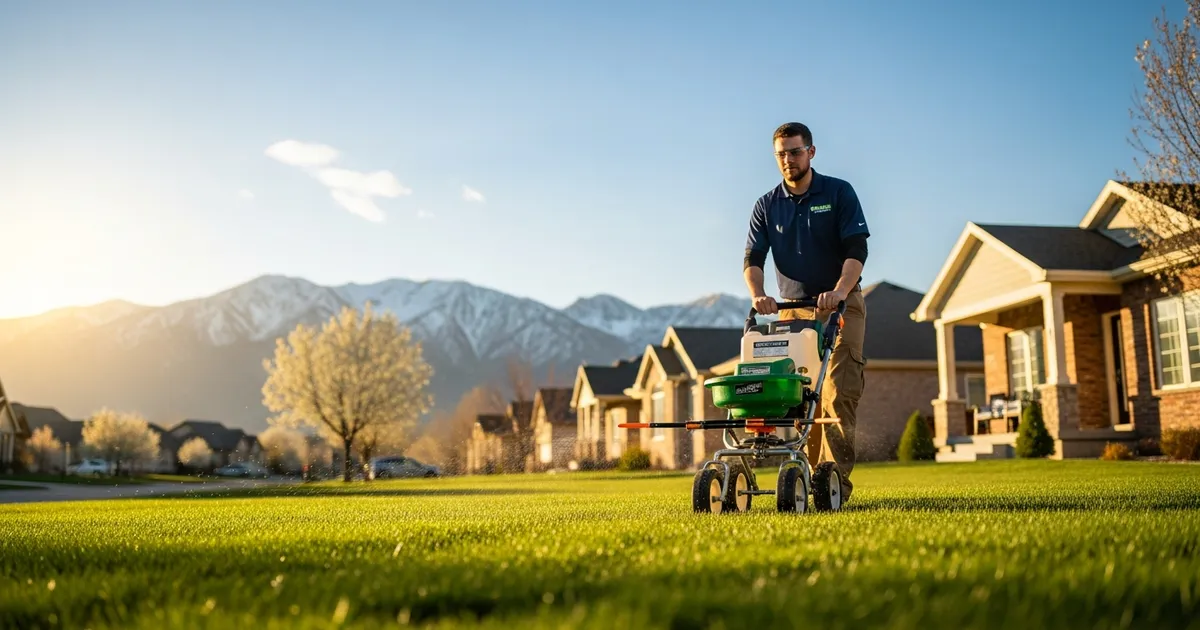
Products containing oryzalin, pendimethalin, or prodiamine work effectively against goathead seeds. Professional applications ensure proper coverage and timing.
Cultural Prevention Methods
Maintaining dense, healthy vegetation prevents goathead establishment. Native plants adapted to Hurricane’s climate compete effectively against invasive species.
Recommended prevention practices:
- Overseed thin areas with native grasses in fall
- Maintain 3-4 inch mulch layer in landscape beds
- Avoid disturbing soil unnecessarily during peak germination periods
- Clean equipment after working in infested areas
- Inspect new plants and soil amendments for seed contamination
Never transport soil, gravel, or plant materials from areas with known goathead infestations. Seeds can remain dormant in soil for years before germinating in new locations.
Manual Removal Strategies
Hand removal works for small infestations but requires proper technique and timing. Success depends on removing the entire root system before seed production begins.
Optimal Timing
Remove goatheads in Hurricane during two key windows:
- Spring: March-April when plants are small but established
- Post-monsoon: August-September when soil moisture aids removal
Avoid removal during flowering and seed production (May-July) to prevent spreading viable seeds.
Proper Removal Technique
Successful manual removal requires accessing the entire taproot system. In Hurricane’s compacted caliche soils, this means digging 18-24 inches deep in mature infestations.
Step-by-step removal process:
- Water the area 24-48 hours before removal to soften soil
- Use a long-handled weeding tool or shovel
- Dig in a 12-inch circle around the plant base
- Follow the taproot down until you reach the end
- Remove all root fragments—pieces left behind will regrow
- Backfill holes and overseed immediately
Use a dandelion weeder tool for small goathead plants. The forked end helps extract the taproot without breaking it. For larger infestations, a mattock or pickaxe breaks through Hurricane’s caliche layer more effectively.
Chemical Control Options
Chemical control provides efficient treatment for larger infestations. Selecting the right herbicide and application timing maximizes effectiveness while minimizing environmental impact.
Post-Emergent Herbicides
Post-emergent treatments target actively growing plants. In Hurricane’s climate, multiple applications are typically necessary due to extended growing seasons.
| Herbicide Type | Best Timing | Effectiveness | Considerations |
|---|---|---|---|
| Glyphosate | Spring growth, pre-flower | 85-90% kill rate | Non-selective, kills all vegetation |
| 2,4-D | Active growth periods | 70-80% effectiveness | Selective for broadleaf weeds |
| Dicamba | Early to mid-season | 80-85% control | Good soil residual activity |
| Aminopyralid | Any active growth | 90-95% long-term control | Persistent soil activity, restricted use |
Application Considerations
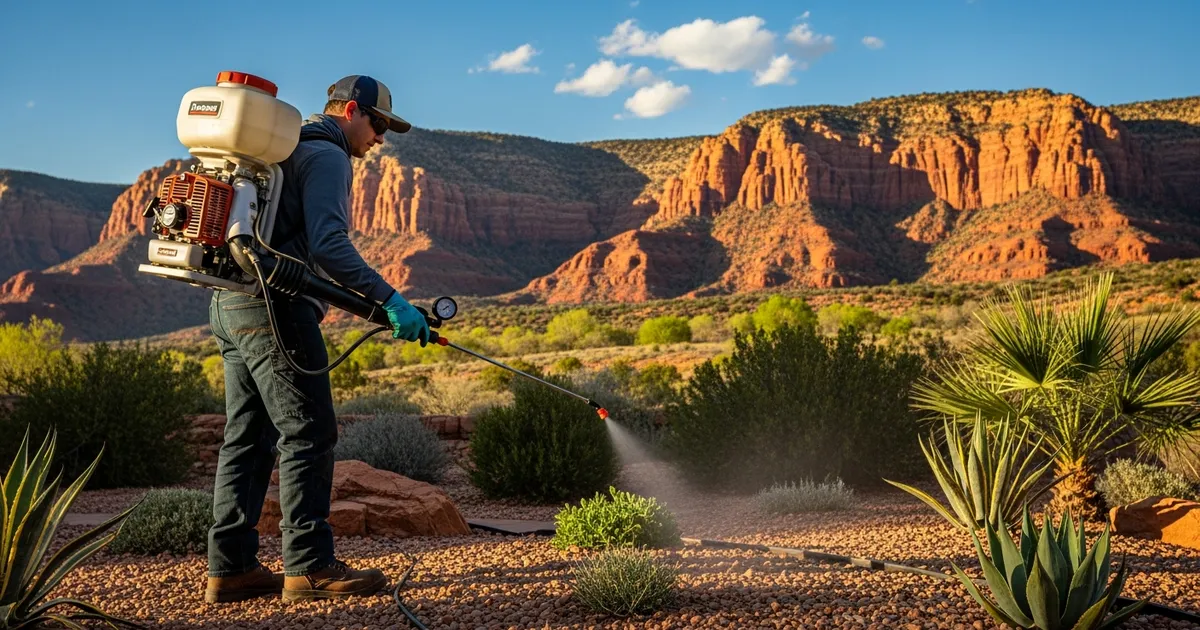
Hurricane’s windy conditions require careful timing of herbicide applications. Wind speeds above 10 mph increase drift risk and reduce effectiveness.
Optimal application conditions:
- Morning hours (6-10 AM) with minimal wind
- Temperature between 65-85°F
- No precipitation forecast for 6-12 hours
- Adequate soil moisture for active plant growth
Add surfactants to improve herbicide penetration through goathead’s waxy leaf surface. Colorants help track application coverage in large treatment areas.
Integrated Management Approach
Combining multiple control methods provides better long-term results than relying on single approaches. An integrated strategy adapts to Hurricane’s specific conditions and goathead biology.
Year 1: Aggressive Control
The first year focuses on reducing seed production and establishing competitive vegetation.
Timeline:
- February: Apply pre-emergent herbicide
- April: Manual removal of escaped plants
- May: Spot-treat with post-emergent herbicide
- June: Second manual removal before seed set
- October: Overseed with competitive species
Years 2-3: Maintenance Phase
Continue pre-emergent applications while monitoring for new germinations. The goal is preventing seed bank replenishment.
Years 4+: Long-term Suppression
Maintain competitive vegetation and spot-treat occasional escapes. Monitor adjacent areas for new infestations.
Document your treatment areas with photos and GPS coordinates. Goathead seed banks can germinate sporadically for years, and detailed records help target follow-up treatments effectively.
Seasonal Timing Guide for Hurricane
Hurricane’s unique climate requires adjusted timing compared to northern Utah. Understanding local seasonal patterns improves treatment success rates.
Spring (March-May)
Primary germination period begins when soil temperatures reach 65°F, typically in mid-March. Pre-emergent applications must occur before this threshold.
Key activities:
- Apply pre-emergent herbicides in early March
- Monitor for first germinations by late March
- Begin manual removal of young plants in April
- Apply post-emergent treatments before flowering
Summer (June-August)
Peak growing season with continuous seed production. Focus on preventing seed dispersal while preparing for fall treatments.
Fall (September-November)
Second germination period occurs with monsoon moisture. This window provides excellent opportunities for establishment of competitive vegetation.
Winter (December-February)
Planning and preparation period. Order herbicides, schedule professional treatments, and plan landscape improvements.
Protecting Desirable Plants
Hurricane’s desert landscaping often includes valuable native plants that require protection during goathead control efforts. Selective approaches preserve existing vegetation while targeting invasive species.
Protection strategies include:
- Using cardboard shields during herbicide applications
- Applying herbicides with foam applicators for precise targeting
- Timing treatments when desirable plants are dormant
- Hand-painting herbicide on individual goathead plants
Native plants like desert willow, apache plume, and prickly pear cactus provide natural competition against goatheads once established. These species adapt well to Hurricane’s climate and require minimal water inputs.
Cost Analysis: DIY vs Professional Treatment
Treatment costs vary significantly based on infestation size, access, and chosen methods. Understanding true costs helps homeowners make informed decisions.
DIY Treatment Costs
Materials and equipment for self-treatment:
- Pre-emergent herbicide: $30-50 per acre per application
- Post-emergent herbicide: $25-40 per acre per application
- Application equipment: $100-300 initial investment
- Safety equipment: $50-100 for proper protective gear
Labor costs include significant time investments—expect 8-12 hours per acre for manual removal, 2-4 hours per acre for chemical applications.
Professional Treatment Investment
Professional services provide comprehensive treatment with guaranteed results:
- Initial treatment: $150-300 per acre
- Follow-up applications: $75-150 per acre
- Multi-year contracts: 15-25% discount on total costs
Professional advantages include proper equipment, licensed applicators, and treatment warranties.
Common Mistakes to Avoid
Hurricane residents often make specific errors that reduce treatment effectiveness or create new problems.
Timing Errors
Applying pre-emergent herbicides too late misses the primary germination window. Hurricane’s early springs require February applications, not the April timing used in northern climates.
Incomplete Removal
Leaving root fragments during manual removal guarantees regrowth. Goathead taproots regenerate from small pieces, requiring complete extraction.
Seed Dispersal
Removing plants during seed production spreads viable seeds across larger areas. Wait for dormant periods or use careful collection methods.
Neglecting Soil Health
Focusing only on killing existing plants without improving soil conditions allows reinfestation. Building healthy soil biology suppresses goathead germination naturally.
How Green Defense Handles Goathead Control
Green Defense Pest Control brings over 15 years of southern Utah experience to goathead management. Our integrated approach combines proven techniques with local knowledge of Hurricane’s specific conditions.
Our comprehensive process includes:
Initial Assessment
We map infestation areas using GPS technology and assess soil conditions, existing vegetation, and environmental factors. This detailed analysis guides our customized treatment plan.
Multi-Modal Treatment
Our licensed technicians apply pre-emergent barriers timed to Hurricane’s specific germination patterns. We use professional-grade equipment ensuring uniform coverage and optimal results.
Follow-up treatments target escaped plants before seed production. Our selective post-emergent applications protect desirable vegetation while eliminating goatheads.
Vegetation Establishment
We help establish competitive native plants suited to Hurricane’s climate. Our team recommends species that provide natural goathead suppression while requiring minimal water inputs.
Ongoing Monitoring
Regular monitoring visits catch new germinations early when treatment is most effective. Our service records track progress and adjust strategies as needed.
Treatment packages start at $150 per acre with multi-year contracts available at discounted rates. Free estimates include detailed infestation mapping and customized treatment recommendations.
Long-term Success Strategies
Achieving permanent goathead control requires commitment to long-term management. Hurricane’s climate allows year-round vigilance and treatment opportunities.
Success factors include:
- Consistent pre-emergent applications for 3-5 years minimum
- Rapid response to new germinations
- Establishment of competitive native vegetation
- Coordination with neighboring property owners
- Professional monitoring and treatment as needed
Property values in Hurricane’s desirable neighborhoods like Coral Canyon and Desert Color benefit from weed-free landscapes. Investing in professional goathead control protects both property values and outdoor enjoyment.
Remember that goathead seeds remain viable for 3-5 years in soil. Even perfect treatment requires ongoing vigilance to prevent reinfestation from the existing seed bank.