
Living in St. George means enjoying beautiful red rock scenery and mild winters. But our desert climate also creates perfect conditions for termites. Understanding when they’re most active and what signs to watch for can save you thousands in home repairs.
The Coral Canyon and Green Valley neighborhoods have seen increased termite activity in recent years. This makes sense given the new construction and landscaping that creates ideal termite habitat.
When Is Termite Season in St. George?
Termite season in St. George runs from mid-April through June, with peak activity occurring in May. This timing aligns with our spring rainy season when soil moisture levels rise and temperatures consistently reach 70°F or higher.
Eastern subterranean termites trigger their swarms based on three factors: temperature (70-80°F), humidity (above 75%), and barometric pressure changes from approaching storms. In St. George, these conditions typically align during our April-May monsoon preview period.
Western drywood termites also swarm during this window but are less predictable. They don’t require soil contact like subterranean species, so their timing depends more on internal colony maturity than weather patterns.
Monthly Breakdown of Termite Activity
- March: Colony preparation begins, workers increase activity
- April: First swarms appear mid-month, typically after rain
- May: Peak swarming activity, highest risk period
- June: Late swarms continue, new colonies establish
- July-August: Activity decreases due to extreme heat
Set a calendar reminder for April 15th each year to inspect your property for early termite signs. This timing gives you the best chance to catch problems before major swarming begins.
Primary Termite Species in Southern Utah
Two termite species pose the biggest threat to St. George homes. Understanding their differences helps you identify which type you’re dealing with.
Eastern Subterranean Termite
This is our primary concern in St. George. Eastern subterranean termites arrived with landscaping materials and thrived in our irrigated neighborhoods. They build extensive underground colonies that can house 300,000+ individuals.
Key characteristics:
- Require soil contact for moisture
- Build distinctive mud tubes up foundation walls
- Swarm in large numbers (hundreds to thousands)
- Workers are pale, soft-bodied, about 1/4 inch long
- Swarmers are dark brown to black with wings
Western Drywood Termite
Less common but still present in St. George, especially in older wooden structures. They live entirely within the wood they consume, making detection more challenging.
Key characteristics:
- No soil contact needed
- Smaller colonies (typically under 1,000 individuals)
- Leave distinctive pellet-shaped droppings
- Swarmers are reddish-brown
- Create small holes in wood for waste disposal
| Feature | Eastern Subterranean | Western Drywood |
|---|---|---|
| Soil Contact | Required | Not needed |
| Colony Size | 60,000-300,000+ | 200-1,000 |
| Swarm Color | Dark brown/black | Reddish-brown |
| Primary Evidence | Mud tubes | Pellet droppings |
| Damage Speed | Fast (large colonies) | Slow (small colonies) |
Flying Termites vs Flying Ants: Critical Differences
Many St. George homeowners mistake flying ants for termites, leading to unnecessary panic or missed warning signs. Here’s how to tell them apart instantly.
The easiest identification method focuses on three body features: antennae, wings, and waist.
Termite Identification
- Antennae: Straight, beaded like a string of pearls
- Wings: Four wings of equal length, milky white
- Waist: Thick, no pinched waist
- Body: Soft, pale (workers) or dark (swarmers)
Flying Ant Identification
- Antennae: Bent at 90-degree angle (elbowed)
- Wings: Four wings with front pair longer than back
- Waist: Distinctly pinched, hourglass shape
- Body: Hard exoskeleton, usually darker
Never ignore flying insects around your home during spring months. Even if you’re unsure whether they’re termites or ants, professional identification costs far less than termite damage repairs.
Early Warning Signs of Termite Activity
Catching termites early can save you $3,000-$8,000 in average repair costs. These signs appear weeks or months before major structural damage occurs.
1. Flying Termites (Swarmers)
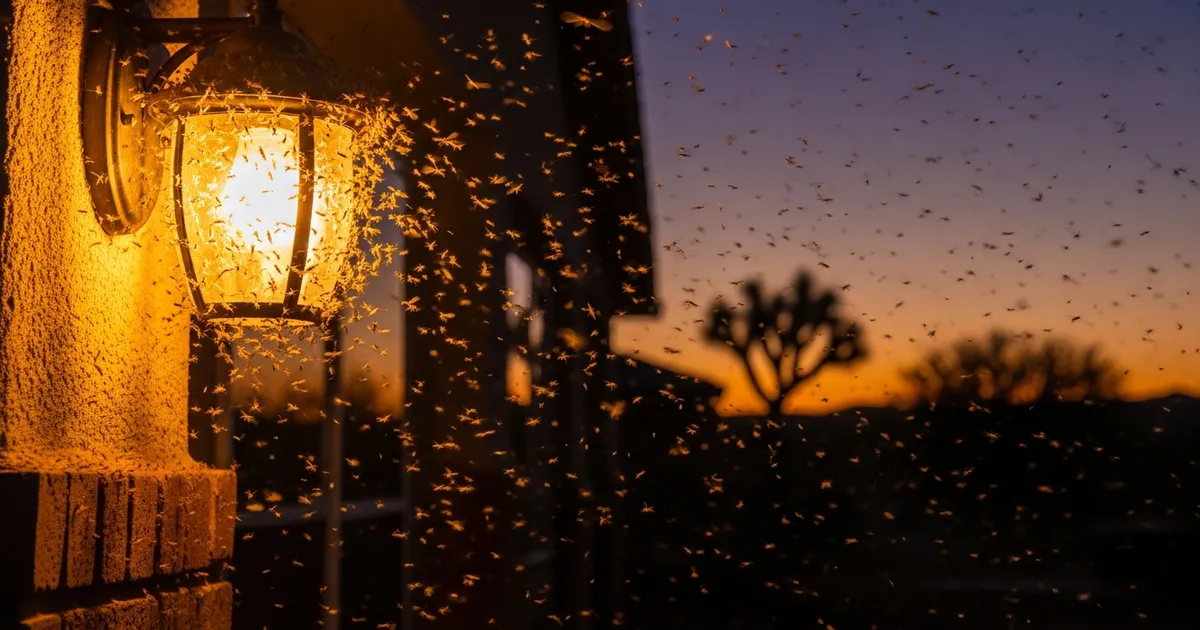
Swarming termites are often the first visible sign of an established colony. In St. George, swarms typically occur on warm afternoons (75°F+) following spring rain showers.
What to look for:
- Groups of flying insects around windows and light sources
- Swarms lasting 30-60 minutes before dispersing
- Activity concentrated between 2-6 PM
- Multiple swarms over several days
2. Discarded Wings
After mating flights, termites shed their wings in small piles. These wing deposits are often more noticeable than the swarms themselves.
Common locations:
- Windowsills, especially south-facing windows
- Door frames and entryways
- Near outdoor light fixtures
- On sidewalks and patios
3. Mud Tubes
Subterranean termites build pencil-thick mud tubes to travel between soil and wood sources. These tubes protect them from dry air and predators.
Where to check:
- Foundation walls, especially corners
- Basement or crawl space walls
- Around plumbing penetrations
- Under porches and decks
- Along concrete slabs
Use a flashlight to inspect your foundation monthly. Look for mud tubes about as thick as a pencil running vertically up walls. Break open suspicious tubes—if they’re quickly rebuilt within a week, you have active termites.
4. Wood Damage Signs
Termites consume wood from the inside out, leaving a thin outer shell. This creates distinctive damage patterns.
Signs to watch for:
- Hollow sound when tapping wood with screwdriver handle
- Soft spots in hardwood floors
- Sagging or squeaky floor boards
- Doors and windows that stick or won’t close properly
- Small holes in drywall (drywood termite exit holes)
5. Termite Droppings
Drywood termites push wood-colored pellets out of their galleries. These droppings are about 1/16 inch long and hexagonal in shape.
Common locations:
- Below wooden beams and joists
- Near wooden furniture
- Around wooden window frames
- On floors beneath infested wood
High-Risk Areas in St. George Properties
Certain areas of your property attract termites more than others. Focus your inspection efforts on these vulnerable spots.
Irrigation and Moisture Areas
St. George’s desert climate means most termite activity concentrates around artificial water sources. Neighborhoods with extensive landscaping irrigation see higher termite pressure.
High-risk zones:
- Areas within 10 feet of sprinkler systems
- Around swimming pools and spas
- Near air conditioning units with condensate drains
- Under leaking outdoor faucets
- Around French drains and downspouts
Structural Vulnerabilities
Certain construction features create termite highways into your home. Many St. George homes built in the 1980s-2000s have these risk factors.
Problem areas:
- Wood-to-ground contact (deck posts, fence connections)
- Expansion joints in concrete slabs
- Cracks in foundation walls
- Attached garages with wooden framing
- Basement window wells
Landscaping Risk Factors
Beautiful xeriscape gardens can inadvertently create termite habitat. Wood mulch, dead plant material, and certain shrubs provide food sources.
Risky landscape features:
- Wood mulch within 12 inches of foundation
- Tree stumps and buried wood debris
- Dense shrub plantings against house walls
- Irrigation boxes and underground utilities
- Railroad tie retaining walls
Replace wood mulch near your foundation with inorganic alternatives like gravel or rubber mulch. Maintain an 18-inch gap between soil/mulch and any wooden parts of your home structure.
Prevention Strategies for St. George Homes
Preventing termites costs far less than treating an infestation. These strategies work specifically well in our desert climate.
Moisture Control
Eliminating excess moisture removes termites’ primary survival requirement. In St. George’s dry climate, even small water sources attract termites from long distances.
Essential moisture controls:
- Fix leaky pipes and faucets within 24 hours
- Ensure proper grading so water flows away from foundation
- Clean gutters twice yearly (spring and fall)
- Install splash blocks under downspouts
- Use dehumidifiers in basements (keep below 50% humidity)
Physical Barriers
Creating barriers between soil and wood eliminates termite access routes. This works especially well for new construction or renovation projects.
Effective barriers:
- Maintain 6-inch minimum clearance between wood and soil
- Install metal termite shields on foundation piers
- Use concrete or metal posts instead of wood for decks
- Seal cracks in foundation walls with concrete crack filler
- Install sand barriers around structures (particles too large for tubes)
Regular Inspections
Monthly self-inspections catch problems early when treatment costs remain manageable. Professional inspections provide deeper analysis annually.
Monthly checklist:
- Walk foundation perimeter with flashlight
- Check for mud tubes, wings, or wood damage
- Inspect crawl spaces and basements
- Test wood firmness with screwdriver
- Look for moisture problems
What to Do If You Find Termites
Finding termites doesn’t mean panic time, but immediate action prevents minor problems from becoming major damage. Here’s your step-by-step response plan.
Immediate Steps (First 24 Hours)
Take these actions immediately to document the problem and prevent further damage:
- Document everything: Take photos of termites, damage, or mud tubes
- Collect samples: Capture a few termites in a jar with rubbing alcohol
- Don’t disturb nests: Avoid breaking mud tubes or spraying insecticides
- Schedule professional inspection: Call a licensed company within 24 hours
- Check insurance coverage: Review your homeowner’s policy (most don’t cover termites)
What NOT to Do
These common mistakes can make termite problems worse or interfere with professional treatment:
- Don’t use over-the-counter sprays (termites will relocate, not die)
- Don’t break all mud tubes (professionals need some intact for assessment)
- Don’t ignore small signs hoping they’ll go away
- Don’t attempt DIY liquid termiticide applications
- Don’t assume one treatment solves the problem permanently
Termites can cause significant structural damage before becoming visible. If you suspect termite activity, get professional inspection within 48 hours. Delays can cost thousands in additional damage.
How Green Defense Handles Termite Problems
Our St. George termite team has protected southern Utah homes since 2015. We understand local termite species, seasonal patterns, and the unique challenges of desert termite control.
Our Inspection Process
Every termite inspection follows the same thorough protocol:
- Exterior assessment (45 minutes): Complete foundation inspection, landscaping evaluation, moisture source identification
- Interior evaluation (30 minutes): Basement, crawl spaces, and living areas for damage signs
- Detailed report (15 minutes): Written findings with photos, treatment recommendations, and prevention strategies
- Treatment proposal: Customized plan based on termite species, infestation level, and property layout
Treatment Options
We offer multiple treatment approaches depending on your specific situation:
Liquid Termiticide Barrier: Creates a protective zone around your foundation. Effective for 5-10 years. Best for preventing new infestations or treating active subterranean termites.
Bait Station System: Strategic placement of monitoring and baiting stations around property perimeter. Targets entire colonies through worker feeding behavior. Ideal for environmentally sensitive areas.
Spot Treatment: Localized treatment for small drywood termite infestations. Uses targeted injections directly into infested wood.
Pricing and Warranty
Termite treatment investment ranges from $1,200-$3,500 depending on home size and treatment type. We provide written warranties covering re-treatment and damage repair for qualified properties.
All treatments include:
- Free annual inspections for warranty period
- 24/7 emergency response for new termite activity
- Retreat guarantee if termites return
- Transferable warranty for home sales
Seasonal Termite Maintenance Schedule
Year-round termite prevention requires seasonal adjustments. This schedule aligns with St. George’s climate patterns and termite biology.
Spring (March-May)
- Professional inspection before swarm season
- Check and repair winter irrigation damage
- Trim vegetation away from foundation
- Service existing bait stations
- Monitor for swarming activity
Summer (June-August)
- Increase irrigation efficiency to reduce overwatering
- Check air conditioning condensate drainage
- Inspect pool and spa areas for moisture issues
- Maintain proper mulch distances
Fall (September-November)
- Clean gutters and downspouts
- Seal foundation cracks before winter
- Remove dead vegetation and wood debris
- Professional follow-up inspection
Winter (December-February)
- Monitor heating system moisture levels
- Check basement and crawl space humidity
- Plan spring prevention upgrades
- Schedule professional treatment renewals
Cost of Ignoring Termite Signs
Termite damage costs continue rising even after treatment begins. Understanding these financial impacts motivates prompt action when warning signs appear.
Average damage costs in St. George:
- Minor damage (caught early): $500-$1,500 repairs
- Moderate damage (1-2 years): $2,500-$8,000 repairs
- Severe damage (3+ years): $10,000-$25,000+ repairs
- Structural compromise: $30,000+ potential replacement costs
Common repair categories:
- Floor joist replacement: $1,500-$4,000
- Foundation repair: $3,000-$10,000
- Wall stud replacement: $2,000-$6,000
- Subfloor replacement: $1,000-$3,000 per room
Most homeowner insurance policies exclude termite damage, making prevention and early detection critical financial strategies.