
Living in Southern Utah’s stunning red rock country comes with unique challenges — including two species of scorpions that regularly invade homes in St. George, Hurricane, and La Verkin. While these desert arachnids play an important role in controlling insects, finding one in your bedroom or kitchen is never welcome.
The Arizona bark scorpion, North America’s most venomous scorpion species, and the larger desert hairy scorpion both thrive in Washington County’s warm, dry climate. Understanding their behavior and implementing targeted prevention strategies can keep your family safe and your home scorpion-free.
Identifying Southern Utah’s Scorpions
Southern Utah hosts two primary scorpion species that homeowners encounter. Proper identification helps determine the urgency of your response.
Arizona Bark Scorpion (Centruroides sculpturatus)
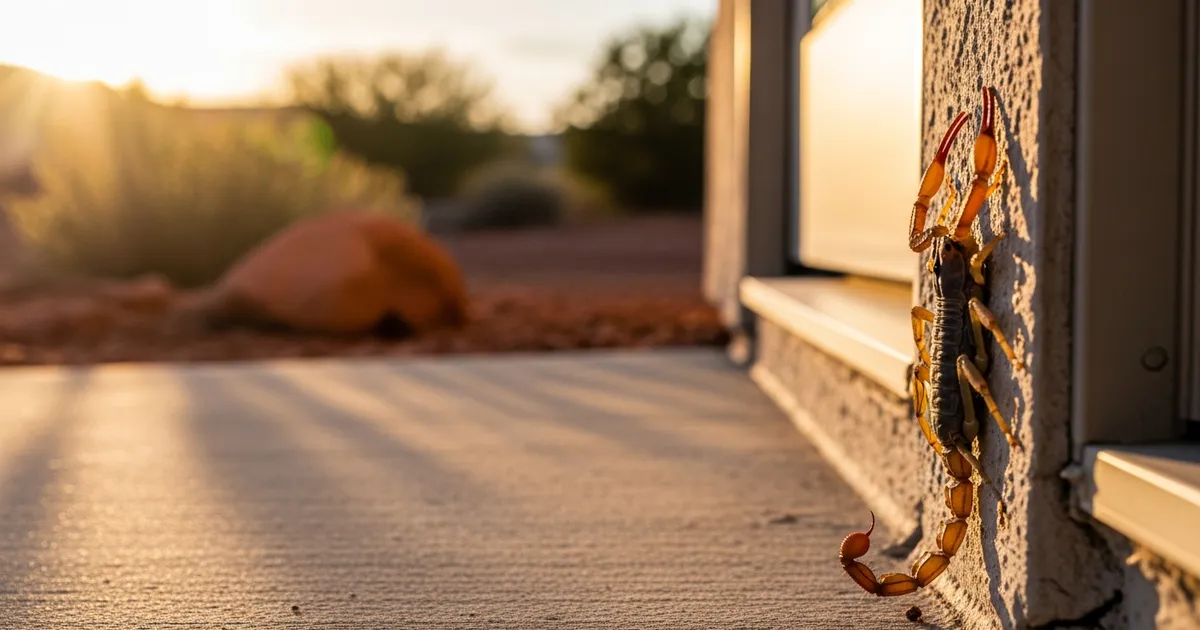
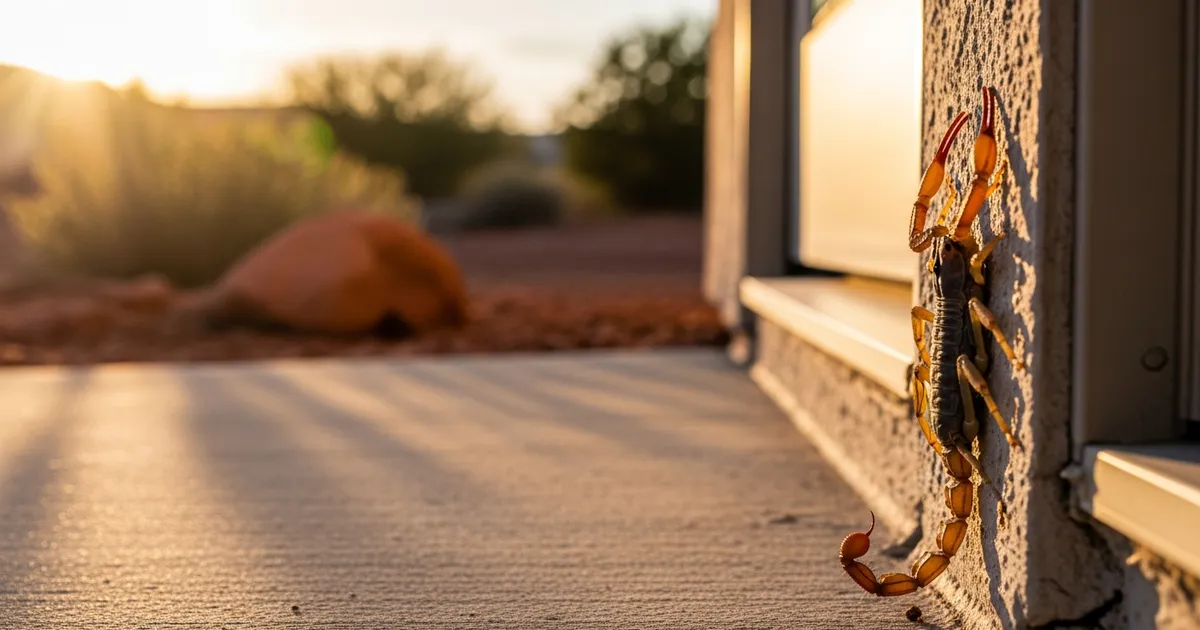
The Arizona bark scorpion is Southern Utah’s most dangerous arachnid. Adults measure 2.5 to 3 inches long with a slender, pale yellow to tan body and darker stripes or mottling. Their pincers are narrow and weak-looking compared to their venomous tail.
These scorpions are excellent climbers, scaling stucco walls, trees, and even glass surfaces. They often hide under loose bark (hence the name), in palm fronds, and inside homes where they seek cool, dark spaces during hot summer days.
Desert Hairy Scorpion (Hadrurus arizonensis)
Desert hairy scorpions are Southern Utah’s largest scorpion species, reaching 5 to 7 inches in length. They have robust, dark brown to black bodies covered in fine hairs and massive, powerful pincers. Despite their intimidating appearance, their sting is less medically significant than the bark scorpion’s.
These ground-dwellers prefer rocky areas and rarely climb walls or enter homes voluntarily. When they do get inside, it’s usually through ground-level entry points.
Arizona bark scorpion stings cause severe pain, numbness, and potentially life-threatening symptoms in children and elderly individuals. Seek immediate medical attention for any suspected bark scorpion sting.
Peak Scorpion Season in Southern Utah
Scorpion activity in Southern Utah follows predictable seasonal patterns tied to temperature and prey availability. Understanding these cycles helps homeowners prepare effectively.
Peak scorpion season runs from April through October, with highest activity during late spring and early fall when nighttime temperatures range between 70-85°F. Summer activity continues but shifts to late-night hours (10 PM to 3 AM) when temperatures drop below 95°F.
Monthly Activity Levels
- April-May: Scorpions emerge from winter hiding spots, peak mating season begins
- June-August: High activity but limited to cooler nighttime hours
- September-October: Second peak as scorpions prepare for winter
- November-March: Minimal activity, scorpions remain hidden in winter shelters
Rain events trigger increased activity as scorpions hunt prey insects that become active after moisture. The days following summer monsoons often see the highest home invasion rates.
Why Scorpions Enter Homes
Scorpions don’t intentionally seek human dwellings, but Southern Utah’s development patterns create ideal conditions for human-scorpion conflicts. Understanding their motivations helps target prevention efforts effectively.
Primary Attractants
Water Sources: Desert scorpions require minimal water but are drawn to consistent moisture sources. Leaky irrigation systems, pet water bowls, and poorly sealed swimming pools attract both scorpions and their insect prey.
Prey Insects: Scorpions follow food sources. Homes with cricket, roach, or ant problems inevitably develop scorpion issues. Outdoor lighting that attracts flying insects also draws hunting scorpions.
Shelter: Scorpions seek cool, dark hiding spots during hot days. Cluttered garages, woodpiles, landscaping rocks, and palm trees provide ideal daytime retreats near homes.
Entry Points
Scorpions exploit surprisingly small gaps to enter homes. Common entry points include:
- Gaps under doors (especially garage doors)
- Cracks around windows and sliding doors
- Utility penetrations (cable, electrical, plumbing)
- Weep holes in block walls
- Damaged weatherstripping
- Gaps where roof lines meet walls
Use the “credit card test” to identify potential entry points. If you can slide a credit card through a gap, a scorpion can squeeze through it. Arizona bark scorpions can flatten their bodies to fit through cracks as thin as 1/16 inch.
Comprehensive Scorpion Prevention Strategy
Effective scorpion prevention requires a multi-layered approach targeting their basic needs: shelter, water, and prey. This systematic strategy has proven successful for hundreds of Southern Utah homeowners.
1. Foundation and Perimeter Management
Create an inhospitable zone around your home’s foundation by implementing a 3-foot clear barrier.
Remove Harborage:
- Clear all rocks, decorative boulders, and landscape timbers within 3 feet of the foundation
- Trim vegetation back from walls (scorpions climb plants to access rooflines)
- Remove woodpiles, stored materials, and unused equipment from foundation areas
- Eliminate palm trees within 10 feet of the home (bark scorpions love palm fronds)
Landscape Modifications:
- Replace rock mulch with fine gravel (1/4 inch or smaller) in foundation beds
- Install drip irrigation instead of sprinkler systems to reduce moisture
- Choose desert-adapted plants that require minimal water
- Maintain a gravel or concrete border between grass/plants and the home
2. Structural Exclusion
Sealing entry points is the most effective long-term scorpion prevention method. Focus on these critical areas:
Door Sealing:
- Install door sweeps with bristles extending to the ground
- Replace worn weatherstripping around door frames
- Seal gaps where door frames meet walls with appropriate caulk
- Pay special attention to garage doors (largest entry point)
Window and Utility Sealing:
- Caulk gaps around window frames with exterior-grade silicone
- Install fine mesh screens over weep holes
- Seal penetrations where utilities enter the home
- Use expanding foam for larger gaps, followed by caulk for smooth finish
| Gap Size | Sealing Method | Best Materials |
|---|---|---|
| Hair-thin cracks | Caulking | Exterior silicone caulk |
| 1/16 – 1/4 inch | Caulk or expanding foam | Polyurethane caulk |
| 1/4 – 1 inch | Expanding foam + caulk | Closed-cell foam |
| Larger than 1 inch | Hardware cloth + foam | 1/4 inch mesh screen |
3. Water Management
Eliminating excess moisture reduces both scorpions and their prey insects significantly.
- Repair leaky faucets, hoses, and irrigation systems immediately
- Empty pet water bowls at night (refill in morning)
- Fix drainage issues that create standing water
- Clean pool areas regularly and maintain proper chemical balance
- Remove water features near the home
Walk your property’s perimeter monthly with a UV blacklight flashlight after dark. Scorpions glow bright blue-green under blacklight, making detection easy. Focus on areas within 20 feet of your home’s foundation.
Interior Prevention Measures
While exterior exclusion is primary, interior modifications provide additional protection and early detection opportunities.
Reducing Interior Harborage
Scorpions hide in cluttered, undisturbed areas during daylight hours. Minimize these hiding spots throughout your home.
- Keep storage areas organized with items in sealed containers
- Vacuum regularly, especially in corners and under furniture
- Eliminate cardboard boxes in favor of plastic storage containers
- Keep beds and furniture away from walls
- Remove unnecessary items from closet floors
Bedroom-Specific Precautions
Bedrooms require special attention since scorpion encounters here pose the highest risk.
- Tuck bed sheets and blankets completely under the mattress
- Keep beds at least 6 inches from walls
- Store shoes in closed containers or check before wearing
- Shake out clothing before putting it on
- Use a blacklight to check bedding if you suspect scorpion activity
Natural and Chemical Control Options
While prevention is primary, targeted control measures help reduce scorpion populations around homes.
Natural Control Methods
Several natural approaches can supplement exclusion efforts without introducing pesticides near living areas.
Diatomaceous Earth: Food-grade diatomaceous earth creates a barrier that damages scorpion exoskeletons. Apply thin lines around foundation perimeters and reapply after rain.
Beneficial Predators: Encourage natural scorpion predators like certain spider species, birds, and bats by providing appropriate habitat away from the home.
Essential Oil Deterrents: Some homeowners report success with peppermint, lavender, or cedarwood oil sprays around entry points, though scientific evidence is limited.
Professional Chemical Control
Licensed pest control professionals have access to effective residual insecticides that create long-lasting barriers against scorpions.
Never attempt to treat scorpion infestations yourself with over-the-counter pesticides. Improper application can scatter scorpions throughout the home and create dangerous exposure situations.
Emergency Procedures and First Aid
Despite best prevention efforts, scorpion encounters sometimes occur. Knowing proper emergency procedures protects your family.
If You Find a Scorpion
- Keep children and pets away from the area immediately
- Do not attempt to catch or kill the scorpion with your hands
- Use a long-handled tool (broom, tongs) to capture it in a jar
- If you cannot capture it safely, note its location and call professionals
- Take a photo for identification if possible
Sting First Aid
Arizona bark scorpion stings require immediate medical attention, especially for children, elderly individuals, or those with compromised immune systems.
Immediate Steps:
- Clean the sting site with soap and water
- Apply a cold compress to reduce pain and swelling
- Seek medical attention immediately for suspected bark scorpion stings
- Monitor for severe symptoms: difficulty breathing, muscle twitching, excessive drooling
- Call 911 for severe reactions
Keep a blacklight flashlight in your nightstand drawer. If you feel a sting at night, use the blacklight to locate and identify the scorpion. This information helps medical professionals determine appropriate treatment.
Seasonal Maintenance Schedule
Effective scorpion prevention requires year-round attention with seasonal emphasis adjustments.
Spring Preparation (March-April)
- Inspect and repair winter damage to seals and weatherstripping
- Clean up winter debris that may harbor scorpions
- Begin monthly blacklight inspections
- Service irrigation systems to eliminate leaks
Summer Vigilance (May-August)
- Increase blacklight inspections to twice monthly
- Monitor and eliminate water sources
- Keep vegetation trimmed back from foundations
- Check door seals monthly
Fall Assessment (September-October)
- Conduct thorough exterior inspection and sealing
- Remove summer debris and harborage sites
- Prepare interior spaces for winter scorpion hiding
Winter Maintenance (November-February)
- Focus on interior organization and clutter removal
- Plan landscape modifications for spring implementation
- Service and repair exclusion materials
How Green Defense Handles Scorpion Problems
Green Defense Pest Control has protected Southern Utah families from scorpions for over a decade. Our comprehensive approach combines proven exclusion techniques with targeted treatments.
Our certified technicians begin with a detailed inspection using professional-grade UV equipment to identify scorpion activity patterns and entry points. We then implement a multi-step treatment process:
- Exterior Barrier Treatment: Application of residual insecticides around the foundation and key harborage areas
- Entry Point Sealing: Professional-grade sealing of cracks, gaps, and potential entry points
- Habitat Modification: Recommendations and implementation of landscape changes to reduce scorpion attractiveness
- Monitoring Program: Monthly blacklight inspections and treatment adjustments
Our scorpion control programs start at $89 for initial treatment, with quarterly maintenance visits priced at $65. We guarantee results and provide emergency callback service during scorpion season.
Community-Specific Considerations
Different areas of Southern Utah present unique scorpion challenges based on geography and development patterns.
St. George Area
Established neighborhoods near the Red Cliffs Desert Reserve see the highest bark scorpion activity. Homes backing to natural desert areas require extra vigilance and professional treatment.
Hurricane and La Verkin
These communities’ proximity to the Virgin River creates additional moisture challenges. Focus extra attention on water management and consider professional moisture barrier installation.
Washington and Santa Clara
Newer developments often lack mature landscapes that support scorpion predators. Temporary increased vulnerability requires enhanced prevention measures for the first 2-3 years.
Long-Term Success Strategies
Successful scorpion prevention requires commitment to long-term maintenance and vigilance. Homeowners who follow comprehensive prevention protocols typically see 90-95% reduction in scorpion encounters within the first year.
The most successful approach combines professional treatment for immediate population reduction with homeowner-implemented prevention measures for long-term control. This partnership approach provides both immediate relief and sustainable protection.
Remember that scorpion prevention is an ongoing process, not a one-time fix. Regular maintenance, seasonal adjustments, and professional support when needed keep Southern Utah families safe from these dangerous desert dwellers.