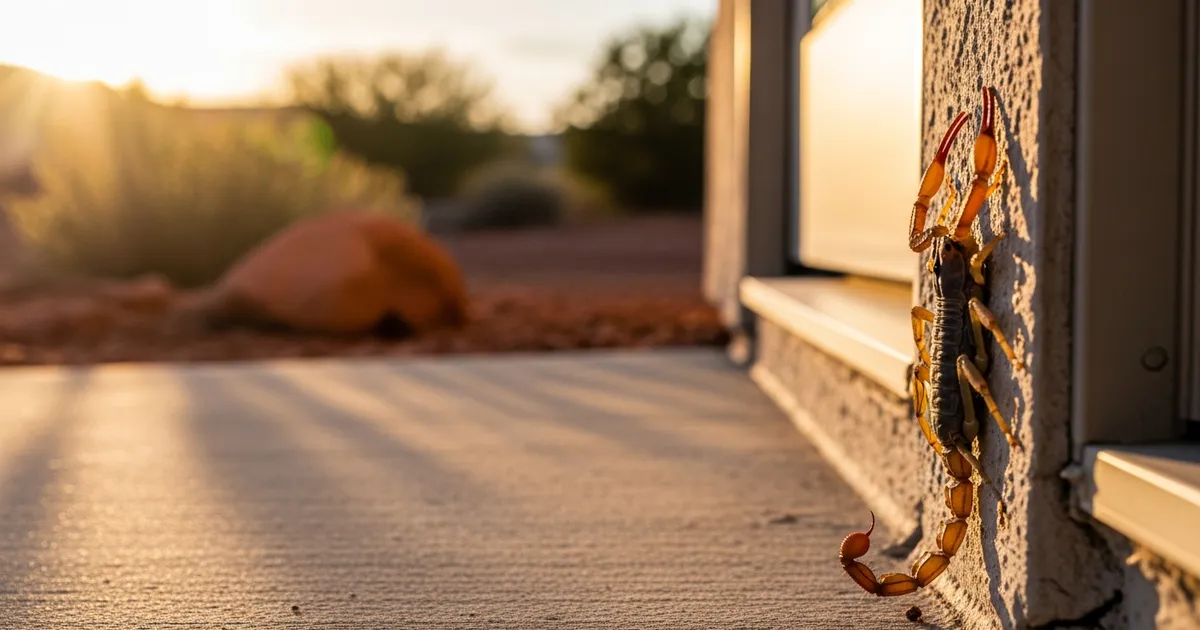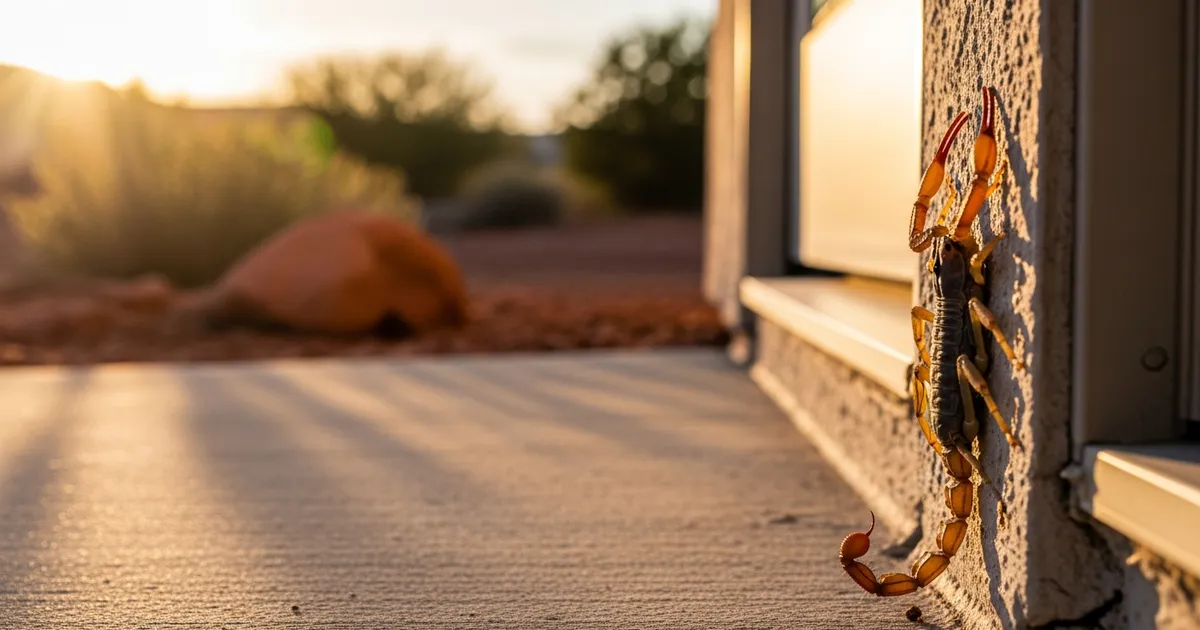
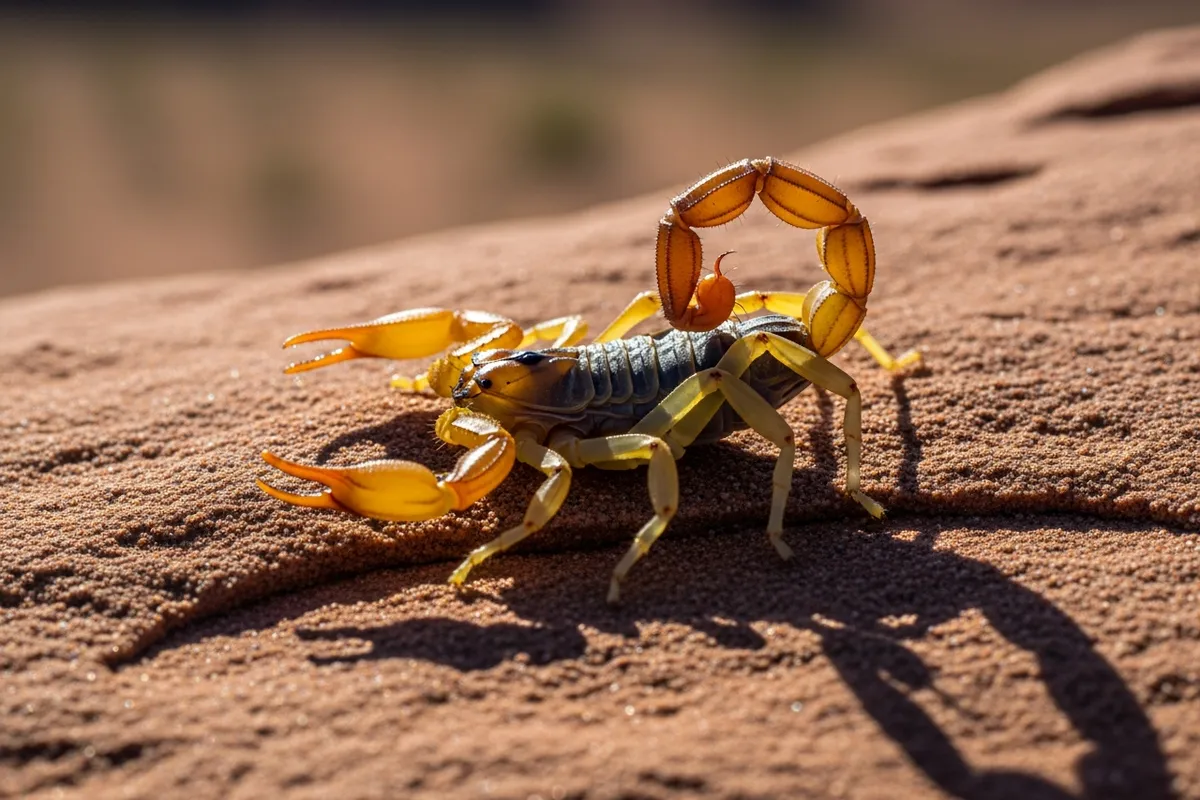
The Arizona bark scorpion (Centruroides sculpturatus) is the only scorpion in the United States whose sting is considered medically significant, and it’s the one species you actually need to know about if you live in Washington County. Adults are small, pale, and active on warm nights from spring through fall. Bark scorpions are exceptional climbers, often turning up on walls and ceilings rather than just the floor. If you’re seeing them indoors, especially with kids or pets in the home, it’s time to call a pro.
Identification
Adult Arizona bark scorpions are slender, light yellow to yellowish-tan, and run about 2 to 3 inches long from claws to stinger. They have notably thin pincers and a long, narrow tail — a delicate-looking build compared to the chunkier scorpions you’ll see in the desert. Like nearly all scorpions, they fluoresce a bright bluish-green under UV blacklight, which is the easiest way to spot them after dark. The most common look-alike in our area is the desert hairy scorpion (Hadrurus arizonensis), but it’s much larger, visibly hairy, and has thick, robust pincers. One detail that matters a lot: bark scorpions readily climb walls, stucco, and ceilings, and often rest hanging upside down. Most other scorpions in our region stay on the ground.
Where Bark Scorpions Live in Southern Utah
In Utah, bark scorpions are restricted to the warm Mojave Desert ecotype in the far southwest corner of the state — Washington County and a sliver of Kane County — and they are not found in northern Utah. Around St. George, Hurricane, Bloomington, Dixie Downs, and the red rock terrain near Sand Hollow, they hide in rocky outcrops, under loose bark, in woodpiles, inside block walls, and in irrigation boxes. They’ll also tuck into shoes, gloves, or laundry left on the patio overnight. Their favorite outdoor harborage is anywhere cool, dark, and slightly humid during the day so they can emerge to hunt at night.
Why They Get Into Homes
Three things pull bark scorpions toward your house, and Southern Utah summers crank all three to maximum. First is water — once daytime temperatures climb above 100°F, scorpions seek any moisture they can find, including bathrooms, leaky hose bibs, and pet water bowls. Second is prey: bark scorpions eat crickets, roaches, spiders, and other soft-bodied insects, so an interior bug problem is what’s actually feeding a scorpion problem. Third is harborage — cool, dark wall voids, garages, and crawl spaces stay much cooler than sun-exposed patios and rocks during the day. Active construction nearby can also disturb native habitat and push displaced scorpions into existing homes.
Signs You Have Bark Scorpions
Because bark scorpions are nocturnal and small, most homeowners don’t realize they have them until something specific tips them off. Watch for these:
- A live scorpion stuck in your bathtub, shower, or sink — they fall in chasing moisture and can’t climb back out of smooth, glazed surfaces
- Scorpions on walls or ceilings, often hanging upside down
- Pale, translucent shed exoskeletons in garages, sheds, or along baseboards
- One found in a shoe, boot, or pile of folded laundry
- Bluish-green glowing dots when you sweep a UV blacklight across the yard or foundation at night
- An active cricket or roach population indoors — their food source
- Sightings increasing after monsoon storms or new construction nearby
Even one confirmed indoor sighting in a home with small children warrants immediate action — bark scorpions can aggregate in groups, especially in cooler months, so where there’s one, there are often more nearby.
Health Risks: Honest Assessment
The Arizona bark scorpion is the only scorpion in the U.S. whose sting is considered medically significant. A sting causes intense localized pain, numbness, and tingling that can radiate across the body and last for hours to a few days. Most healthy adults recover at home with ice and over-the-counter pain medication. Children are at the highest risk for severe symptoms — including rapid jittery eye movements, excessive salivation, muscle twitching, and respiratory difficulty — and need emergency care. Adults with underlying medical conditions or known allergies should also be evaluated promptly. The good news: an effective antivenom (Anascorp) was FDA-approved in 2011 and is stocked at hospitals serving regions where bark scorpions occur. Deaths in the U.S. are extremely rare. Pets are usually fine, but call your vet if a small dog or cat shows distress.
How to Prevent Bark Scorpions Around Your Home
Prevention is mostly about denying them food, water, and entry points. The highest-impact steps:
- Seal cracks and gaps around your foundation, doors, windows, and where utilities enter the home — bark scorpions can squeeze through very small openings
- Install tight-fitting door sweeps on every exterior door, including the garage
- Move woodpiles, rock piles, and stacked construction materials at least 20 feet from the house
- Always shake out shoes, gloves, towels, and clothing left in the garage or outdoors before putting them on
- Switch exterior bulbs to yellow “bug” lights — they attract fewer insects, which removes a key food source
- Keep grass cut short, trim shrubs back from the foundation, and clear yard debris and leaf litter
- Fix leaky hose bibs, drip lines, and irrigation; eliminate standing water near the home
- Walk the property monthly with a UV blacklight after dark to spot activity early
One bonus: every step you take to control crickets, roaches, and spiders is also a step toward fewer scorpions, since you’re cutting off the buffet.
When to Call a Professional
You should call a pro if you’ve had repeated indoor sightings, anyone in the home has been stung, you have small children or pets, your property backs up to red rock or undeveloped desert, or there’s active construction nearby. Bark scorpions are notoriously difficult to control with DIY products because of their climbing ability and how deep they hide. Green Defense uses targeted barrier treatments combined with cricket and insect control to remove their food source — a one-two approach that works far better than spraying alone. Request a free Southern Utah scorpion inspection and we’ll walk your property at night with a blacklight so you know exactly what you’re dealing with.