
Southern Utah pest library
Identification
The desert hairy scorpion is the largest scorpion in North America and one of the more intimidating creatures Southern Utah homeowners encounter. Despite its size and appearance, its sting is generally less dangerous than that of the much smaller Arizona bark scorpion, which is the species you actually want to worry about. Sealing the home and clearing harborage handles most cases, and a professional pest control program adds a steady barrier through scorpion season.
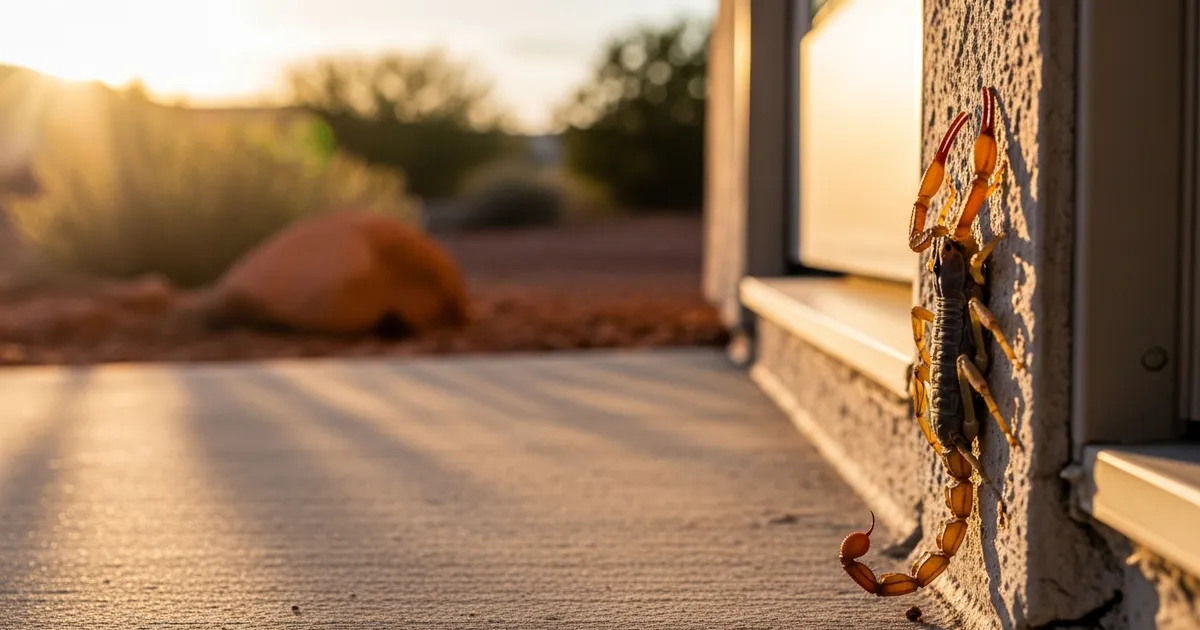
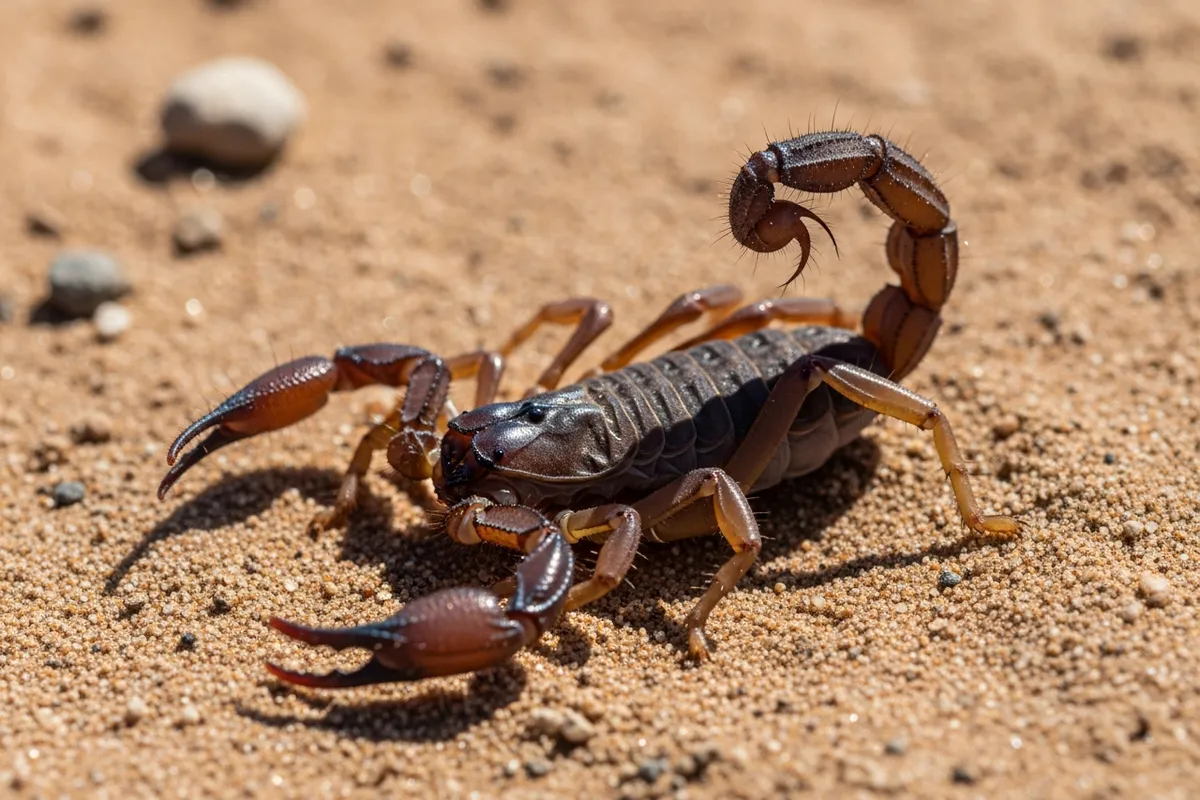
This species (Hadrurus arizonensis) is large (adults often reach four to five inches long, sometimes more) with a yellowish or olive body, dark greenish-brown back, and the distinctive coat of fine brown hairs on its legs and tail that gives the species its name. The pincers are bulky and the tail is thick. By contrast, the Arizona bark scorpion is much smaller (about two to three inches), light tan to straw-colored, and has notably slender pincers and a thin tail. As a general rule, larger scorpions with thick pincers and chunky tails have less potent venom, while smaller scorpions with slim pincers and skinny tails (like the bark scorpion) are the more medically significant ones. If you see a scorpion glowing bright blue-green under a UV flashlight at night, that’s normal: all scorpions fluoresce under UV light.
Quick ID
Giant Hairy Scorpion Quick ID
It is the biggest scorpion you will see in Southern Utah. Here is how to size one up.
Size
4 to 5 inches or more
Desert hairy scorpion size dwarfs a bark scorpion, which runs 2 to 3 inches.
Color
Yellow body, dark back
Bulky pincers, a thick tail, and fine brown hairs on the legs and tail.
Where in Southern Utah
Washes, rock beds, block walls
Burrows in sandy, rocky ground and shelters under rocks, woodpiles and timbers.
Danger level
Painful, rarely serious
Most stings feel like a strong bee sting. Allergic people and young kids need care.
Moderate Risk
Book a Blacklight Scorpion Inspection
Scorpions glow under UV light. We walk your property at night with a blacklight so you know exactly what you are dealing with, then treat the hiding spots.
Where Desert Hairy Scorpions Live in Utah
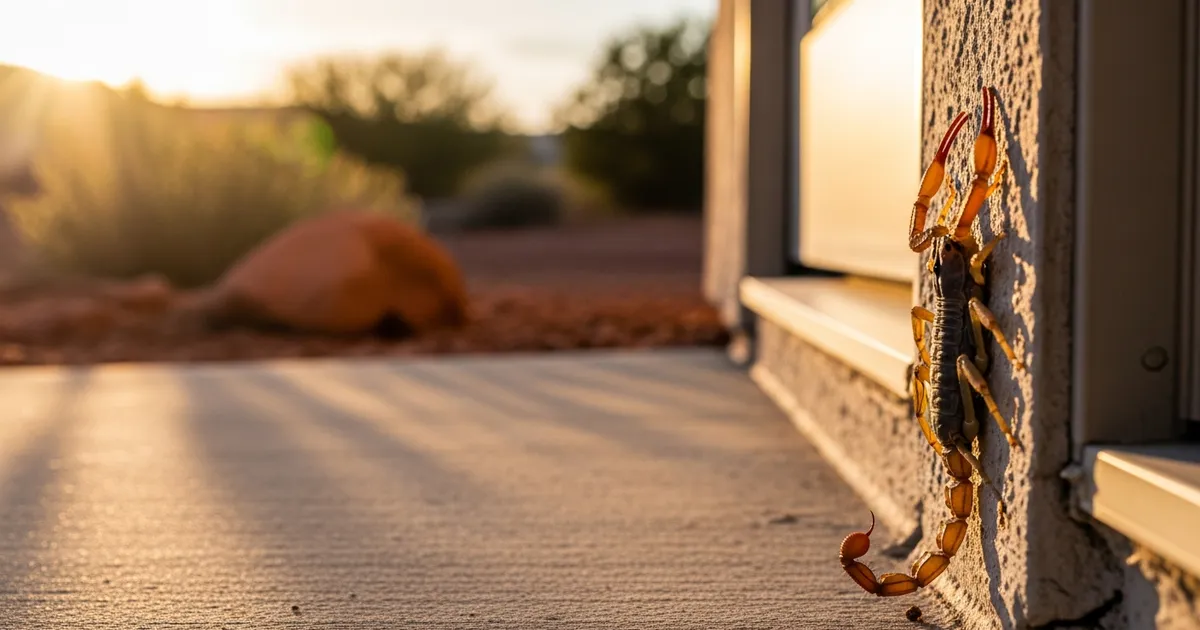
They’re found across Washington County and the broader Mojave-influenced desert of Southern Utah. They prefer dry, rocky, sandy terrain and are common in undisturbed desert washes, foothills, and the natural areas around developed neighborhoods. They dig burrows up to several feet deep to escape daytime heat, emerging at night to hunt insects, spiders, and even other scorpions. Around homes, they shelter under rocks, in woodpiles, beneath landscape timbers, in block walls, and inside garages. Construction sites and freshly graded lots tend to push displaced scorpions toward nearby houses for several seasons after development.
Why They Get Into Homes / What Attracts Them
These scorpions don’t seek out homes the way some pests do: they’re following prey and looking for cool, humid shelter. Crickets, cockroaches, beetles, and other insects around exterior lights and garage doors draw them toward the structure. Once they’re at the foundation, any gap larger than the width of a credit card is enough for one to slip inside. They’re also drawn to moisture, particularly during the hottest part of summer, so leaky hose bibs, irrigation overspray, and condensation around AC units act as magnets. Garages, ground-floor bathrooms, laundry rooms, and basements see the most indoor encounters because they’re the coolest, dampest parts of the home.


Signs You Have a Desert Hairy Scorpion Problem
Scorpions are secretive, so signs can be subtle:
- Live scorpions spotted at night, especially in garages, patios, or block walls
- Bright blue-green glow under a UV flashlight after dark
- Shed exoskeletons in basements, garages, or under landscape rocks
- Dead scorpions in pool skimmers, window wells, or buckets
- Other prey insects like crickets and roaches showing up around the foundation
- Burrows or holes the size of a pencil under rocks, slabs, or block walls
- Reports from neighbors of recent sightings, especially during summer monsoon season
Sting Health Risks: Honest Assessment
The desert hairy scorpion’s sting is painful (usually compared to a strong bee or wasp sting) but its venom is generally not considered medically significant for healthy adults. Most people experience localized pain, redness, and swelling that resolves within a day. People allergic to insect venom, young children, the elderly, and anyone with underlying health conditions should seek medical attention for any scorpion sting. The far more dangerous Arizona bark scorpion produces neurotoxic effects that can be serious, especially in children, which is why proper identification matters. If you’re stung and unsure which species was involved, it’s reasonable to call Poison Control or get evaluated, especially if symptoms extend beyond the sting site.
Not sure which scorpion you found?
Snap a photo from a safe distance and send it with your quote request. We’ll tell you what it is and where it’s likely hiding.
DIY or a pro
Getting Rid of Big Scorpions
Big scorpions are easy to spot, which makes the do-it-yourself part simpler. Keeping the next one out is the hard part.
What you can do yourself
- Check the yard after dark with a UV flashlight; they glow blue-green.
- Remove one with long tongs into a jar with a lid; never pick one up.
- Lift and clear rock piles, landscape timbers and boards near the house.
- Cut down crickets and roaches around exterior lights, their main food.
- Seal the gaps under doors and around pipes before summer.
When to Call a Professional for Scorpion Control
Scorpions in Southern Utah aren’t a problem you fully solve on your own: once a property has them, ongoing pressure is the norm. Green Defense uses targeted, eco-friendly treatments around foundations, harborage areas, and entry points, and we walk the property at night with UV light to identify hot spots most homeowners miss. Request a free quote and we’ll build a plan around your specific lot and exposure.
Our scorpion exterminator service treats burrows, rock beds, block walls and entry points on a set schedule through scorpion season, and we point out the harborage worth clearing on your lot.
How to Prevent Desert Hairy Scorpions Around Your Home
Scorpion prevention is mostly about denying shelter and entry:
- Seal foundation gaps, weep holes, and cracks larger than 1/8 inch: scorpions can squeeze through surprisingly small openings
- Install tight-fitting door sweeps on all exterior doors, especially the garage
- Caulk around plumbing penetrations, dryer vents, and utility entries
- Remove ground-level debris, rock piles, woodpiles, and unused landscape timbers near the home
- Keep landscaping trimmed back so vegetation doesn’t touch the exterior walls
- Reduce outdoor lighting near doors, or switch to yellow bulbs that attract fewer prey insects
- Address moisture sources: fix leaky spigots, redirect irrigation, and clear standing water
- Shake out shoes, towels, and bedding left in garages or on patios before use

Keep Big Scorpions Out of the Garage
Most Southern Utah homes are on our bi-monthly plan, a visit every other month from spring through fall. Each visit covers the foundation, the garage, block walls and the rock beds where big scorpions shelter during the day. If scorpions come back between visits, so do we, free.
Questions
Big Scorpion FAQ
Is a desert hairy scorpion sting dangerous?
For most healthy adults, no. It hurts and swells for a day or so. Get checked if you’re allergic to stings, or if a child, an older adult or someone with health problems is stung.
How do I tell it apart from a bark scorpion?
Size and build. The bigger one is twice as long with thick pincers and a hairy tail; the bark scorpion is small and slender with thin pincers.
Why are they showing up after new construction?
Grading and building tear up their burrows, so displaced scorpions move toward the nearest homes for a few seasons.
Need them gone? See how our scorpion pest control works. If pests come back between visits, so do we, free. Live in Washington County? Learn about pest control in St. George.
Related pests
From our blog