Southern Utah pest library
Wolf Spider in Utah: Identification
Wolf spiders look terrifying, but they’re one of the most misunderstood arachnids in your yard. They’re large, fast, hairy hunters that don’t build webs and rarely bite people. Most homeowners spot them in fall and winter when cooler weather pushes them indoors. The good news: their bite is not medically significant, and they actually eat the insects you don’t want around.
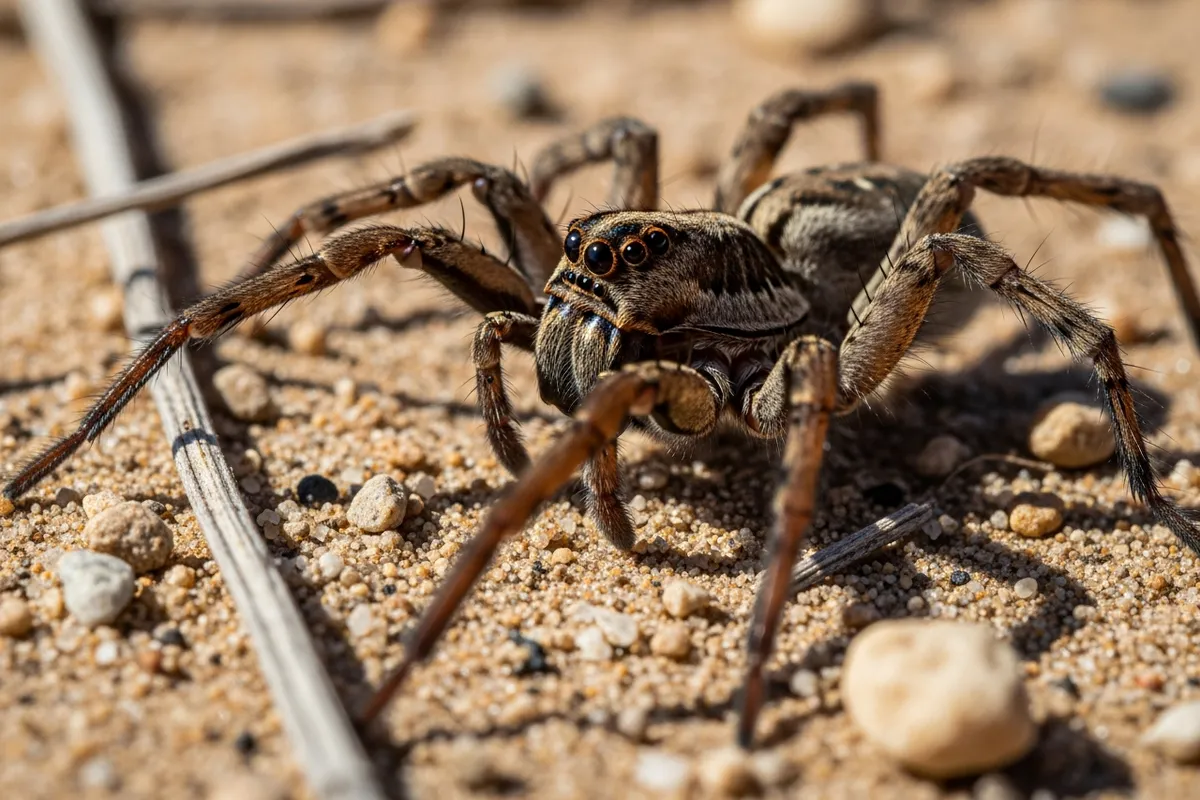
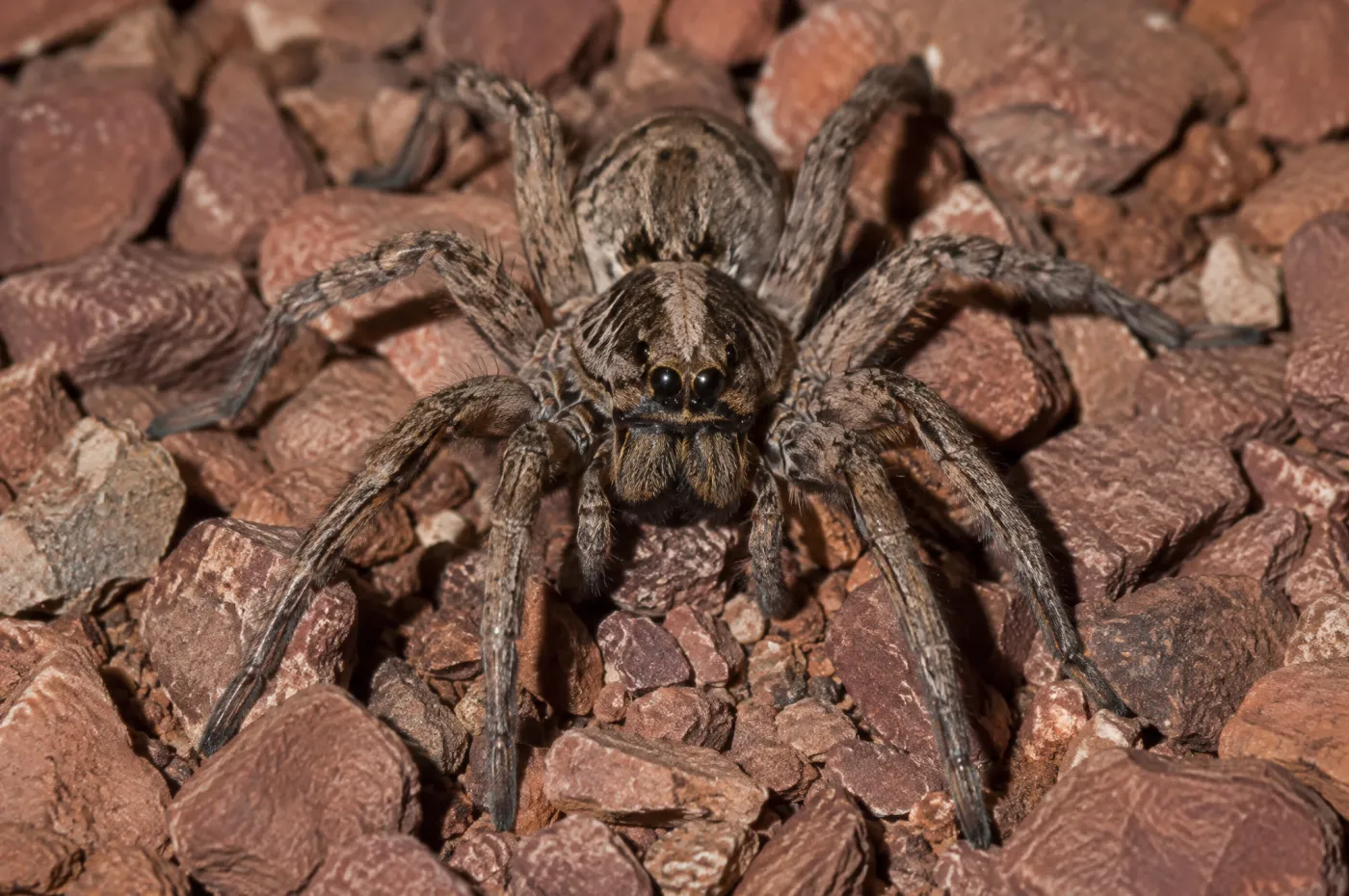
Wolf spiders (Hogna spp. and related genera) are stocky, hairy, brown-to-gray spiders ranging from a half-inch to nearly two inches across with their legs extended. They have eight eyes arranged in three rows, with two large forward-facing eyes that often reflect light when you shine a flashlight on them at night. Their legs are thick and powerful, built for chasing rather than waiting. People often mistake wolf spiders for brown recluses, but recluses are smaller, smoother, light tan, and have a distinctive violin-shaped marking behind the head. They’re also commonly confused with grass spiders, which build funnel webs. One of the most identifiable behaviors is in females: they carry their egg sac attached to their spinnerets, and after hatching, the spiderlings ride on the mother’s back for a week or two.
Quick ID
Quick ID: Size, Eyes and Risk
Big, fast and hairy, but harmless. Four checks tell you it’s this hunter and not something to worry about.
Size
1/2 inch to nearly 2 inches
Measured across the legs. Typical wolf spider size runs about an inch.
Color
Brown to gray
Hairy, with darker stripes, thick legs and two large eyes that shine in a flashlight.
Where in Southern Utah
Rock beds and mulch
They hunt on the ground and wander in under doors as fall nights cool.
Danger level
Harmless to people
A bite feels like a bee sting and fades in a day or two.
Low Risk
Seeing Wolf Spider? We can help.
A licensed technician will inspect, treat the problem areas, and come back free if they return between visits.
Where Wolf Spiders Live in Utah
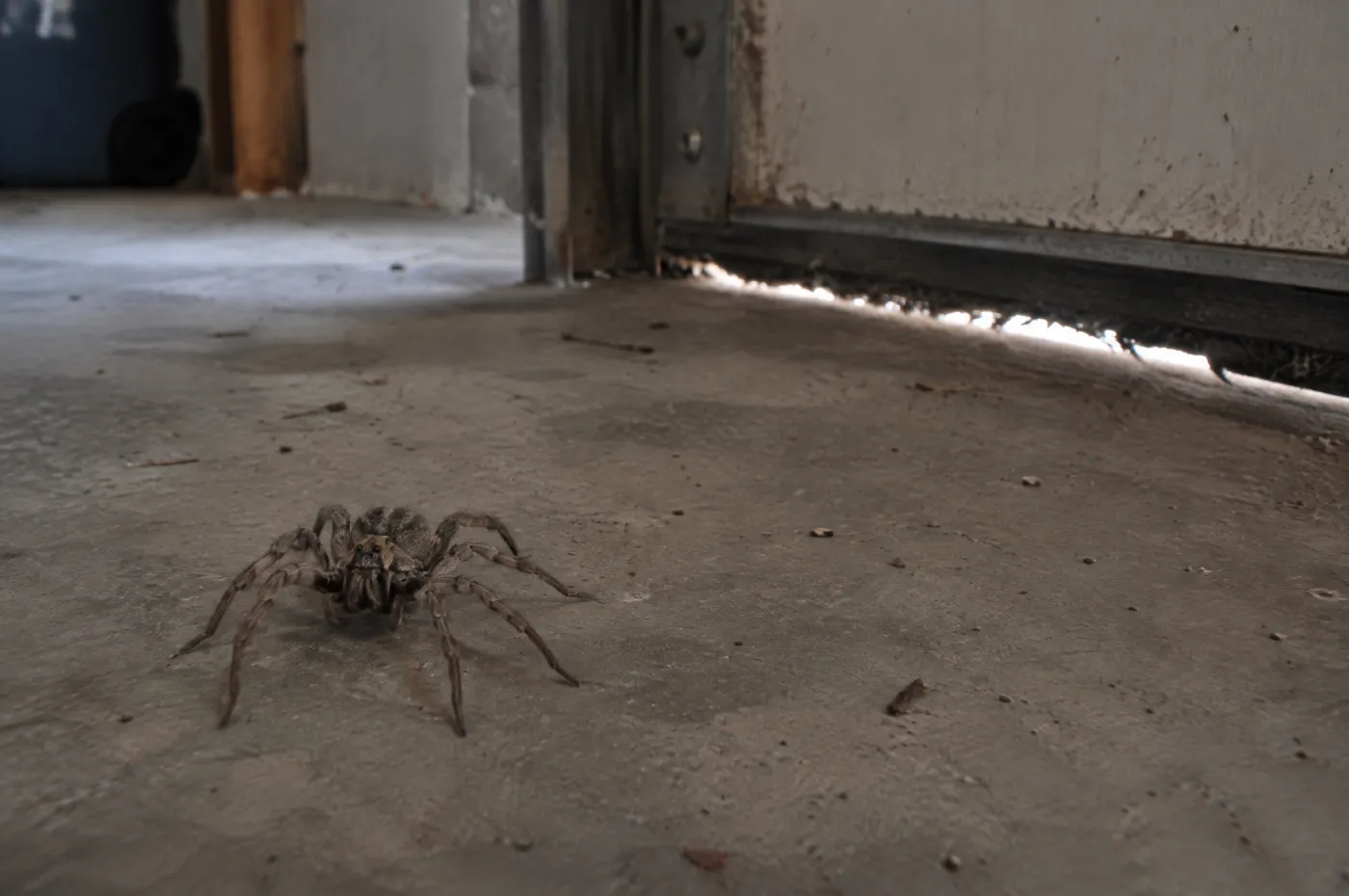
Wolf spiders thrive across Utah because they tolerate a huge range of conditions. In southern Utah and the rest of the state, they’re most visible from spring through fall, hunting in landscape rock, mulch, sagebrush, and irrigated lawns. They’re ground dwellers and don’t climb walls the way many other spiders do, so you’ll typically see them at floor level if they wander inside. Cooler nights in autumn often drive them through gaps under doors and into garages and basements.
Why They Get Into Homes
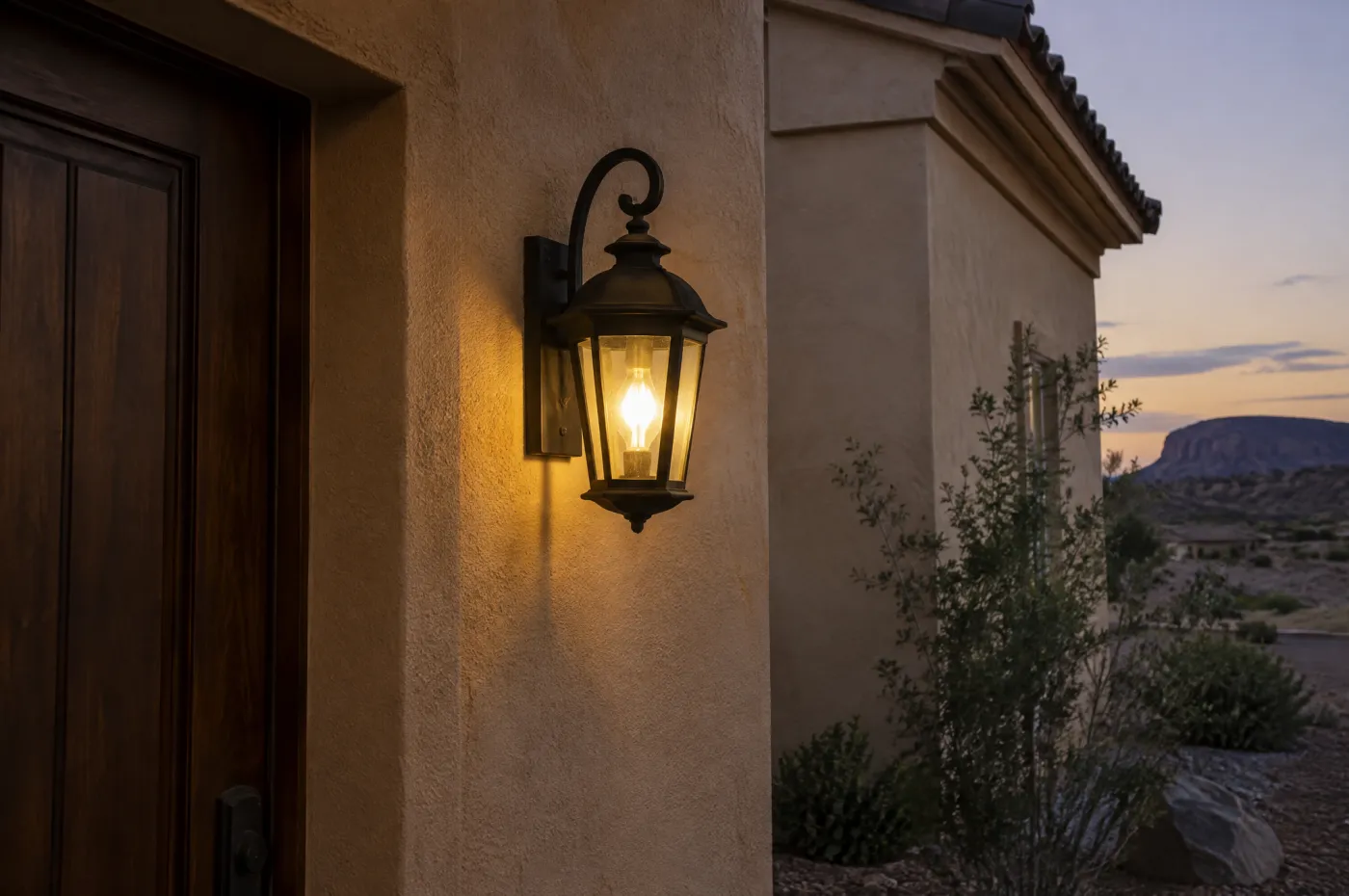
They aren’t really trying to live in your house. They follow prey or seek shelter from temperature swings, and once inside they often can’t find their way back out. Homes with active insect populations, such as crickets, roaches, or pillbugs, naturally attract more wolf spiders. Outdoor lighting that draws insects to the porch and exterior walls is a common reason these spiders end up by the front door. Gaps under garage doors, torn weather stripping, and unsealed crawl space vents give them easy access. They’re not nesting indoors, just passing through and hunting.

Signs You Have a Wolf Spider Problem
Because wolf spiders don’t build webs, the signs are different from most other spiders:
- Large, fast-moving spiders darting across floors, especially at night
- Eyeshine reflecting back when you sweep a flashlight across the lawn after dark
- Spiders found in basements, garages, and ground-level rooms
- Burrows or shallow holes in mulch, sandy soil, or under landscape rocks
- Egg sacs (round, pea-sized, light gray) attached to a female’s abdomen
- An uptick in sightings during fall as outdoor temperatures drop
- No webs in corners or window frames where you’d expect spider activity
Wolf Spider Bite Health Risks: Honest Assessment
Wolf spiders look scary, but they’re not dangerous to people or pets. They don’t seek out humans and only bite if pinned against skin, such as inside a shoe or glove. A bite typically feels like a bee sting and may leave a small red welt that fades within a day or two. There’s no necrotic venom, no systemic illness, and no medical follow-up needed for the vast majority of bites. If swelling spreads, pain worsens significantly, or you have a known allergy to insect venom, see a doctor, but most encounters require no treatment beyond washing the area.
Seeing them inside often?
That usually means plenty of crickets and other insects around the house to feed them. Fix the food supply and the spiders follow.
DIY or a pro
How to Get Rid of Wolf Spiders
You can’t spray your way out of wanderers. You can close the door and cut the food.
What you can do yourself
- Catch strays under a cup and a sheet of paper and release them outside.
- Add door sweeps and fix weather stripping on every exterior and garage door.
- Switch porch lights to yellow bulbs so fewer insects gather.
- Pull mulch, leaves and firewood back from the foundation.
- Set sticky traps along garage walls to see where they enter.
When to Call a Professional for Wolf Spider Control
Most wolf spider sightings don’t require treatment, but if you’re seeing them inside regularly, that often points to a larger insect population on the property feeding them. A professional can identify which prey insects are drawing them in, treat exterior harborage, and apply targeted barrier products around entry points. Request a free quote and we’ll assess your home. Homeowners in southern Utah can also learn more about our St. George service area or our pest control programs.
For steady sightings, our spider pest control treats the exterior harborage and entry points and knocks down the insects they hunt.
How to Prevent Wolf Spiders Around Your Home
Reducing wolf spider sightings is mostly about reducing their food and entry points:
- Seal gaps under exterior doors with weather stripping and door sweeps
- Caulk cracks around windows, utility penetrations, and the foundation
- Switch outdoor bulbs to yellow or LED “bug lights” that attract fewer insects
- Keep mulch, leaf piles, and firewood away from the foundation
- Trim grass and groundcover plants back from the home
- Reduce clutter in garages, basements, and storage rooms where prey hides
- Vacuum corners and floor edges regularly to remove other insects
- Shake out shoes, gloves, and laundry left on garage floors before use
Fewer Spiders on the Floor This Fall
Our bi-monthly plan keeps a barrier at the doors, foundation and garage, where ground hunters come in. If spiders come back between visits, so do we, free.
Questions
Wolf Spider FAQ
Are wolf spiders poisonous?
They have venom, like almost every spider, but it isn’t medically significant for people or pets. They bite only when trapped against skin.
How big is a giant wolf spider?
The largest ones, often called giant wolf spiders, reach nearly two inches across with legs spread. Most in Utah yards are smaller.
Why is a spider carrying babies on its back?
That’s a female wolf spider. She carries her egg sac, then the spiderlings ride on her back for a week or two after hatching.
Need them gone? See how our spider exterminator service in St. George works. If pests come back between visits, so do we, free. Live in Washington County? Learn about St. George pest control services.
Related pests
From our blog