Crickets are the chirping, jumping insects that show up in Utah garages, basements, and entryways every late summer and fall. They’re not dangerous and they don’t bite, but their constant noise and ability to chew on fabric, paper, and even wallpaper makes them one of the more frustrating nuisance pests in the state. Sealing entry points and reducing outdoor moisture handles most cases, and a professional pest control perimeter treatment shuts down the rest.
Identification
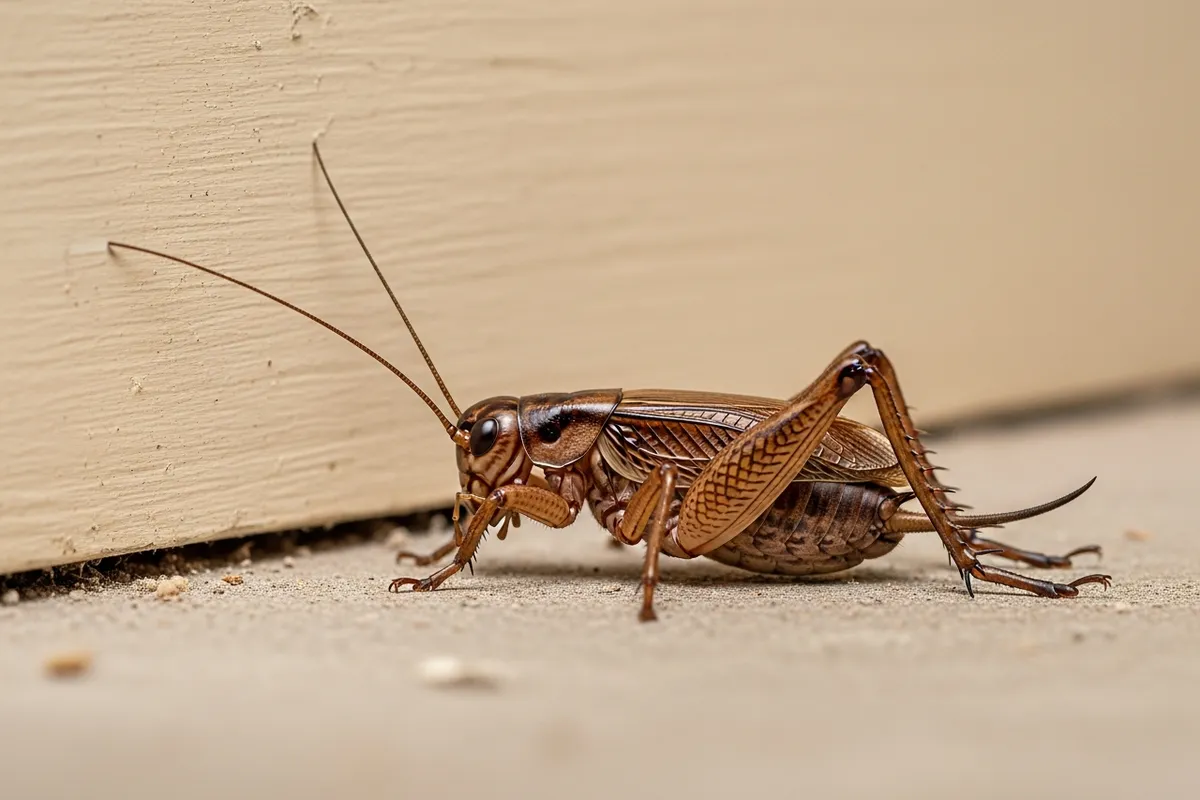
Most house and field crickets in Utah belong to the genus Gryllus, with adults running from about a half-inch to just over an inch long. Field crickets are dark brown to black with long antennae, powerful jumping hind legs, and wings folded flat over the back. House crickets are lighter – yellowish-brown with three darker bands across the head. Females have a long, needle-like ovipositor extending from the rear, which is sometimes mistaken for a stinger but is harmless. Cave or camel crickets, which also show up in Utah basements, are humpbacked, wingless, and don’t chirp – they’re often confused with spiders at first glance because of their long legs. The chirping sound homeowners hear is made by males rubbing their wings together, and only certain species produce it.
Where Crickets Live in Utah
Crickets are found across both Southern and Northern Utah, in landscapes ranging from desert washes around Hurricane to manicured Wasatch Front lawns. They prefer warm, moist hiding places during the day – under rocks, mulch, woodpiles, landscape timbers, and irrigation boxes – and emerge at night to feed and call for mates. Camel crickets prefer cooler, damper spots like crawl spaces, basements, and window wells. As nights cool down in late August and September, outdoor crickets begin migrating toward warmer structures, and that’s when garage doors, basement windows, and foundation gaps start delivering them indoors in numbers.
Why They Get Into Homes / What Attracts Them
Crickets come inside chasing three things: warmth, moisture, and light. Falling temperatures push them toward heated buildings, and any warm air leaking out of a foundation gap or garage door is a beacon. Outdoor lighting attracts them too – porch lights, security lights, and landscape lighting pull crickets in from across the yard, where they then find their way inside. Damp basements, leaky water heaters, and humid crawl spaces give them a reason to stay. Once inside, they’re not picky about food: pet kibble, crumbs, paper, fabric, houseplants, and even dead insects all work. Homes with heavy mulch beds, rock landscaping, or dense ground cover near the foundation tend to see the most pressure.
Signs You Have a Cricket Problem
Crickets give themselves away pretty quickly:
- Persistent chirping at night, often from a single hard-to-find spot
- Crickets jumping out from behind appliances, boxes, or storage bins
- Small, irregular holes chewed in clothing, curtains, paper, or cardboard
- Dark droppings – about the size of pencil tips – in basements, garages, and storage areas
- Dead crickets accumulating in window wells, garage corners, and basement floors
- Pet food bowls visited overnight or knocked-over kibble
- Camel crickets jumping erratically when surprised in damp basements or crawl spaces
What’s the Damage?
Crickets are mostly a nuisance, but they’re not entirely harmless to property. They’ll chew on natural fibers like cotton, wool, silk, and linen, and they’ll feed on paper, cardboard, books, and wallpaper paste – sometimes leaving small irregular holes in stored clothing or boxed items. They don’t bite people in any meaningful way and don’t carry significant disease risk. The bigger issue for most homeowners is sleep: a single male cricket calling from a wall void or basement corner can be loud enough to keep an entire household awake until it’s found and removed.
How to Prevent Crickets Around Your Home
Most cricket problems trace back to entry points and outdoor conditions:
- Seal gaps under exterior doors with door sweeps, especially on garage and basement doors
- Caulk foundation cracks, utility penetrations, and gaps around windows and dryer vents
- Reduce exterior lighting at night, or switch to yellow or sodium-vapor bulbs that attract fewer insects
- Move landscape and security lighting away from the home so crickets gather in the yard, not at the door
- Keep basements, crawl spaces, and storage areas dry – fix leaks and run a dehumidifier if needed
- Remove leaf litter, woodpiles, and dense mulch within a few feet of the foundation
- Trim back vegetation touching the house and clear out window wells
- Store pet food in sealed containers, not open bags in the garage
When to Call a Professional
If chirping has become a nightly event, or if you’re regularly finding crickets in living spaces, a perimeter treatment combined with targeted interior work is the fastest way to take back control. Green Defense uses eco-friendly products applied at foundation level and around common entry points, knocking down current activity and creating a barrier through the fall migration. Request a free quote and we’ll handle it before the next chirping marathon.