
Southern Utah’s warm climate and rocky terrain create perfect conditions for Western black widow spiders. From the red rock canyons around St. George to the desert landscapes near Hurricane and La Verkin, these venomous spiders have established themselves as permanent residents throughout Washington County and beyond.
Unlike many spider species that become less active during cooler months, black widows in Southern Utah remain a year-round concern. The region’s mild winters and hot summers provide consistent conditions that keep these dangerous arachnids active and reproducing.
Identifying Western Black Widow Spiders
The Western black widow (Latrodectus hesperus) is the species you’ll encounter in Southern Utah. Proper identification can literally be a matter of life and death, as their bite requires immediate medical attention.
Female Black Widow Characteristics
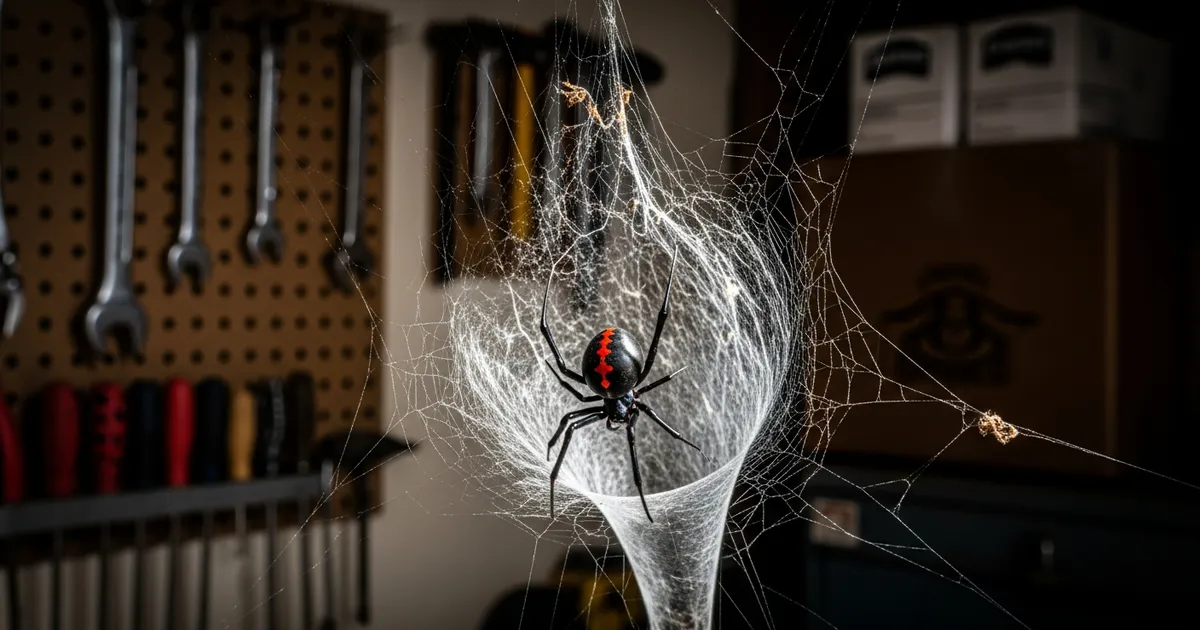
Female Western black widows are the dangerous ones homeowners need to worry about. They measure 1.5 inches across including legs, with bodies reaching 0.5 inches in length. Their most distinctive feature is the bright red hourglass marking on the underside of their shiny black abdomen.
- Body color: Glossy jet black
- Size: 1.5 inches legspan, 0.5-inch body
- Markings: Red hourglass on abdomen underside
- Web: Irregular, messy cobweb structure
- Legs: Long, thin, and completely black
Male Black Widow Characteristics
Male black widows pose no threat to humans. They’re significantly smaller than females and lack potent venom. You’ll rarely see them as they typically die after mating.
- Size: 0.25 inches body length
- Color: Brown to light gray
- Markings: White or yellow stripes on abdomen
- Behavior: Non-aggressive, short lifespan
Never attempt to identify a black widow by picking it up or getting close. Use a flashlight to examine webs from at least 3 feet away. The red hourglass is only visible when looking at the spider’s underside.
Common Black Widow Habitats in Southern Utah
Understanding where black widows prefer to live helps you target prevention efforts effectively. These spiders seek out specific environmental conditions that Southern Utah provides in abundance.
Outdoor Hiding Spots
Southern Utah’s landscape offers countless black widow habitats. They thrive in the region’s numerous rock formations, desert vegetation, and human structures.
- Rock crevices and caves: Natural formations throughout Zion area
- Woodpiles and lumber: Common in Hurricane and Washington yards
- Outdoor furniture: Under chairs, tables, and cushions
- Storage areas: Sheds, garages, and carports
- Utility areas: Around water meters, electrical boxes, and pipes
- Vegetation: Dense shrubs, agave plants, and palm tree skirts
Indoor Locations
While black widows prefer outdoor environments, they frequently enter homes seeking shelter or following prey insects. Basements are rare in Southern Utah, but these spiders find plenty of suitable indoor spots.
- Garages: Especially corners and storage areas
- Laundry rooms: Behind washers and dryers
- Closets: Particularly rarely-used storage closets
- Pantries: Dark corners with minimal disturbance
- Crawl spaces: Under homes and in attic access areas
Black Widow Activity Patterns
Contrary to popular belief, Western black widows in Southern Utah remain active 24 hours a day throughout the year. The region’s climate supports continuous activity rather than seasonal dormancy.
Year-Round Activity
Southern Utah’s mild winters, with average January lows around 29°F in St. George, allow black widows to remain active when spiders elsewhere become dormant. Summer temperatures exceeding 100°F don’t slow them down either.
| Season | Activity Level | Peak Times | Behavior Notes |
|---|---|---|---|
| Spring (Mar-May) | High | Dawn and dusk | Mating season, web building |
| Summer (Jun-Aug) | Moderate | Early morning, evening | Seek cooler microclimates |
| Fall (Sep-Nov) | High | All day | Egg sac production |
| Winter (Dec-Feb) | Low-Moderate | Midday warmth | Slower but still active |
Daily Activity Cycles
Unlike nocturnal spiders, black widows hunt and maintain webs throughout both day and night. This continuous activity increases encounter risks for Southern Utah residents engaging in outdoor activities or yard work at any hour.
Always wear gloves when working in garages, sheds, or outdoor storage areas. Black widows can be active during daylight hours and may bite if disturbed while handling stored items.
Why Black Widows Thrive in Southern Utah
Several environmental factors make Southern Utah particularly hospitable to Western black widow populations. Understanding these conditions helps explain why professional pest control is often necessary in this region.
Climate Advantages
The Mojave Desert climate provides optimal conditions for black widow survival and reproduction. Average temperatures between 45-85°F support year-round activity, while low humidity prevents fungal diseases that affect spider populations in more humid regions.
Abundant Prey
Southern Utah’s diverse insect population provides steady food sources for black widows. Crickets, beetles, ants, and flies drawn to urban irrigation create rich hunting grounds around St. George, Hurricane, and surrounding communities.
Natural Shelter
The region’s geology offers countless hiding spots. Sandstone formations, lava rock landscaping, and natural caves provide protected web locations that remain undisturbed by weather or human activity.
Preventing Black Widow Infestations
Effective black widow prevention requires both habitat modification and regular monitoring. Southern Utah residents need comprehensive approaches that address the unique challenges posed by desert environments.
Exterior Prevention Measures
Start prevention efforts outside your home where black widows are most likely to establish initial populations. Focus on eliminating hiding spots and reducing attractants.
- Remove debris: Clear woodpiles, unused materials, and clutter within 20 feet of structures
- Trim vegetation: Maintain 12-inch clearance between plants and exterior walls
- Seal entry points: Caulk gaps around pipes, vents, and foundation cracks
- Install door sweeps: Eliminate gaps under doors and garage entries
- Reduce lighting: Use yellow bulbs that attract fewer insects
- Clean regularly: Remove webs and egg sacs immediately when spotted
Interior Prevention Strategies
Indoor prevention focuses on eliminating food sources and hiding spots that might attract black widows from outdoor populations.
- Vacuum regularly: Remove webs, insects, and spider hiding spots weekly
- Organize storage: Keep items in sealed plastic containers rather than cardboard boxes
- Inspect packages: Check outdoor furniture, equipment, and decorations before bringing inside
- Control insects: Eliminate flies, ants, and other prey that attract spiders
- Maintain dryness: Use dehumidifiers in humid areas like laundry rooms
Inspect and shake out gardening gloves, shoes, and outdoor clothing before use. Black widows often hide in these items overnight, especially during warmer months when they’re most active.
Safe Black Widow Removal Methods
While prevention is ideal, Southern Utah residents will inevitably encounter established black widow populations. Safe removal requires extreme caution and often professional intervention.
When to Call Professionals
Certain situations always warrant professional pest control services. Don’t attempt DIY removal in these high-risk scenarios:
- Multiple spiders present: Indicates established breeding population
- Egg sacs discovered: Each sac contains 200-900 spiderlings
- Indoor populations: Higher risk of accidental encounters
- Areas with children or pets: Increased bite risk during treatment
- Medical conditions: Compromised immune systems increase bite severity
Emergency DIY Removal
If you must remove a single black widow yourself, use extreme caution and proper protective equipment. This should only be attempted for isolated outdoor spiders.
- Protective gear: Long sleeves, pants, closed shoes, and gloves
- Long-handled tools: Broom or grabber tool for 3-foot minimum distance
- Container method: Trap spider under jar, slide cardboard underneath
- Vacuum method: Use shop vacuum with long hose attachment
- Disposal: Freeze captured spider for 24 hours before disposal
Never attempt to kill black widows by hand or with short tools. Their defensive bite response is extremely fast, and medical treatment costs far exceed professional removal fees.
Understanding Black Widow Bites
Black widow envenomation is a serious medical emergency requiring immediate professional treatment. Understanding bite symptoms helps Southern Utah residents respond appropriately to exposures.
Bite Symptoms and Timeline
Black widow venom contains neurotoxins that affect the nervous system. Symptoms typically develop within 1-3 hours after the bite and can persist for several days without treatment.
- Immediate (0-30 minutes): Sharp pain at bite site, possible fang marks
- Early (30 minutes-2 hours): Muscle cramps, sweating, nausea
- Progressive (2-8 hours): Abdominal pain, difficulty breathing, high blood pressure
- Severe (8-24 hours): Muscle paralysis, seizures, cardiovascular complications
Emergency Response
Any suspected black widow bite requires immediate medical attention. Do not wait for symptoms to develop or attempt home treatment.
- Call 911 immediately or go to nearest emergency room
- Clean bite area with soap and water if possible
- Apply cold compress to slow venom spread
- Capture spider if safely possible for identification
- Monitor vital signs and watch for symptom progression
Distinguishing Black Widows from Similar Spiders
Southern Utah hosts several spider species that residents might confuse with black widows. Accurate identification prevents unnecessary panic while ensuring appropriate responses to actual threats.
Desert Recluse vs Black Widow
Desert recluse spiders (Loxosceles deserta) are present in Southern Utah, but brown recluse spiders are not established in the region despite common misconceptions. Here’s how to tell them apart:
| Feature | Black Widow | Desert Recluse |
|---|---|---|
| Size | 1.5 inches legspan | 2 inches legspan |
| Color | Glossy black | Light brown/tan |
| Markings | Red hourglass underneath | Dark violin shape on back |
| Web type | Irregular cobweb | No web (hunting spider) |
| Leg position | Legs extended outward | Legs pulled close to body |
Common Harmless Look-alikes
Several harmless spiders in Southern Utah might trigger black widow concerns among residents unfamiliar with local species:
- False black widows: Similar size but brown coloration, no red markings
- Cellar spiders: Long thin legs but pale coloration and different web structure
- Cobweb weavers: Similar web style but smaller size and different body shape
- Orb weavers: Large size but different web pattern and body markings
Take photos from a safe distance if you’re unsure about spider identification. Local pest control professionals can identify species from clear photographs, helping you determine appropriate response levels.
Seasonal Black Widow Management
Southern Utah’s unique climate requires year-round vigilance, but certain seasons present higher risks and require intensified management efforts.
Spring Management (March-May)
Spring brings increased black widow activity as temperatures warm and mating begins. This season requires intensive prevention efforts to prevent population establishment.
- Weekly inspections: Check all outdoor storage areas and hiding spots
- Deep cleaning: Remove winter debris and accumulated webs
- Seal entry points: Repair winter damage to exterior barriers
- Professional treatment: Schedule preventive applications before peak season
Summer Adaptations (June-August)
Extreme summer heat drives black widows to seek cooler microclimates closer to human activities. Focus protection efforts on air-conditioned structures and shaded areas.
Fall Preparation (September-November)
Fall egg laying creates future population pressures. Aggressive removal of egg sacs prevents spring emergences of hundreds of spiderlings.
Winter Monitoring (December-February)
Reduced activity doesn’t mean elimination. Continue monthly inspections and maintain barriers against the spring population resurgence.
How Green Defense Handles Black Widow Control
At Green Defense Pest Control, we understand that black widow management in Southern Utah requires specialized knowledge of local species behavior and environmental conditions. Our licensed technicians have extensive experience dealing with Western black widow populations throughout Washington County and surrounding areas.
Our Treatment Process
We begin every black widow service with a comprehensive inspection to identify current populations, potential hiding spots, and environmental factors contributing to infestations. Our approach combines immediate population reduction with long-term prevention strategies.
- Thorough inspection: 360-degree property evaluation including all structures and landscaping
- Population mapping: Identify all active web sites and egg sac locations
- Targeted treatment: Apply professional-grade materials to eliminate existing spiders
- Barrier protection: Create protective zones around structures and high-risk areas
- Follow-up monitoring: Regular inspections to ensure treatment effectiveness
Why Professional Treatment Works
Our professional treatments provide several advantages over DIY approaches, particularly important when dealing with dangerous species like black widows:
- Safety first: Trained technicians handle dangerous spiders without exposure risk
- Complete elimination: Professional products reach hidden populations missed by homeowner treatments
- Residual protection: Long-lasting barriers prevent reinfestations
- Guaranteed results: Service guarantees ensure effective population control
Our black widow control services typically range from $200-400 for initial treatment, with ongoing monthly or quarterly maintenance plans available. Given the serious medical risks associated with black widow bites, professional treatment represents excellent value compared to potential healthcare costs.
Long-term Black Widow Prevention
Successful black widow management in Southern Utah requires ongoing effort rather than one-time treatments. The region’s favorable climate means new populations can establish quickly without proper maintenance.
Integrated Management Approach
Combine multiple strategies for maximum effectiveness:
- Habitat modification: Eliminate preferred hiding spots and breeding areas
- Regular monitoring: Monthly inspections during peak seasons
- Professional treatments: Quarterly applications for continuous protection
- Education: Family awareness of identification and safety practices
Community Considerations
Black widow populations often spread between neighboring properties. Consider coordinating prevention efforts with neighbors, especially in developments like those around Snow Canyon State Park or along the Virgin River corridor where natural habitats border residential areas.
Property management companies in Southern Utah increasingly recognize black widow control as essential maintenance, particularly for vacation rentals and seasonal residences where extended vacancy periods allow populations to establish undisturbed.