
Fire ants have turned Central Florida lawns into minefields since their arrival in the 1930s. These aggressive invaders build their colonies throughout Orlando neighborhoods, from Lake Nona to Winter Garden, making yard work a painful gamble. Unlike other ant species, fire ants deliver venomous stings that create burning sensations and pustule-filled welts.
Central Florida’s warm, humid climate provides perfect conditions for red imported fire ants year-round. A single colony can contain 200,000 to 500,000 workers, and mature colonies produce winged reproductives that establish new infestations within a 5-mile radius. Understanding their behavior and implementing proper control strategies protects your family and preserves your outdoor lifestyle.
Identifying Fire Ants in Central Florida Yards
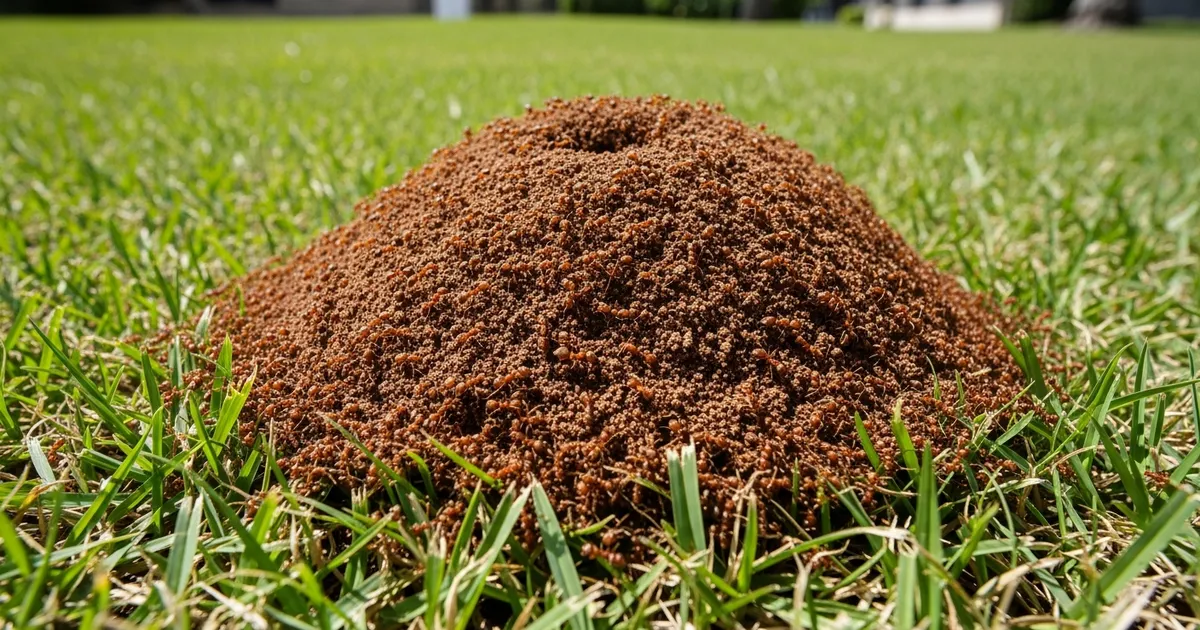
Fire ant mounds are the most obvious sign of infestation, but proper identification prevents treating harmless native ant species. Red imported fire ants build distinctive dome-shaped mounds that lack visible entrance holes on the surface.
Fire ant mounds typically measure 6-24 inches in diameter and rise 6-18 inches high. Fresh mounds appear as loose, fluffy soil that looks recently disturbed. Older mounds become harder and more compact. Unlike other ant hills, fire ant mounds have no central opening – workers enter and exit through underground tunnels that connect to the main colony structure below ground.
The ants themselves are reddish-brown to dark brown, measuring 1/8 to 1/4 inch long. Workers come in multiple sizes within the same colony – a characteristic called polymorphism. When disturbed, fire ants swarm aggressively from underground tunnels, climbing vertical surfaces and stinging repeatedly.
Test suspicious mounds by gently disturbing the surface with a long stick. Fire ants will aggressively swarm out within 10-15 seconds, while native ants typically scatter or show minimal response.
Fire Ant Behavior Patterns
Fire ants remain active year-round in Central Florida, unlike northern regions where cold weather slows activity. Peak foraging occurs when soil temperatures range between 70-95°F, typically during morning and evening hours in summer.
Workers forage up to 100 feet from mounds, following scent trails to food sources. They prefer protein-rich foods like insects, small animals, and pet food, but also consume plant material, grease, and sugary substances. During Central Florida’s rainy season (June-September), colonies may relocate to higher ground, creating new mounds seemingly overnight.
Why Fire Ants Thrive in Central Florida
Central Florida’s subtropical climate provides optimal conditions for fire ant reproduction and survival. Year-round temperatures above freezing allow continuous colony growth, while sandy soils drain well and are easy for ants to excavate.
Fire ants arrived in Mobile, Alabama in the 1930s and spread rapidly throughout the Southeast. Florida’s climate closely matches their native South American habitat, allowing populations to explode without natural predators or parasites that controlled them in their homeland.
Urban development in Orlando, Deltona, Daytona, and Palm Coast creates ideal fire ant habitat. Disturbed soils, irrigation systems, and landscaping provide perfect nesting sites. Golf courses, parks, and residential lawns offer food sources and reduced competition from native ant species.
Seasonal Activity Patterns
Fire ant activity peaks during Central Florida’s cooler months (October-April) when temperatures remain comfortable for foraging. Summer heat drives ants deeper underground during midday, but activity continues during cooler morning and evening periods.
Reproductive flights occur primarily in spring and fall, typically 24-72 hours after rainfall when humidity is high. New queens can fly up to 12 miles to establish colonies, explaining rapid spread throughout Central Florida neighborhoods.
Health Risks and Medical Concerns
Fire ant stings pose serious health risks ranging from painful welts to life-threatening allergic reactions. Understanding these risks helps property owners prioritize effective control measures and recognize when to seek medical attention.
Fire ant venom contains alkaloids that cause immediate burning pain followed by pustule formation within 8-24 hours. A single ant can sting multiple times, and typical attacks involve dozens or hundreds of ants stinging simultaneously.
Fire ant stings can trigger severe allergic reactions (anaphylaxis) in sensitive individuals. Seek immediate medical attention if you experience difficulty breathing, widespread hives, dizziness, or swelling of face/throat after fire ant stings.
Typical Sting Reactions
Normal fire ant sting reactions progress through predictable stages. Initial stings cause immediate burning pain and redness at sting sites. Within 4-8 hours, small fluid-filled pustules form at each sting location.
Pustules typically persist for 3-10 days before breaking open and healing. Secondary bacterial infections can occur if pustules are scratched open or not kept clean. Large local reactions may cause significant swelling extending beyond the immediate sting area.
Approximately 1-2% of people develop severe allergic reactions to fire ant stings. Previous stings can sensitize individuals, making subsequent exposures more dangerous. Anyone with a history of severe reactions should carry epinephrine auto-injectors when working outdoors.
Comprehensive Fire Ant Control Strategies
Effective fire ant control requires a two-step approach combining broadcast bait applications with individual mound treatments. This integrated strategy provides both immediate knockdown and long-term population suppression.
Broadcast baits work slowly but effectively, eliminating entire colonies including queens. Individual mound treatments provide quick results but may miss satellite colonies and newly established mounds.
| Treatment Method | Speed of Results | Duration of Control | Coverage Area | Best Use |
|---|---|---|---|---|
| Broadcast Bait | 2-6 weeks | 3-6 months | Entire property | Prevention & long-term control |
| Individual Mound Treatment | 24-48 hours | 2-8 weeks | Single mounds | Immediate knockdown |
| Granular Insecticides | 3-7 days | 2-4 months | Treatment zones | Perimeter protection |
| Contact Sprays | Minutes to hours | 1-7 days | Surface only | Emergency situations |
Broadcast Baiting Strategy
Broadcast baiting involves applying granular bait across the entire property at manufacturer-specified rates. Baits contain slow-acting insecticides combined with attractive food sources that workers carry back to colonies.
Apply broadcast baits when soil temperatures range between 70-95°F and no rain is forecast for 4-6 hours. In Central Florida, optimal timing occurs during spring (March-May) and fall (September-November) when ant activity is high but temperatures remain moderate.
Professional-grade baits like indoxacarb and fipronil provide superior results compared to consumer products. These baits remain attractive to ants for 4-6 weeks and continue working for 2-4 months after application.
Apply broadcast baits in early morning when dew provides slight moisture but before temperatures exceed 85°F. Ants are most active during these conditions and baits remain fresh longer.
Individual Mound Treatment Methods
Individual mound treatments target visible colonies for immediate results. Several methods prove effective, each with specific advantages for different situations.
Granular mound treatments involve applying insecticide granules directly to mound surfaces and immediate surrounding areas. Workers carry granules into colonies within hours, eliminating mounds within 24-72 hours.
Liquid drenches penetrate deep into colony structures, reaching queens and brood chambers that granular treatments might miss. Professional-strength drenches typically eliminate mounds within 24-48 hours.
Injection treatments deliver insecticide directly into colony centers through specialized equipment. This method provides rapid results while minimizing environmental exposure.
DIY vs Professional Fire Ant Control
Central Florida homeowners can achieve temporary fire ant suppression using retail products, but professional treatments provide superior long-term control. Understanding the differences helps property owners make informed decisions.
Consumer baits typically contain lower concentrations of active ingredients and less attractive food matrices compared to professional products. Retail mound treatments often fail to reach queens and deep colony chambers, leading to mound relocation rather than elimination.
Limitations of DIY Approaches
Homeowner fire ant control faces several challenges that limit effectiveness. Improper timing reduces bait acceptance – applying baits during hot weather or before rain wastes product and provides minimal results.
Incomplete coverage allows surviving colonies to reinfest treated areas rapidly. Fire ants can relocate mounds 50-100 feet overnight, making visual inspections insufficient for comprehensive control.
Safety concerns arise when homeowners use excessive amounts of products or apply treatments during windy conditions. Proper protective equipment and application techniques require training and experience.
If attempting DIY control, never disturb mounds before treatment. Disturbance triggers defensive behavior and may cause colonies to relocate before insecticides take effect.
Professional Treatment Advantages
Licensed pest control professionals have access to superior products unavailable to consumers. Professional baits like Advion and Amdro Pro contain higher concentrations of active ingredients and more attractive bait matrices.
Professionals understand fire ant biology and seasonal behavior patterns, optimizing treatment timing for maximum effectiveness. They can identify species correctly and adjust strategies based on infestation severity and property characteristics.
Professional equipment allows precise application rates and thorough coverage. Granular spreaders ensure even distribution, while specialized injection equipment reaches deep colony chambers.
Prevention Strategies for Central Florida Properties
Preventing fire ant establishment is more effective and less expensive than eliminating established infestations. Property modifications and maintenance practices significantly reduce fire ant attraction and survival.
Eliminate food sources by removing pet food, cleaning outdoor eating areas, and maintaining clean garbage containers with tight-fitting lids. Fire ants scavenge dead insects, so reducing other pest populations indirectly limits fire ant food supplies.
Landscape Modifications
Proper drainage reduces fire ant nesting opportunities. Fill low-lying areas where water collects, and ensure sprinkler systems don’t create persistently moist conditions favorable for mound construction.
Maintain healthy, dense turf that competes with fire ants for space. Sparse or damaged lawns provide ideal nesting sites. Overseed thin areas and address soil compaction that weakens grass growth.
Remove potential nesting materials like lumber piles, mulch accumulations, and debris. Store firewood and construction materials on elevated platforms away from structures.
Regular Monitoring
Conduct monthly property inspections to detect new mounds before colonies mature. Early detection allows targeted treatment while colonies remain small and vulnerable.
Focus inspections on sunny, well-drained areas where fire ants prefer nesting. Check around trees, fence lines, and irrigation heads where soil disturbance creates favorable conditions.
Document mound locations and treatment dates to track control program effectiveness. Recurring mounds in specific areas may indicate underlying attractants requiring correction.
Seasonal Treatment Planning
Central Florida’s year-round fire ant activity requires strategic treatment timing to maximize effectiveness and minimize reinfestations. Understanding seasonal behavior patterns guides optimal intervention schedules.
Spring treatments (March-May) target colonies as they increase foraging activity after winter dormancy. Workers readily accept baits during this period, and colonies haven’t yet reached peak reproductive capacity.
Fall treatments (September-November) prepare properties for winter and prevent spring population explosions. Cooler temperatures allow thorough coverage without heat stress on application crews or rapid bait degradation.
Summer Considerations
Summer fire ant control in Central Florida requires modified approaches due to extreme heat and frequent rainfall. Apply treatments during early morning hours (6-9 AM) or late evening (7-10 PM) when temperatures moderate.
Monitor weather forecasts carefully – afternoon thunderstorms can wash away fresh bait applications. Time treatments for periods with 6+ hours before predicted rainfall.
Individual mound treatments prove more reliable than broadcast applications during summer. Heat stress reduces foraging activity, limiting bait acceptance during peak temperature periods.
Fire Ant Control Costs in Central Florida
Fire ant control costs vary based on property size, infestation severity, and treatment frequency. Understanding pricing helps property owners budget for effective long-term management.
Initial professional treatments for average residential properties (0.25-0.5 acres) typically range from $150-300. This includes broadcast bait application and individual mound treatments for existing colonies.
Quarterly maintenance programs cost $400-800 annually, providing year-round protection through scheduled broadcast applications and unlimited mound retreatments. Large properties or severe infestations may require higher investment.
Cost Comparison Analysis
DIY fire ant control appears less expensive initially but often requires frequent reapplications. Quality broadcast baits cost $40-80 per application for average properties, plus mound treatment products adding $20-40 per treatment.
Professional treatment provides superior active ingredients, proper timing, and guaranteed results. The cost difference becomes minimal when considering the effectiveness gap and time investment required for DIY approaches.
Medical costs from fire ant stings can far exceed prevention expenses. Emergency room visits for severe allergic reactions cost $1,000-5,000, not including follow-up care or lost productivity.
How Green Defense Handles Fire Ant Control
Green Defense Pest Control uses an integrated approach combining professional-grade broadcast baits with targeted mound treatments for comprehensive fire ant management throughout Central Florida.
Our initial service includes thorough property inspection to identify all existing colonies and potential problem areas. We apply broadcast bait across the entire treatment area using calibrated equipment for even coverage, then treat individual mounds with fast-acting granular or liquid formulations.
Follow-up services occur every 90 days to maintain protection levels and address new infestations. Between scheduled services, we provide unlimited mound retreatments at no additional charge – simply call if new colonies appear.
Our technicians receive specialized training in fire ant biology and behavior, ensuring optimal treatment timing and product selection. We use only EPA-registered products proven effective against fire ants while minimizing environmental impact.
Treatment costs start at $179 for initial service on properties up to 0.5 acres, with quarterly maintenance plans available. Larger properties receive customized pricing based on specific needs and challenges. All services include our satisfaction guarantee – if fire ants return between scheduled treatments, we retreat at no charge.
Emergency Fire Ant Situations
Some fire ant situations require immediate professional intervention to protect human health and safety. Recognizing these scenarios helps property owners respond appropriately.
Multiple mounds near children’s play areas, pet exercise zones, or high-traffic walkways create unacceptable sting risks. Professional emergency treatments can eliminate these threats within 24-48 hours.
Properties with residents who have known fire ant allergies require aggressive control measures. Even single mounds pose serious risks when severe reactions are possible.
Never attempt to treat fire ant mounds yourself if you have a history of severe allergic reactions to insect stings. Contact pest control professionals immediately and avoid the area until treatment is complete.
Large outdoor events like weddings, parties, or festivals require advance fire ant elimination. Guest safety demands thorough treatment 1-2 weeks before events to ensure complete colony elimination.
Post-Hurricane Considerations
Hurricanes and tropical storms disrupt fire ant colonies throughout Central Florida, often causing them to relocate to safer ground. Post-storm conditions create ideal opportunities for professional treatment while colonies are stressed and vulnerable.
Standing water forces fire ants to higher ground, concentrating populations in areas that were previously ant-free. Comprehensive post-storm treatment prevents establishment of new colonies in these relocated areas.
Storm debris provides temporary shelter for displaced colonies. Professional inspection identifies these hidden populations before they establish permanent mounds in unexpected locations.