Black widow spiders are the most medically significant spider you’re likely to encounter in Utah or central Florida. They’re shy, prefer to hide, and rarely bite unless pressed against skin – but the venom is genuinely potent, and a confirmed bite warrants medical attention. Reducing clutter and clearing webs goes a long way; for active populations near living spaces, professional treatment is the safe call.
Identification
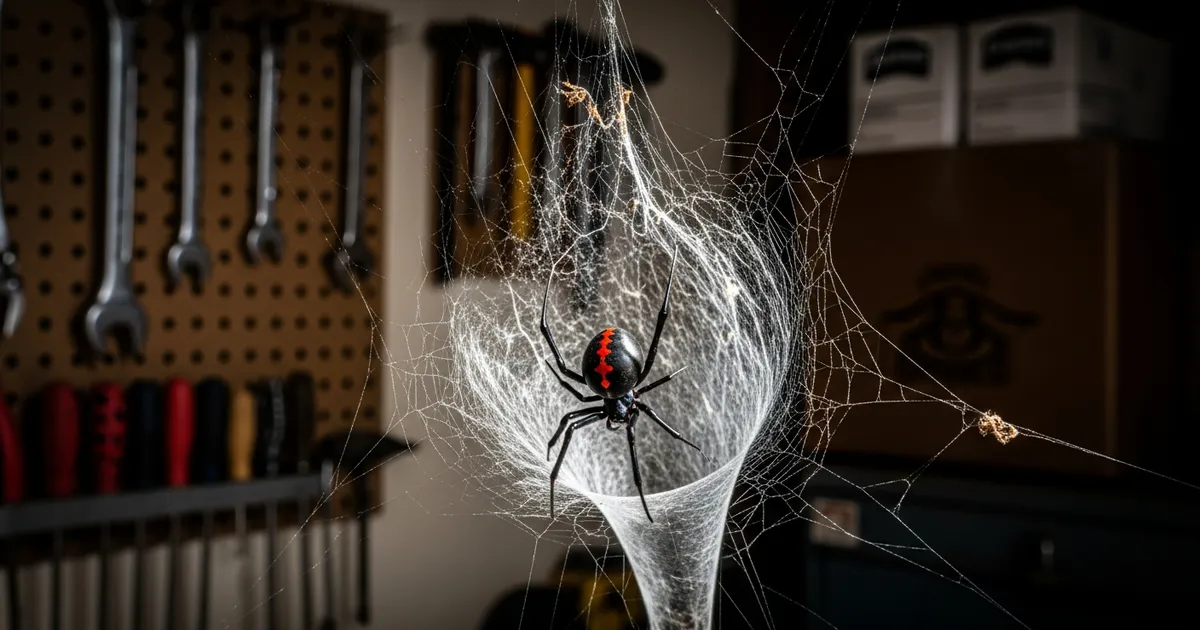
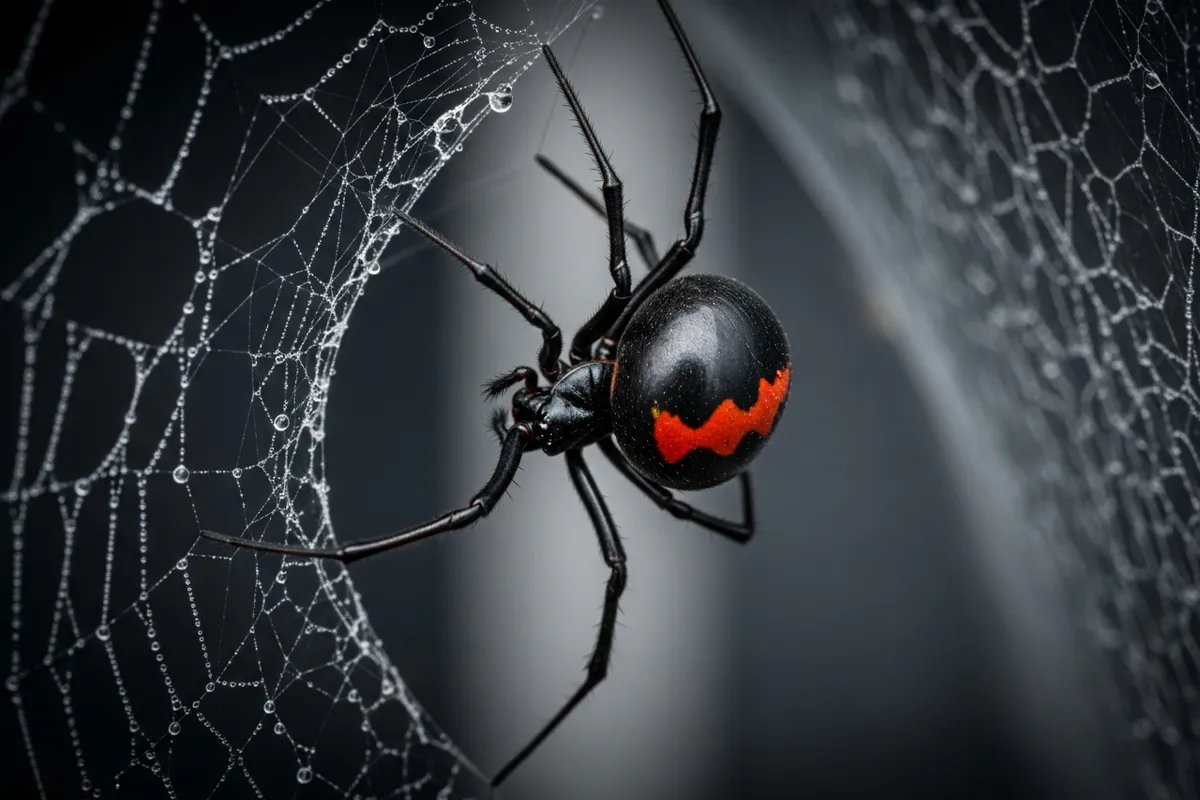
The Western Black Widow (Latrodectus hesperus) is the species you’ll find across Utah, while the Southern Black Widow (Latrodectus mactans) handles the same role in central Florida. Both look much the same from a homeowner’s perspective. Mature females are glossy jet black with a rounded, bulbous abdomen and a bright red hourglass marking on the underside – the classic field mark. Females span roughly the size of a quarter with legs extended. Males are much smaller, lighter, often with white or yellow markings, and aren’t medically significant. Web is a giveaway: black widow webs are coarse, irregular tangles, noticeably stronger than typical house spider webs, usually built low and in protected spots. Look-alikes include false widows and some cobweb spiders, but the combination of glossy black body and red hourglass on a female is unmistakable.
Where Black Widows Live in Utah and Florida
In Utah, black widows are common across southern Utah’s red rock and desert country – including St. George and Hurricane – and present throughout the rest of the state in suitable habitat. They favor dark, dry, undisturbed spots: garages, sheds, woodpiles, outdoor storage, crawl spaces, window wells, irrigation boxes, and the underside of patio furniture. In central Florida, the Southern Black Widow occupies similar territory, with the added factor of year-round warmth that keeps them active across all twelve months. Florida populations also gravitate toward outbuildings, garage corners, mailbox interiors, screened lanais, and the dark spaces behind stored items. In both regions, peak activity and bite reports cluster in the warm months.
Why They Get Into Homes / What Attracts Them
Black widows aren’t seeking out humans – they’re seeking out quiet, sheltered places to build webs and the small insect prey those webs catch. Garages, sheds, and storage areas check every box: dark, dry, low traffic, and rich in flies, beetles, and other prey drawn to outdoor lighting. Cluttered yards with woodpiles, stacked landscape stone, dense shrubs against the foundation, and unused planters all create ideal harborage. Outdoor lighting that draws insects also draws the widows that prey on them, which is why porch corners, garage door tracks, and exterior wall voids are common nest sites.
Signs You Have a Black Widow Problem
Black widows hide more than they show themselves, but the clues add up:
- Coarse, tangled webs in garage corners, sheds, or window wells
- Webs noticeably stronger than typical house spider webs when brushed
- Pale, papery egg sacs roughly the size of a pea attached to webs
- Glossy black spiders retreating into cracks when disturbed
- The red hourglass visible on the underside of an upside-down female
- Webs in seldom-used storage boxes, planters, or under patio furniture
- Dead insect debris collecting in low corners and wall-to-floor seams
Health Risks: Honest Assessment
Black widow bites are medically significant. The venom is neurotoxic and can cause intense pain, muscle cramping (often in the abdomen, back, or chest), sweating, nausea, and elevated blood pressure, with symptoms typically peaking within hours and resolving over a few days. That said, fatalities in healthy adults are rare, and effective antivenom is available when needed. Children, older adults, and people with underlying health conditions are at higher risk for severe reactions and should seek medical care promptly after any suspected bite. Most bites happen when a spider is pressed against skin – putting on a stored shoe, reaching into a glove, lifting a piece of stored wood. Awareness and a few habits handle most of the risk.
How to Prevent Black Widows Around Your Home
A few consistent habits dramatically reduce encounters:
- Shake out shoes, gloves, and gardening tools before putting them on
- Wear gloves when moving woodpiles, stones, or stored boxes
- Clear webs from garage corners, sheds, and window wells regularly
- Reduce clutter in storage areas and seal items in plastic bins
- Move woodpiles and debris well away from the foundation
- Trim shrubs and ground cover back from exterior walls
- Seal cracks and gaps in siding, foundation, and door sweeps
- Switch exterior lighting to bug-resistant bulbs to reduce prey insects
When to Call a Professional
If you’re finding multiple webs, egg sacs, or live black widows in spaces you actually use – garage, patio, storage shed, kids’ play area – that’s the point to bring in help. Treatment focuses on harborage areas, web clearance, and a residual perimeter that reduces both the spiders and the prey insects feeding them. Our team handles black widow control across both Utah and central Florida service areas. Learn more about our pest control services or request a free quote.