Spotted spurge is the flat-growing summer weed that takes over thin lawn spots, gravel xeriscape, and sidewalk cracks across Utah once the heat sets in. It’s not dangerous, but it spreads aggressively in hot dry weather and can cover a surprising amount of ground in a short time. A combination of pre-emergent timing and healthy lawn density usually keeps it in check.
Identification
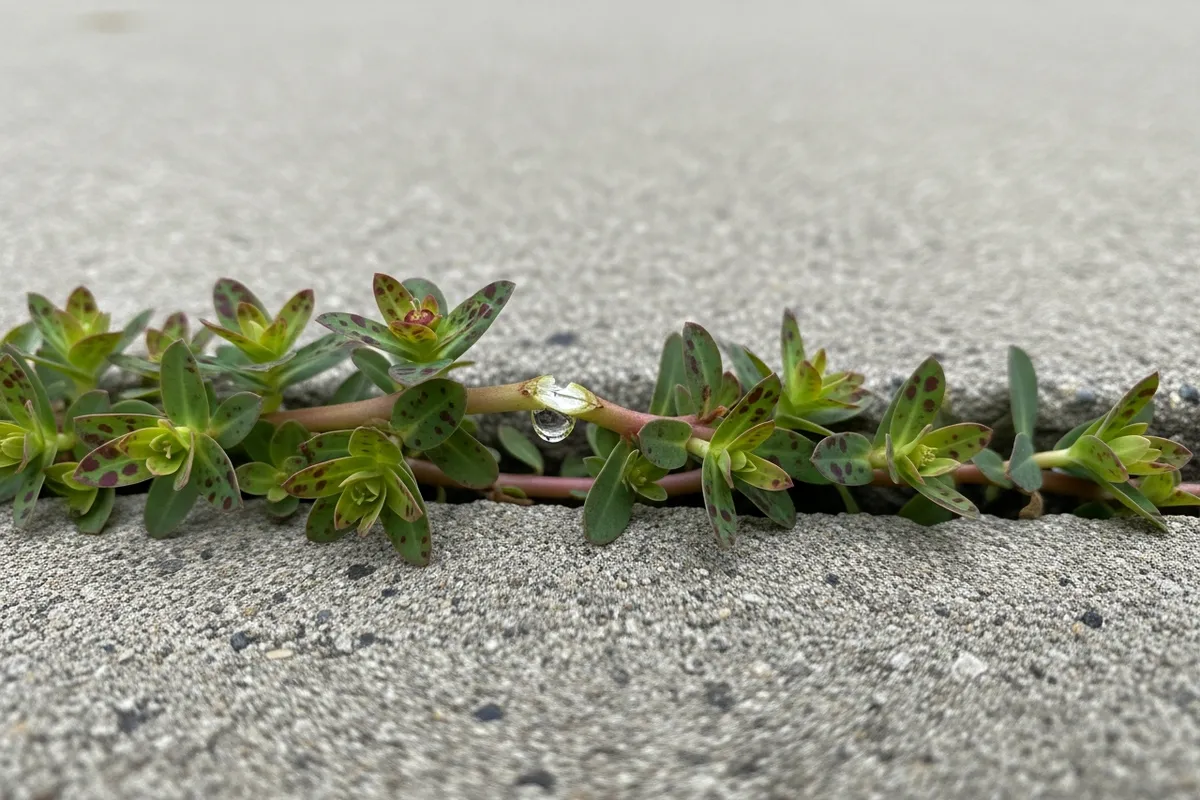
Spotted spurge (Euphorbia maculata) is a low, mat-forming summer annual that grows tight to the ground in a starburst pattern radiating from a central taproot. The small oval leaves are arranged in opposite pairs along reddish stems, and most leaves carry a distinctive maroon or purple spot near the center – the source of the common name. Tiny pinkish-white flowers appear at leaf bases through summer. Snap any stem and you’ll see milky white sap ooze out, which is one of the easiest ways to confirm identification. Look-alikes include prostrate knotweed and purslane, but the milky sap, opposite leaves, and leaf spot together are reliable tells.
Where Spotted Spurge Lives in Utah
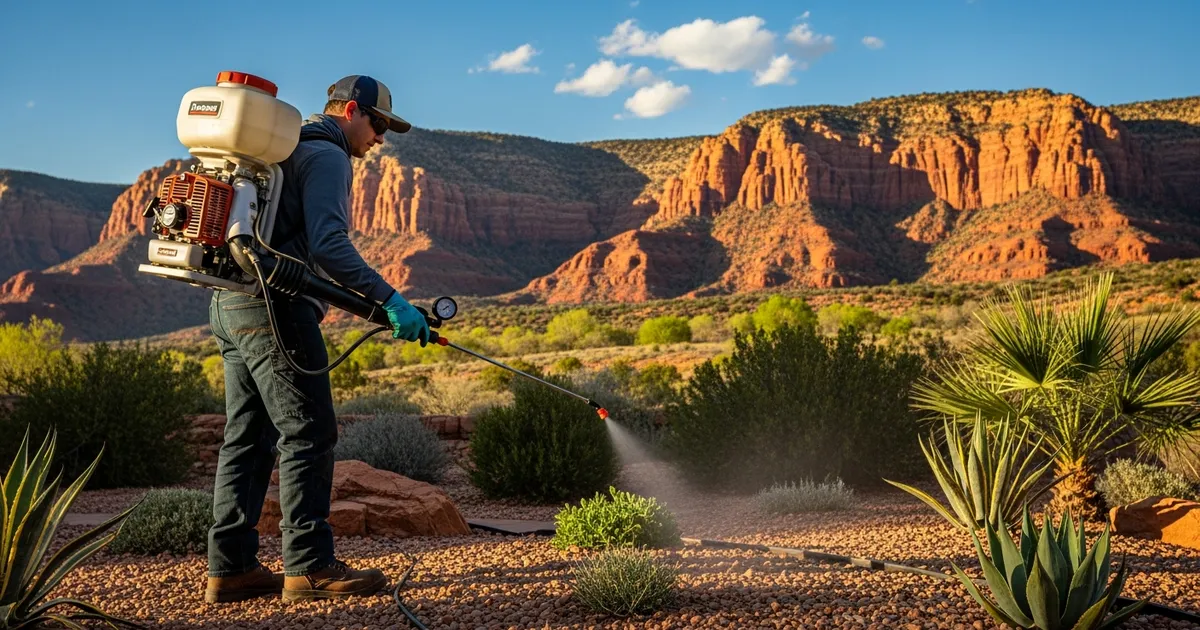
Spotted spurge thrives wherever Utah summers turn hot and soil dries out. You’ll find it across the Wasatch Front, through southern Utah communities like St. George and Hurricane, and pretty much anywhere lawns thin out, gravel beds heat up, or pavement edges crack. It loves the bare or compacted spots where turf struggles: sidewalk gaps, paver joints, the strip between curb and grass, gravel driveways, xeriscape rock beds, and patio edges. It’s especially common in lawn thin spots where mowing has stressed the grass or irrigation isn’t reaching evenly. Seeds germinate when soil warms in late spring and early summer, and the plant grows fastest during the hottest part of the season.
Why It Spreads So Easily
Spurge is built for fast turnover. From germination to seed production can take only a few weeks, and a single plant produces a large number of seeds that stay viable in the soil for years. Bare or thin ground is its favorite real estate, which is why drought-stressed lawns and gravel xeriscape are such common hot spots. Heat doesn’t slow it down – it speeds it up. Foot traffic, irrigation patterns, and lawn equipment all spread seed across the yard, and once a few plants have set seed, next summer’s outbreak is already loaded into the soil.
Signs You Have a Spotted Spurge Problem
Spurge tends to fill in fast once it gets started:
- Flat circular mats of small leaves with reddish stems in lawn or gravel
- A maroon or purple spot on most leaves
- Milky white sap when stems are broken
- Plants filling sidewalk cracks, paver joints, and xeriscape gravel
- Aggressive spread in thin or stressed lawn areas
- Skin irritation after handling without gloves
- New patches reappearing in the same spots each summer
What’s the Damage?
Spotted spurge isn’t a major health threat, but it’s not entirely friendly either. The milky sap can irritate skin, eyes, and pet mouths on contact, so weeding without gloves is a bad idea. The plant itself crowds out desirable lawn grass, leaving bare spots where it eventually dies back at first frost. In gravel xeriscape, it makes the landscape look unkempt and forms dense mats that are tough to pull out cleanly. The bigger long-term issue is the seed bank: an untreated season builds up enough seed in the soil to make next summer’s outbreak even worse.
How to Prevent Spotted Spurge Around Your Home
Density and timing are the two big levers:
- Apply pre-emergent herbicide in late spring before soil warms
- Treat post-emergent escapes while plants are still small
- Maintain a thick, healthy lawn with proper mowing height
- Water deeply and less often to encourage deep grass roots
- Overseed thin or bare spots in the cool season
- Mulch ornamental beds to suppress germination
- Pull young plants by hand with gloves before they set seed
- Sweep gravel and paver areas to remove dropped seed
When to Call a Professional
Spotted spurge becomes a chronic problem when the seed bank builds up in the soil, and at that point hand-pulling can’t keep up with the germination rate. A pre-emergent application timed to Utah’s spring soil temperatures, paired with targeted post-emergent treatment of escapes, gets ahead of the cycle. Our team integrates spurge control into broader lawn and landscape programs so you’re not fighting it bed by bed. Explore our weed control services or request a free quote.