
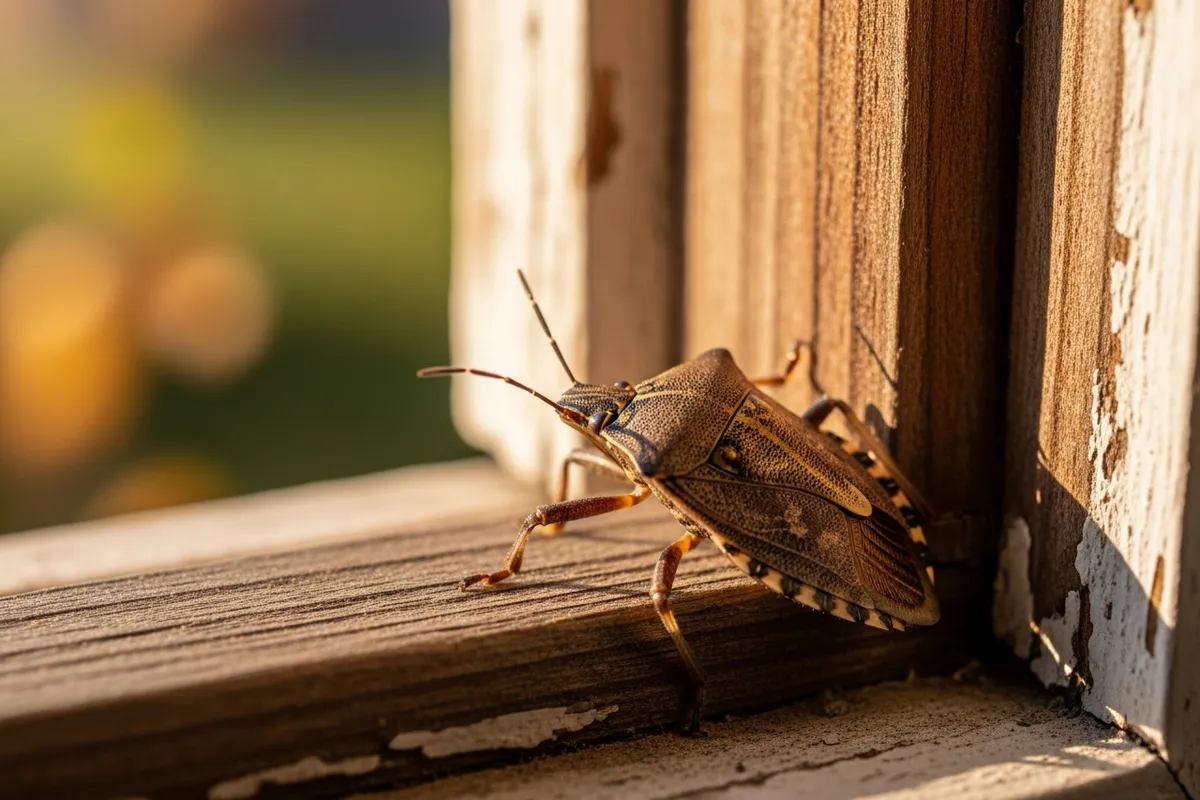
Stink bugs are the shield-shaped insects that show up clinging to the sunny side of Utah homes every fall, looking for a warm place to ride out winter. They don’t bite, sting, or damage your house, but they cluster in unsettling numbers, and crushing one releases the smell behind their name. Sealing them out is the most effective approach.
Identification
The Brown Marmorated Stink Bug (Halyomorpha halys) is the species causing the most trouble in Utah. Adults are about the size of a fingernail, with a distinctive shield-shaped body, mottled brown coloring, and pale white bands on the antennae and along the edges of the abdomen. Up close you can see fine speckling across the back, which is where the marmorated name comes from. Younger nymphs are rounder, often with red or orange markings before they darken into adult coloring. Common look-alikes include native stink bugs (similar shape but usually solid green or gray) and certain leaf-footed bugs, but the antenna banding and mottled brown back are reliable tells.
Where Stink Bugs Live in Utah
The brown marmorated stink bug is an invasive species that has steadily expanded across Utah, particularly along the Wasatch Front and through agricultural valleys. During the growing season, they live outdoors on a wide range of host plants, including fruit trees, garden vegetables, and ornamental landscape. As temperatures drop in late September and through November, they begin looking for protected overwintering sites – and the warm, south-facing walls of homes are perfect. They squeeze into cracks around windows, vents, eaves, and siding gaps, sometimes gathering in attics, wall voids, and behind shutters. They re-emerge in spring as temperatures climb, occasionally appearing inside the house before they head back outside.
Why They Get Into Homes / What Attracts Them
Stink bugs aren’t after your food, water, or any structural element – they’re after warmth. Late-season cold drives them to seek protected hibernation spots, and human structures offer the most consistent shelter available. Sun-warmed siding draws them in, and any gap they can squeeze through becomes a doorway. Once a few have settled inside a wall void or attic, the cluster releases aggregation pheromones that attract more of the same species, which is why infestations tend to grow rather than stay small. Heated homes confuse their winter dormancy, sometimes prompting them to wander indoors on warm winter days, then again in spring.
Signs You Have a Stink Bug Problem
Stink bugs aren’t subtle once they show up:
- Shield-shaped brown bugs clustered on sunny exterior walls in fall
- Bugs gathering around window frames, vents, and eaves
- Live or dead specimens appearing on windowsills indoors
- A sharp, herbal-cilantro odor when one is crushed or disturbed
- Slow-flying bugs appearing inside on warm winter or spring days
- Bugs accumulating in attics, garages, or behind shutters
- Damage to garden tomatoes, peppers, and fruit during summer
What’s the Damage?
For your house, almost none – stink bugs don’t chew, bore, or nest in structural materials. The frustrations are mostly cosmetic and sensory: clusters on siding, occasional indoor wanderers, and the unmistakable smell when one gets squished or vacuumed up. The bigger story in Utah is agricultural and garden damage. Brown marmorated stink bugs feed on a wide range of fruits and vegetables, leaving discolored, dimpled, or corky patches on tomatoes, peppers, apples, peaches, and more. For backyard gardeners, a heavy population can mean a meaningful share of the harvest is unusable.
How to Prevent Stink Bugs Around Your Home
Exclusion is the heart of stink bug control:
- Seal cracks around windows, doors, and siding before fall
- Caulk gaps where pipes, wires, and vents enter the house
- Repair torn screens on windows, vents, and attic openings
- Install door sweeps and check weatherstripping
- Vacuum indoor stink bugs rather than crushing them
- Empty the vacuum outdoors promptly to avoid lingering smell
- Reduce exterior lighting during fall migration evenings
- Keep firewood and yard debris away from the foundation
When to Call a Professional
If stink bugs are gathering on your siding by the dozens or showing up indoors regularly, exclusion alone may not be enough – established overwintering sites in wall voids and attics are tough to reach without the right approach. A late-summer or early-fall exterior treatment, combined with targeted sealing of entry points, dramatically reduces how many actually make it inside. Learn more about our pest control services or request a free quote.
