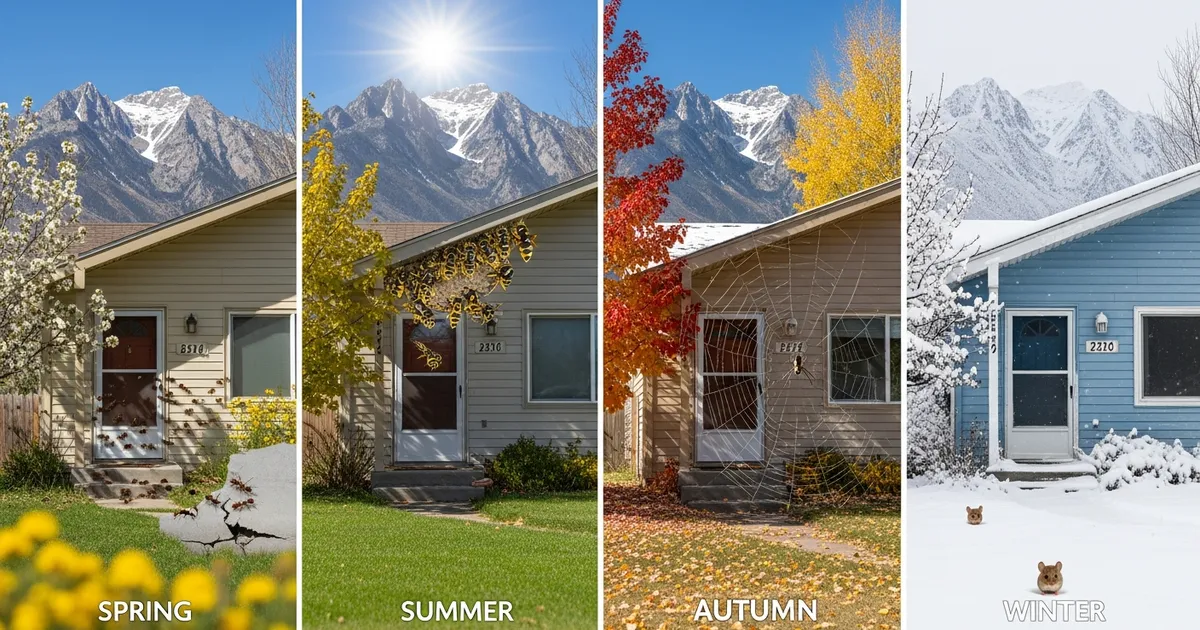

Carpenter ants are large black or reddish-black ants that tunnel through damp or damaged wood to build their nests. Unlike termites, they don’t actually eat the wood – they hollow it out, leaving piles of sawdust-like debris called frass. Established colonies can cause real structural damage if ignored.
Identification
Carpenter ants (Camponotus spp.) are the largest ants most homeowners ever see indoors, with workers ranging from about a quarter-inch up to half an inch long. Most are solid black, though some species show reddish or brown coloration on the thorax. Look for a single node (bump) between the thorax and abdomen, a smoothly rounded thorax in profile, and elbowed antennae. Winged reproductives, called swarmers, appear in late spring and are sometimes mistaken for termites – but ant swarmers have pinched waists, bent antennae, and forewings noticeably longer than hindwings. Termite swarmers, by contrast, have straight bodies, straight antennae, and four equal-sized wings.
Where Carpenter Ants Live in Utah and Florida
In Utah, carpenter ants are common in foothill neighborhoods and anywhere with mature trees, irrigation, and shaded landscaping – including the St. George area, where outdoor watering creates pockets of moist wood the ants love. In Central Florida, year-round humidity and abundant rotting wood make conditions even more favorable, and colonies often nest in tree stumps, woodpiles, and damp wall voids. Outdoors, you’ll find them in dead limbs, hollow trees, and landscape timbers. Indoors, they tend to set up shop wherever wood has been softened by a slow leak – around windows, behind dishwashers, under bathtubs, or in attic rafters near roof penetrations.
Why They Get Into Homes
Carpenter ants follow two things: moisture and easy travel routes. They typically start a satellite nest indoors only after the wood has already been compromised by a leak, condensation, or long-term humidity. Tree branches touching the roof or siding give them a literal bridge into the structure, and firewood stacked against the house is a classic launch point. Once inside, workers forage for sweets, proteins, and grease – pet food bowls, sticky drips behind the toaster, and crumbs in pantry corners are all fair game. They’re most active at night, which is why people often spot a few large ants on a kitchen counter after dark.
Signs You Have a Carpenter Ant Problem
Because the colony is usually hidden inside walls or wood, the evidence shows up before the ants do:
- Small piles of fine, sawdust-like frass below baseboards, window frames, or ceiling beams
- Faint rustling or crinkling sounds inside walls, especially at night
- Large black ants foraging in kitchens or bathrooms after dark
- Winged swarmers appearing indoors in spring, often near windows
- Hollow-sounding wood when tapped, particularly around old water damage
- Smooth, clean galleries visible if damaged wood is opened up
- Discarded wings on windowsills or near light fixtures
What’s the Damage?
Carpenter ants don’t sting in any meaningful way and they aren’t significant disease carriers, so the real concern is structural. A mature colony working undetected for several years can weaken framing, sills, and joists – especially when paired with the moisture problem that drew them in to begin with. The good news is that damage is usually slower than termite damage and easier to repair when caught early. The bad news is that finding the parent nest can be tricky, since it may be in a tree outside while satellite nests sit inside your walls.
How to Prevent Carpenter Ants Around Your Home
Most prevention is really moisture management plus exclusion:
- Fix roof leaks, plumbing drips, and condensation issues quickly
- Replace any wood that’s already soft, spongy, or water-stained
- Trim tree limbs and shrubs back at least a few feet from the roof and siding
- Stack firewood off the ground and away from the house
- Seal cracks around windows, doors, utility penetrations, and the foundation
- Keep gutters clean and direct downspouts away from the foundation
- Store pet food in sealed containers and wipe up spills promptly
- Improve attic and crawl space ventilation to lower humidity
When to Call a Professional
Sprays from the hardware store knock down a few foragers but rarely reach the nest, and carpenter ants are notorious for splitting colonies when disturbed. If you’re seeing frass, hearing activity in walls, or watching swarmers emerge indoors, it’s time for a real inspection. Our team locates parent and satellite nests, treats the colony at the source, and helps identify the moisture issue that started the problem. Learn more about our pest control services or related issues like drywood termites. Request a free quote.