Crabgrass is the low, sprawling summer weed that takes over thin or stressed Utah lawns by July. It’s a warm-season annual, which means it dies every fall but drops thousands of seeds that wait in the soil for spring. The most reliable way to stop it is timing – a pre-emergent applied before soil warms up – and that’s where professional weed control earns its keep.
Identification
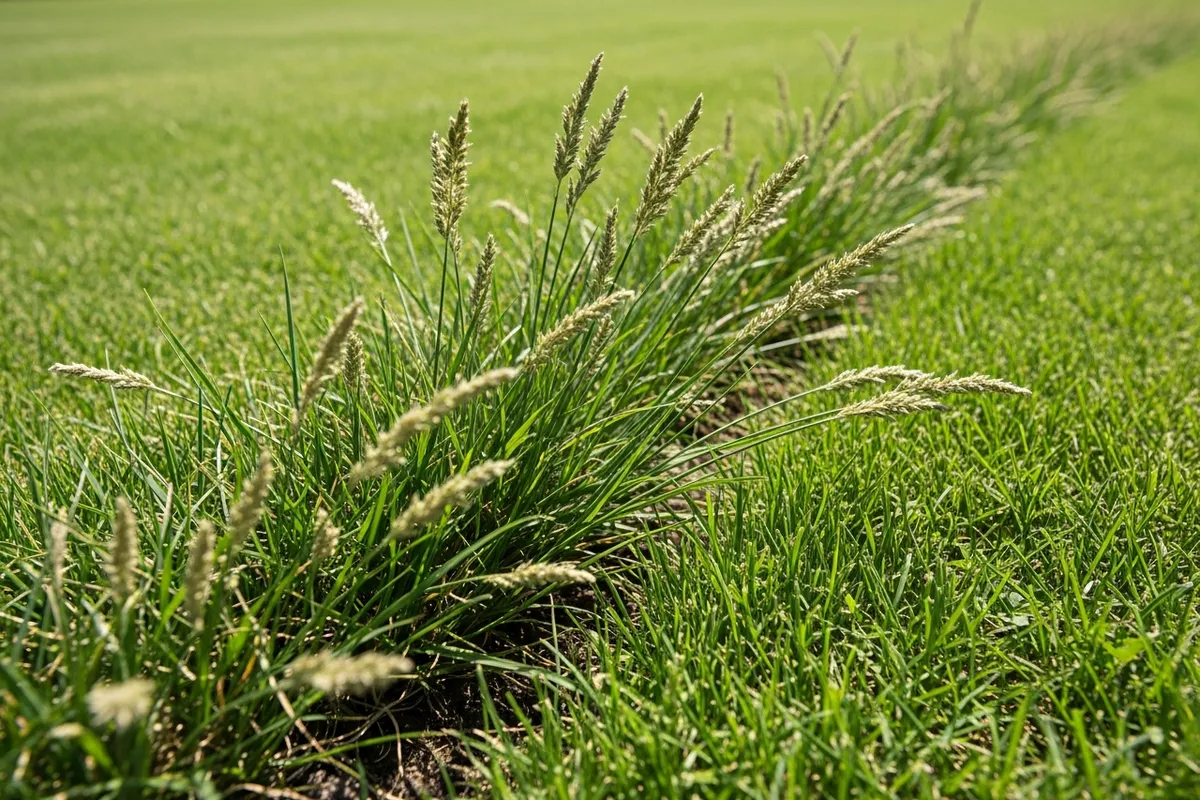
Crabgrass (Digitaria spp.) grows in a low, star-shaped pattern that radiates outward from a central crown, with stems that often lie flat against the ground before turning upward at the tips. The blades are wider and lighter green than typical lawn grass, with a slightly hairy texture near the base. As it matures, it sends up seed heads that look like several finger-like spikes branching from a single point – a feature that gives it the nickname “finger grass.” Homeowners often confuse it with quackgrass, tall fescue clumps, or even goosegrass. Quackgrass grows upright and has a deep rhizome system; goosegrass has a whitish, flattened center; crabgrass keeps that distinctive sprawling, sun-loving habit and bright green color through the heat of summer.
Where Crabgrass Lives in Utah
Crabgrass shows up in lawns across Utah, from St. George up through the Wasatch Front. It thrives in hot, sunny spots with thin turf – along driveways and sidewalks where reflected heat warms the soil first, in bare patches where the lawn was scalped by mowing, and in irrigation gaps where grass goes dormant. Southern Utah’s longer warm season gives crabgrass more time to germinate, set seed, and spread, which is why St. George homeowners often see heavier infestations than those further north. Compacted soils, south-facing slopes, and lawn edges are the most common trouble spots.
Why It Invades Lawns
Crabgrass is opportunistic – it doesn’t compete well against thick, healthy turf, but it pounces on any opening. Bare soil, thin grass, scalped lawns, and overwatered or underwatered patches all give it a foothold. The seeds need warm soil and sunlight to germinate, so areas exposed to direct sun (especially next to concrete) sprout first. Short mowing makes the problem worse by letting sunlight reach the soil. Once a single plant matures, it can produce thousands of seeds in a single season, building up a seed bank that keeps the cycle going for years. That’s why control isn’t a one-summer job.
Signs You Have a Crabgrass Problem
Crabgrass is easy to spot once you know the pattern:
- Light-green, low-growing clumps that look noticeably different from your lawn grass
- Star-shaped or wagon-wheel growth radiating from a central point
- Heaviest infestations along driveways, sidewalks, and curbs
- Finger-like seed heads in mid- to late summer
- Patches of crabgrass where the lawn was thin or bare in spring
- Brown, dead clumps in fall after the first frost – followed by a fresh crop the next summer
- Worsening problem year after year if seeds aren’t intercepted
What’s the Damage?
Crabgrass doesn’t damage your home, your pets, or your health – it’s a cosmetic and turf-quality issue. But it does crowd out desirable lawn grass, leave bare patches when it dies in fall, and degrade the appearance of an otherwise healthy yard. Heavy infestations also make the lawn feel uneven underfoot. The bigger long-term cost is the seed bank: every year you let crabgrass go to seed, you’re stocking the soil with the next several years of weeds, which makes future control harder and more expensive.
How to Prevent Crabgrass Around Your Home
The fight against crabgrass is won in early spring, before you ever see it:
- Apply pre-emergent herbicide in early spring before soil temperatures reach 55°F – timing is everything
- In Southern Utah, that often means February to early March; in Northern Utah, March to early April
- Maintain a thick, healthy lawn through proper fertilization and watering to crowd out crabgrass
- Set mowing height to 3 inches or higher – taller grass shades the soil and prevents seeds from germinating
- Avoid scalping the lawn, especially the first mow of the season
- Water deeply and less often instead of light, frequent watering, which favors shallow-rooted weeds
- Overseed thin areas in fall so spring growth fills in before crabgrass can take hold
- Reapply pre-emergent in mid- to late spring for extended-season protection
When to Call a Professional
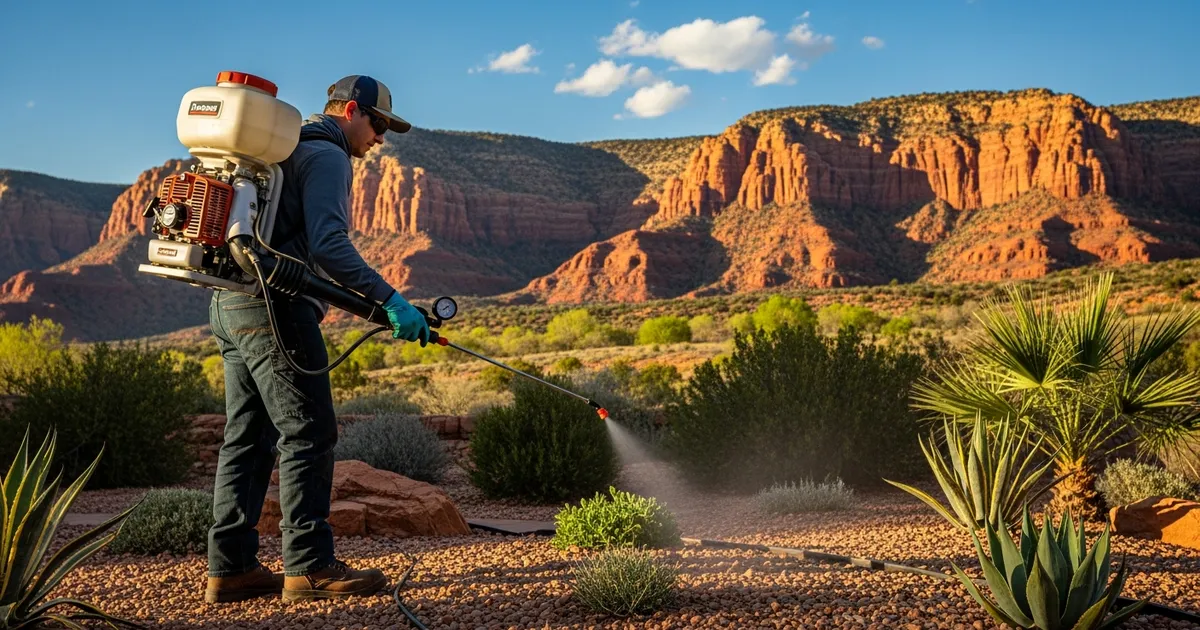
If you missed the spring pre-emergent window, or if crabgrass keeps coming back every summer, a professional program can break the cycle. Green Defense times pre-emergent applications to soil temperature in your specific service area, follows up with selective post-emergent treatments where needed, and pairs it all with lawn-health recommendations so your turf actually outcompetes the weeds. Request a free quote and we’ll get the timing right for your yard.