
Northern Utah’s unique elevation changes and mountain climate create different timing windows for pre-emergent herbicide applications across the Wasatch Front. While Southern Utah gardeners start their weed prevention in early March, Northern Utah residents need to wait for soil temperatures to reach the critical 50°F threshold.
Understanding when and how to apply pre-emergent herbicide can mean the difference between a weed-free lawn and spending your summer battling crabgrass, dandelions, and other persistent weeds that thrive in Utah’s climate.
Understanding Pre-Emergent Herbicide Timing in Northern Utah
Pre-emergent herbicides work by creating a chemical barrier in the soil that prevents weed seeds from germinating. The key to success lies in applying the herbicide before target weeds begin their germination cycle, which is triggered by soil temperature, not air temperature.
In Northern Utah, most summer annual weeds like crabgrass germinate when soil temperatures consistently reach 55-60°F. This typically occurs in late April to early May, depending on elevation and specific location.
Soil Temperature vs. Air Temperature
Many homeowners make the mistake of using air temperature as their guide. Air temperatures can fluctuate dramatically throughout the day, while soil temperature changes more slowly and provides a more reliable indicator of when weeds will germinate.
To measure soil temperature accurately:
- Use a soil thermometer inserted 2-4 inches deep
- Take readings at the same time each day, preferably mid-morning
- Monitor for 3-5 consecutive days of consistent readings
- Focus on shaded areas where soil warms more slowly
Check soil temperature in the shadiest part of your lawn. If it’s reached 50°F there, your entire property is likely ready for pre-emergent application. This prevents early germination in warmer microclimates around your home.
Northern Utah Application Timeline by Location
Northern Utah’s varied topography creates distinct microclimates that affect application timing. Lower elevation areas along the Wasatch Front warm up weeks before mountain communities.
| Location/Elevation | Typical First Application | Second Application | Notes |
|---|---|---|---|
| Ogden, Layton (4,300-4,500 ft) | Mid-March | Early May | Earliest warming in region |
| Salt Lake City, West Valley (4,200-4,400 ft) | Mid to Late March | Early to Mid-May | Urban heat island effect |
| Murray, Midvale, Sandy (4,400-4,600 ft) | Late March | Mid-May | Moderate elevation |
| Provo, Orem (4,500-4,800 ft) | Late March to Early April | Mid to Late May | Higher base elevation |
| Park City, Mountain areas (6,000+ ft) | Mid to Late April | Early June | Extended cold season |
Microclimate Considerations
Even within these general zones, individual properties can vary by 1-2 weeks based on:
- South-facing slopes that warm faster
- North-facing areas that stay cooler longer
- Urban heat islands in downtown areas
- Proximity to the Great Salt Lake’s moderating effect
- Elevation differences within neighborhoods
Target Weeds and Their Germination Patterns
Northern Utah lawns face several challenging weeds that pre-emergent herbicides can effectively prevent. Understanding when these weeds germinate helps refine your timing.
Primary Summer Annual Weeds
Crabgrass: Germinates when soil reaches 55-60°F consistently, typically late April to early May in the valley.
Foxtail: Similar germination timing to crabgrass, thrives in disturbed soil areas.
Purslane: Heat-loving weed that germinates slightly later, around 65°F soil temperature.
Lambsquarters: Cool-season weed that can germinate earlier, around 45-50°F.
Spring Annual Weeds
Some weeds germinate much earlier in spring or even fall:
- Annual bluegrass (Poa annua) – germinates in fall
- Henbit – early spring germination
- Chickweed – can germinate year-round in mild conditions
For comprehensive weed control, consider a fall pre-emergent application in late August to early September. This targets winter annuals and early spring weeds that summer applications miss.
Application Methods and Coverage
Proper application technique is crucial for pre-emergent herbicide effectiveness. The herbicide must create a continuous barrier in the soil to prevent weed germination.
Equipment Options
Broadcast Spreaders: Best for large, open lawn areas. Provide even coverage when properly calibrated.
- Walk at consistent 3-4 mph pace
- Overlap passes by 6-12 inches
- Apply in two perpendicular directions for best coverage
Drop Spreaders: More precise for smaller areas or around landscape beds.
- Slower application but better control
- Less risk of drift onto desirable plants
- Requires more overlapping passes
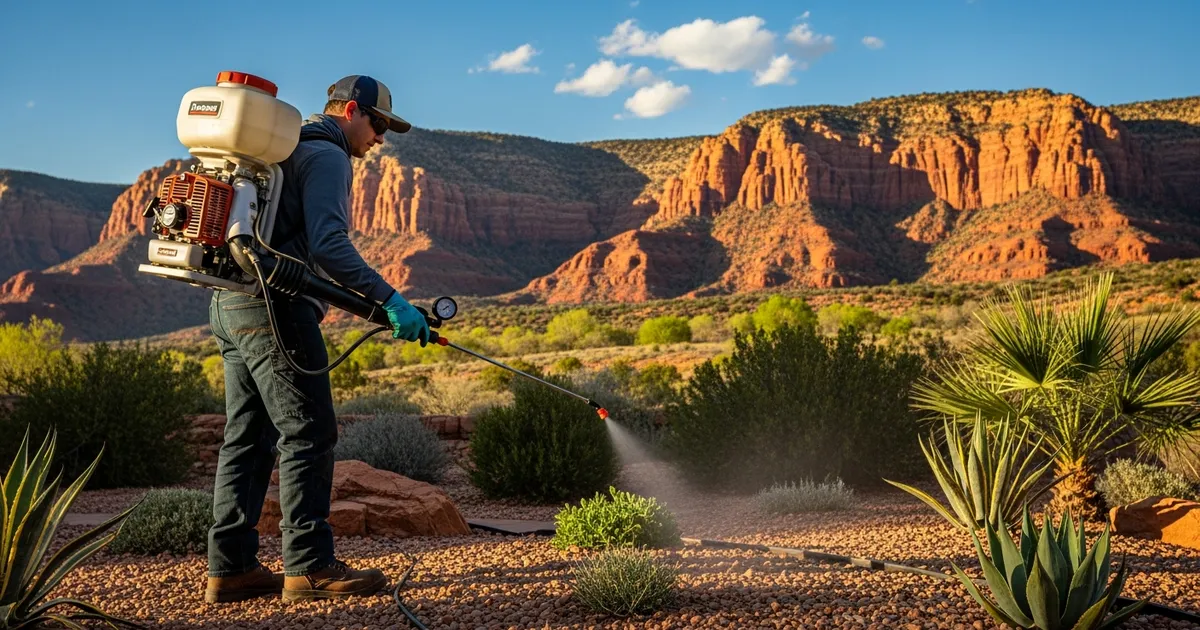
Liquid Application: Professional-grade equipment provides most uniform coverage.
- Better penetration into soil
- Easier to achieve consistent rates
- Can be combined with other treatments
Critical Application Steps
- Calibrate equipment: Test on a small measured area first
- Check weather forecast: Avoid application before heavy rain (more than 0.5 inches)
- Water lightly after application: 0.25-0.5 inches to activate the herbicide
- Avoid disturbing soil: No aeration, overseeding, or heavy raking for 2-4 weeks
Never apply pre-emergent herbicides to newly seeded areas or within 4-6 weeks of planned overseeding. The herbicide will prevent your grass seed from germinating along with the weeds.
Two-Application Strategy for Season-Long Control
A single pre-emergent application rarely provides complete season-long weed control. Northern Utah’s extended growing season from April through October requires strategic timing of multiple applications.
First Application Timing
The first application should occur when soil temperature reaches 50°F for 3-5 consecutive days. This timing:
- Creates a barrier before early germinating weeds emerge
- Provides 6-8 weeks of initial protection
- Allows for proper soil activation before peak germination
Second Application Strategy
Schedule the second application 6-8 weeks after the first, typically:
- Early to mid-May for lower elevations
- Late May to early June for higher elevations
- Before summer annual weeds begin their second germination flush
This timing prevents:
- Late-season crabgrass germination
- Summer broadleaf weeds like purslane
- Fall-germinating winter annuals in some products
Weather Considerations and Climate Factors
Northern Utah’s variable spring weather patterns significantly impact pre-emergent herbicide effectiveness and timing decisions.
Late Spring Freezes
Northern Utah frequently experiences late spring freezes that can affect soil temperature and weed germination patterns. These events can:
- Temporarily lower soil temperatures below germination thresholds
- Delay weed emergence by 1-2 weeks
- Create uneven germination patterns across your property
Moisture Management
Spring moisture levels affect both herbicide activation and weed pressure:
Dry Spring Conditions:
- Slower herbicide activation
- Reduced weed germination pressure
- May require additional irrigation for activation
Wet Spring Conditions:
- Faster herbicide activation
- Higher weed pressure
- Risk of herbicide dilution with excessive rainfall
Wind Considerations
The Wasatch Front’s canyon winds can affect granular applications:
- Apply during calm conditions (wind less than 10 mph)
- Avoid application on very dry, dusty days
- Consider liquid applications in consistently windy areas
Use Utah State University Extension’s weather station data to track soil temperatures in your specific area. Their network provides accurate, local readings that are more reliable than general weather apps.
Product Selection for Northern Utah Conditions
Different pre-emergent herbicides perform better under specific conditions and target different weed spectrums. Understanding these differences helps optimize your weed control strategy.
Active Ingredient Categories
Pendimethalin-based products:
- Excellent crabgrass control
- Good performance in clay soils common along the Wasatch Front
- Longer residual activity (3-4 months)
Prodiamine-based products:
- Broader spectrum weed control
- Better performance in sandy soils
- Lower application rates required
Dithiopyr-based products:
- Some post-emergent activity on young crabgrass
- Good for slightly late applications
- Effective on both grassy and broadleaf weeds
Combination Products
Many homeowner products combine pre-emergent herbicides with fertilizers. These “weed and feed” products can be convenient but have limitations:
Advantages:
- Single application for multiple benefits
- Cost-effective for large areas
- Simplified timing decisions
Disadvantages:
- Fertilizer timing may not align with optimal herbicide timing
- Lower herbicide concentration than dedicated products
- May over-fertilize cool-season grasses in spring
Lawn Type Considerations
Northern Utah lawns consist primarily of cool-season grasses that have specific needs and sensitivities regarding pre-emergent herbicide applications.
Kentucky Bluegrass
The most common lawn grass along the Wasatch Front:
- Tolerates most pre-emergent herbicides well
- Benefits from early spring fertilization combined with herbicide
- Avoid applications during active spring growth periods
Tall Fescue
Increasingly popular for water conservation:
- Very tolerant of pre-emergent herbicides
- Dense growth helps suppress weeds naturally
- May require higher application rates in thin areas
Fine Fescue
Common in mountain and foothill areas:
- More sensitive to some herbicide chemistries
- Lower maintenance requirements
- Naturally more weed-resistant when healthy
Common Application Mistakes to Avoid
Several common errors can significantly reduce pre-emergent herbicide effectiveness or damage your lawn.
Timing Errors
Too Early Application:
- Herbicide breaks down before weed germination
- Wasted money and effort
- May require complete reapplication
Too Late Application:
- Weeds have already germinated
- Herbicide ineffective on emerged weeds
- Requires post-emergent treatment
Application Rate Problems
Under-application:
- Incomplete weed control
- Patchy effectiveness
- Breakthrough germination in thin areas
Over-application:
- Potential lawn injury
- Wasted product and money
- Environmental concerns
- Extended restriction on overseeding
Coverage Issues
Uneven coverage creates weak spots in the chemical barrier:
- Use overlapping patterns for spreader applications
- Mark your walking pattern to ensure complete coverage
- Pay special attention to edges and irregular areas
- Consider professional application for complex landscapes
Integration with Overall Lawn Care Program
Pre-emergent herbicide application should be part of a comprehensive lawn care strategy that promotes thick, healthy turf naturally resistant to weed invasion.
Spring Lawn Care Timeline
Early March:
- Begin monitoring soil temperatures
- Plan pre-emergent application timing
- Prepare equipment and purchase products
Mid-March (Lower Elevations):
- First pre-emergent application
- Light irrigation to activate herbicide
- Avoid heavy foot traffic for 24-48 hours
April:
- Resume normal lawn maintenance
- Begin regular fertilization program
- Monitor for any breakthrough weeds
May:
- Second pre-emergent application
- Increase mowing frequency as grass growth accelerates
- Adjust irrigation as temperatures rise
Cultural Practices That Enhance Herbicide Effectiveness
Proper Mowing:
- Maintain grass height at 2.5-3.5 inches
- Remove no more than 1/3 of blade length per cutting
- Sharp blades prevent stress that weakens turf
Adequate Fertilization:
- Follow soil test recommendations
- Time applications to support grass, not weeds
- Use slow-release formulations for steady nutrition
Proper Irrigation:
- Deep, infrequent watering promotes deep roots
- Early morning irrigation reduces disease pressure
- Adjust for seasonal water restrictions
How Green Defense Handles Pre-Emergent Applications
Green Defense Pest Control’s professional lawn care team understands the unique challenges of Northern Utah’s variable climate and diverse growing conditions. Our pre-emergent herbicide program provides comprehensive weed prevention tailored to your specific location and lawn type.
Our Application Process
Our certified technicians follow a systematic approach:
- Site Assessment: We evaluate your property’s microclimate, elevation, and weed history
- Soil Temperature Monitoring: We track conditions across our service area to optimize timing
- Product Selection: We choose the most effective herbicide for your specific weed problems
- Professional Application: Our calibrated equipment ensures even coverage and proper rates
- Follow-up Service: We monitor effectiveness and provide additional treatments as needed
Service Advantages
Professional application offers several benefits over DIY approaches:
- Access to professional-grade products not available to homeowners
- Precise timing based on local weather monitoring
- Proper equipment calibration and even coverage
- Integration with comprehensive lawn care programs
- Warranty on service effectiveness
Our pre-emergent herbicide service typically costs $75-125 per application for average-sized lawns, depending on property size and product selection. Two-application seasonal programs provide the best value and most comprehensive weed control.
Monitoring and Adjusting Your Strategy
Successful pre-emergent herbicide programs require ongoing monitoring and adjustment based on results and changing conditions.
Effectiveness Indicators
Monitor these factors to evaluate your program success:
- Weed germination patterns compared to previous years
- Areas of breakthrough that may need attention
- Turf health and density improvements
- Reduced need for post-emergent treatments
Record Keeping
Maintain records of:
- Application dates and soil temperatures
- Products used and rates applied
- Weather conditions during and after application
- Weed breakthrough locations and species
- Overall program effectiveness
This information helps refine timing and improve results in subsequent years.
Long-term Program Development
As your lawn matures and weed pressure changes, adjust your approach:
- Reduce application frequency as turf density improves
- Focus treatments on problem areas rather than broadcast applications
- Integrate additional cultural practices for natural weed suppression
- Consider transitioning to more sustainable, integrated approaches
Pre-emergent herbicide application is a powerful tool for maintaining weed-free lawns in Northern Utah, but timing is critical for success. By monitoring soil temperatures, understanding local climate variations, and following proper application techniques, you can achieve excellent weed control throughout the growing season. For complex properties or challenging weed problems, professional application ensures optimal results and protects your investment in a healthy, attractive lawn.