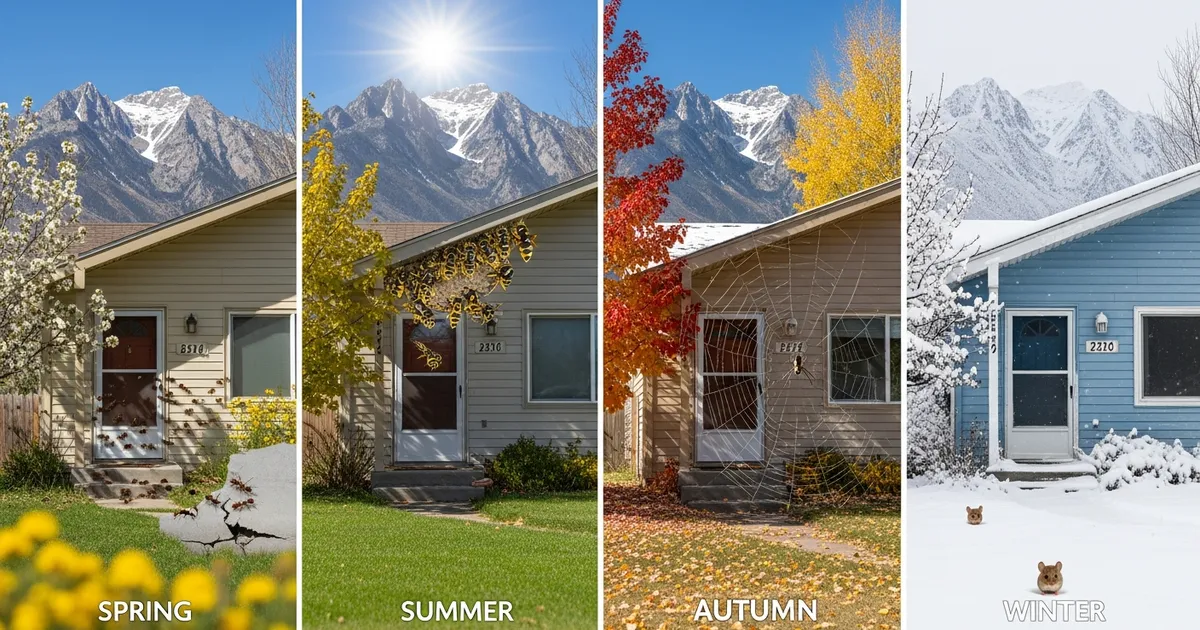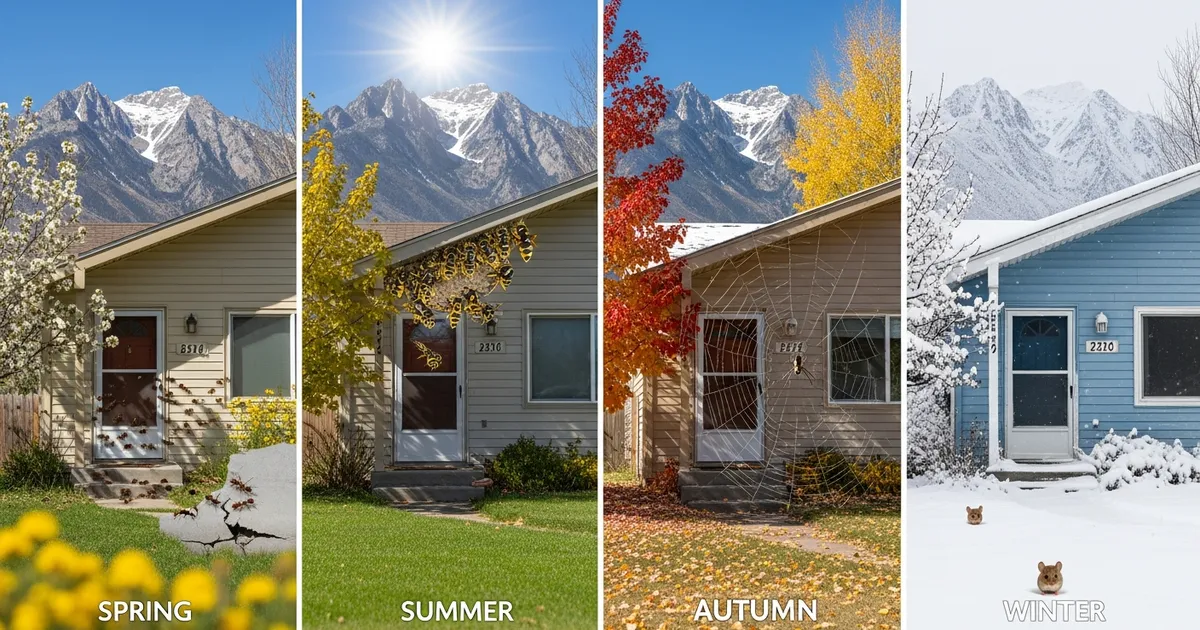
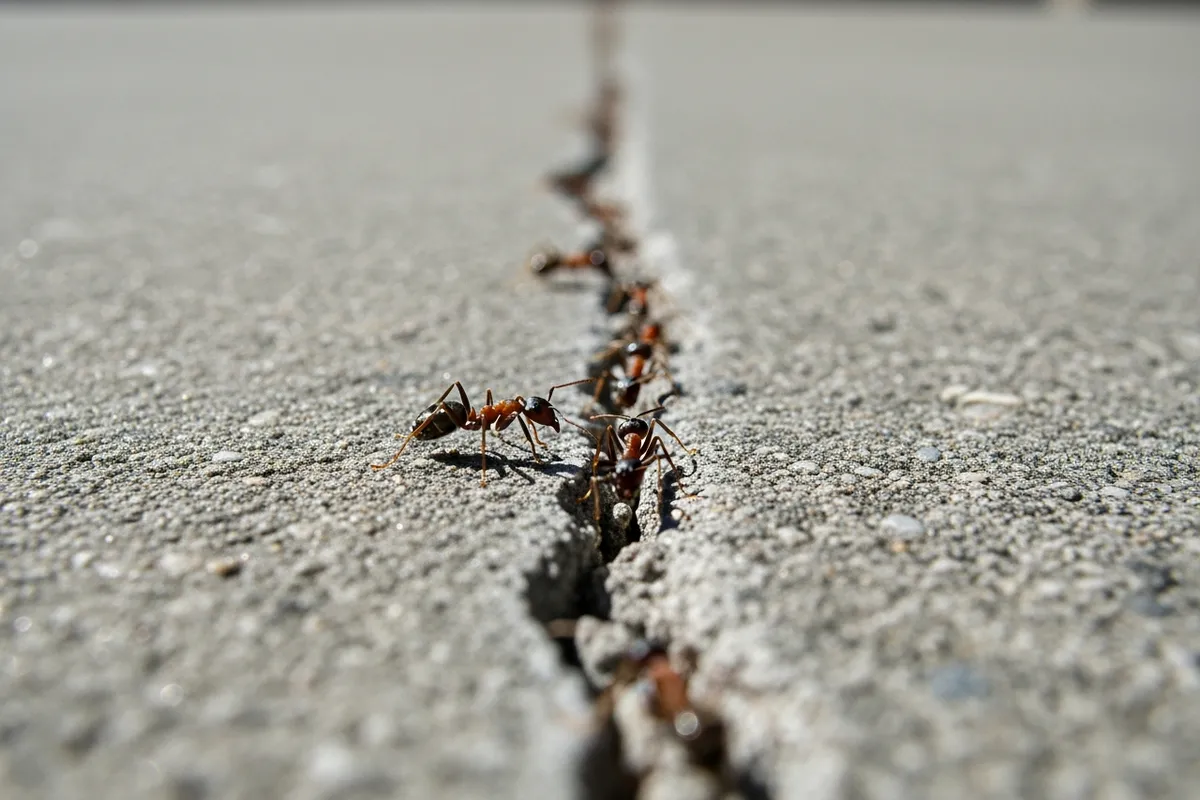
Pavement ants are the small, dark ants you see streaming out of cracks in driveways, sidewalks, and concrete patios across Utah. They’re more nuisance than danger, but once they find a food source inside your home, the trail can stretch from kitchen counter to colony in a hurry. A perimeter treatment usually solves it.
Identification
Pavement ants (Tetramorium caespitum) are small, roughly an eighth of an inch long, with bodies ranging from dark brown to nearly black. Up close, you’ll see fine parallel grooves running along the head and thorax, and a pair of small spines on the back. They have two nodes between the thorax and abdomen, which separates them from many similar-sized ants. Workers move in defined trails rather than wandering randomly, and they’re not shy about showing themselves in daylight. Common look-alikes include odorous house ants (which give off a coconut smell when crushed) and small carpenter ants (which are noticeably bigger and prefer wood). The pavement-cracks habitat is usually the easiest tell.
Where Pavement Ants Live in Utah
Pavement ants are well established across Utah, from the urban Wasatch Front down through southern Utah communities like St. George and Hurricane. As the name suggests, they nest under and beside hardscape: driveways, sidewalks, patio slabs, foundation edges, paver walkways, and the gravel beds beneath them. They also colonize landscape stones, retaining wall blocks, and the soil along curb lines. Utah’s mix of hot summers and cool winters suits them well, and irrigated landscapes give colonies a reliable moisture source even in arid southern climates. Activity ramps up in spring, peaks in mid-summer, and tapers off as nights cool in fall.
Why They Get Into Homes / What Attracts Them
Pavement ants are opportunistic foragers with broad tastes. Inside, they’re after sweets, greasy residue, pet food crumbs, and protein bits, which is why kitchens, pantries, and pet feeding areas are the usual hotspots. Outside, they tend honeydew-producing aphids on landscape plants and scavenge anything edible they can find. Moisture matters too: leaky hose bibs, condensation under HVAC units, and damp foundation soil all give a colony reasons to stay close. Once a scout finds a reliable food source, it lays a pheromone trail and the rest follow, which is why a few ants on the counter can become a steady line within a day.
Signs You Have a Pavement Ant Problem
These ants tend to give themselves away pretty quickly:
- Trails of small dark ants moving in and out of driveway or sidewalk cracks
- Tiny piles of fine soil pushed up between pavers or along concrete edges
- Lines of ants along baseboards, countertops, or pet food bowls
- Activity around kitchen sinks, pantries, and trash areas
- Ants emerging from foundation cracks or weep holes
- Foraging around outdoor garbage cans and grills
- Brief swarms of winged ants in spring or early summer
What’s the Damage?
Pavement ants don’t sting in a meaningful way, don’t damage wood, and aren’t known to spread serious disease. The trouble is mostly nuisance: contaminating food on counters, getting into pet bowls, and showing up in numbers that make a clean kitchen feel anything but. They can also tend aphids on ornamental plants, indirectly stressing your landscape. For most homeowners, the issue is persistence – once a colony settles in, the trails keep returning until the nest is addressed rather than just the visible ants.
How to Prevent Pavement Ants Around Your Home
A few habits go a long way toward keeping trails out of the kitchen:
- Seal cracks in driveways, sidewalks, and foundation walls
- Caulk gaps around pipes, wires, and door thresholds
- Wipe up spills, crumbs, and pet food residue promptly
- Store pantry items and pet food in sealed containers
- Take out kitchen trash regularly and rinse recyclables
- Trim shrubs and tree limbs away from the house
- Fix leaky hose bibs, irrigation lines, and dripping fixtures
- Maintain a clean, dry strip along the foundation perimeter
When to Call a Professional
Spraying visible ants only kills the foragers. The colony stays put underground and sends new workers out within hours, which is why store-bought sprays rarely solve the problem. A quarterly perimeter treatment combined with targeted baiting addresses the colony itself and keeps new ones from establishing along your foundation. Explore our pest control services or request a free quote.