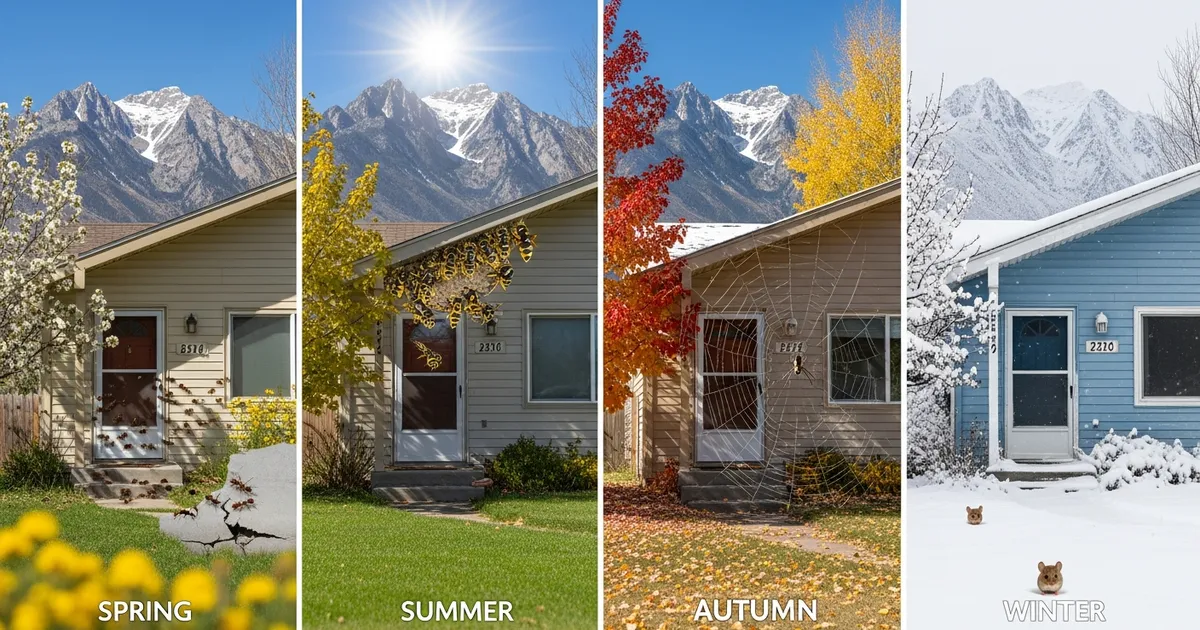

Spring in Utah brings melting snow, blooming flowers, and unfortunately, awakening pest populations. From the Wasatch Front valleys to Park City foothills, Utah homeowners face unique seasonal pest challenges that require proactive inspection and prevention.
The key to effective pest control isn’t waiting for problems to appear—it’s conducting thorough spring inspections before pests become established. Utah’s dramatic temperature swings and diverse microclimates from Salt Lake City to Provo create perfect conditions for various pest species to emerge simultaneously.
Timing Your Utah Spring Pest Inspection
The optimal inspection window for Utah homes runs from mid-March through early April, before soil temperatures consistently reach 55°F. This timing aligns with Utah State University Extension recommendations for pre-emergent applications and gives you maximum effectiveness before pest populations explode.
In the Salt Lake Valley, start inspections when daytime temperatures reach 50°F for 3-4 consecutive days. Higher elevation areas like Park City and Heber should begin 2-3 weeks later. Southern Utah County residents can start inspections in early March due to their warmer microclimate.
Weather patterns significantly impact timing. After heavy snow years, soil stays cold longer, pushing optimal inspection dates later. Conversely, warm February weather accelerates the timeline by 1-2 weeks.
Regional Timing Variations
- Wasatch Front (Salt Lake to Provo): March 15-30
- Davis County: March 20-April 5
- Utah County: March 10-25
- Cache Valley: April 1-15
- Higher Elevations (Park City, Heber): April 5-20
Check soil temperature 2 inches deep using a soil thermometer at 8 AM for three consecutive days. When it consistently reads 50°F or higher, begin your exterior inspection within 48 hours.
Foundation and Structural Inspection
Utah’s clay-heavy soils and freeze-thaw cycles create foundation movement that opens pest entry points. Your inspection should focus on identifying and measuring gaps that require immediate attention.
Start at the foundation’s exterior perimeter, working clockwise around your home. Use a flashlight and measuring tape to document gaps larger than 1/4 inch—the minimum opening size for most common Utah pests.
Critical Foundation Areas to Inspect
Foundation-to-siding junction: Look for gaps where siding meets the foundation, especially common in Wasatch Front homes built on expansive clay soils. These gaps often appear after wet winters when soil expansion shifts foundations.
Utility penetrations: Inspect where electrical, plumbing, gas, and cable lines enter your home. Utah’s volcanic soil conditions often cause settling that opens these penetrations over time.
Basement window wells: Check for cracks in window well walls and ensure proper drainage. Poor drainage creates moisture that attracts carpenter ants and other pests common in northern Utah.
Concrete expansion joints: These planned gaps in driveways and sidewalks often widen during Utah winters, creating highways for ant colonies migrating from overwintering sites.
Measuring and Documenting Gaps
| Gap Size | Pest Risk | Action Required | Timeline |
|---|---|---|---|
| Less than 1/8 inch | Low | Monitor | Re-inspect in fall |
| 1/8 to 1/4 inch | Moderate | Caulk or weatherstrip | Within 2 weeks |
| 1/4 to 1/2 inch | High | Foam sealant or hardware cloth | Within 1 week |
| Over 1/2 inch | Severe | Professional assessment | Within 48 hours |
Gaps larger than 1 inch may indicate structural settling requiring professional evaluation before sealing. Contact a structural engineer if you find multiple large gaps or cracks showing recent expansion.
Roof Line and Attic Entry Points
Utah’s temperature extremes cause significant expansion and contraction in roofing materials, creating entry points for flying insects and small mammals. Focus your inspection on areas where different materials meet.
Examine soffit vents, particularly in older Utah County homes where original screening may have deteriorated. Look for gaps around chimney flashing—common in Wasatch Front homes due to seismic activity and soil settling.
Check gutter attachments and downspout connections. Utah’s heavy spring runoff and occasional hailstorms can loosen these connections, creating gaps. Pay special attention to homes in foothills areas like Draper and Herriman where wind exposure increases wear.
Specific Roof Areas Requiring Attention
Vent penetrations: Bathroom, kitchen, and dryer vents often develop gaps where they penetrate roofing. Use binoculars for safely inspecting these areas from ground level.
Fascia board connections: Look for separation between fascia boards and roof decking, especially on south-facing sides that experience maximum temperature variation.
Attic ventilation screens: Ensure ridge vents, gable vents, and soffit vents have intact screening with openings no larger than 1/4 inch mesh.
Pre-Emergent Herbicide Application Timing
Proper pre-emergent timing prevents weeds that harbor pest insects throughout the growing season. Utah’s variable spring weather requires careful soil temperature monitoring rather than relying on calendar dates.
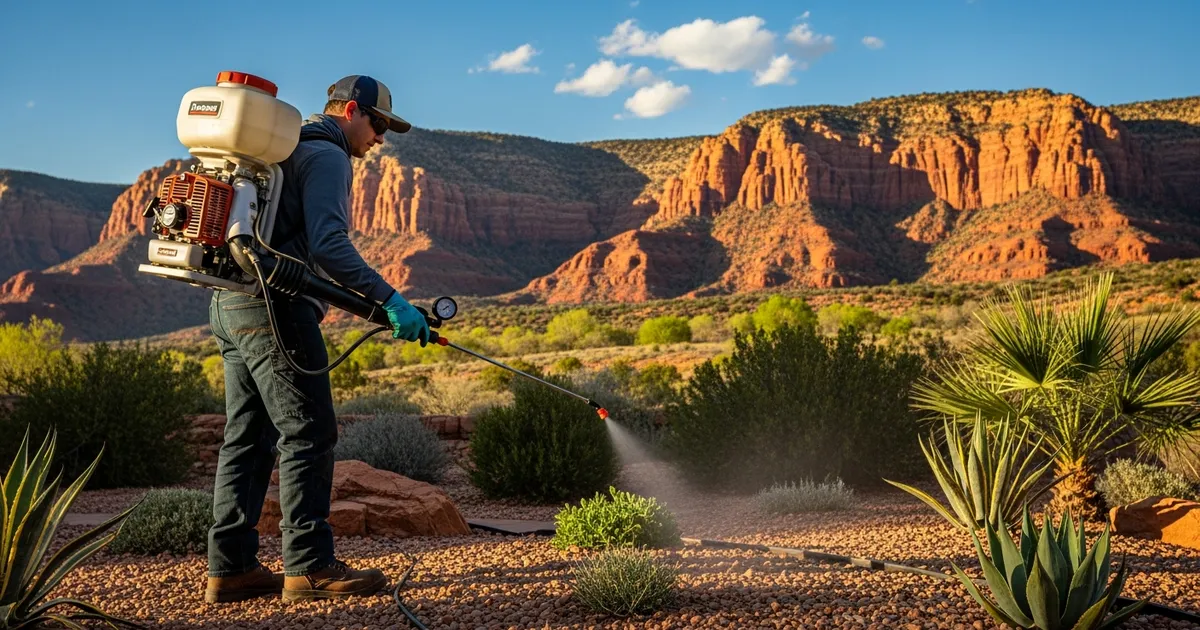
Apply pre-emergent herbicides when soil temperatures reach 50°F consistently for 72 hours at a 2-inch depth. In the Salt Lake Valley, this typically occurs between March 15-30, but can vary by 2-3 weeks depending on winter severity.
Focus applications on areas within 10 feet of your home’s foundation, where weeds create bridges for pest movement. Target graveled areas, fence lines, and landscape beds that connect to your home’s exterior.
Utah-Specific Application Zones
Foundation perimeter: Apply within 3 feet of foundation walls to eliminate vegetation that provides pest harborage and moisture retention against your home’s exterior.
Driveway edges: Treat cracks and edges where weeds emerge early and provide overwintering sites for aphids and other small insects.
Utility corridors: Apply along utility easements where maintenance activities disturb soil and create ideal weed germination conditions.
Record soil temperatures daily for one week before application. Utah’s elevation changes create temperature variations of 10-15°F between valley floors and benches, significantly affecting timing effectiveness.
Ant Prevention and Colony Monitoring
Utah’s common ant species—pavement ants, little black ants, and carpenter ants—emerge at different temperatures, requiring targeted prevention strategies. Understanding their emergence patterns allows for proactive intervention before colonies establish.
Pavement ants typically emerge when air temperatures reach 45°F consistently, usually mid-March in the Wasatch Front. These ants are particularly problematic in Utah due to our extensive use of concrete and asphalt in landscaping.
Carpenter ants require higher temperatures, emerging when nighttime lows stay above 40°F for a week. Focus carpenter ant prevention on homes with wood-to-ground contact or moisture issues common in Utah’s clay soil areas.
Early Season Ant Prevention Steps
Remove overwintering sites: Clear leaf litter, mulch, and debris within 3 feet of your foundation. Utah’s deciduous trees drop significant leaf volume that provides perfect overwintering habitat.
Eliminate moisture sources: Fix leaky irrigation systems and ensure proper drainage around foundations. Utah’s clay soils retain moisture against foundations, attracting carpenter ants.
Seal food sources: Clean up fallen fruit from ornamental trees common in Utah landscaping—crabapples, ornamental cherries, and serviceberries attract ants early in spring.
Create barrier zones: Maintain vegetation-free zones of at least 12 inches around your foundation perimeter using rock or concrete edging.
Interior Inspection Points
Utah homes face unique interior pest pressures due to our extreme temperature variations and dry indoor air. Focus your interior inspection on areas where pests seek moisture and warmth during temperature fluctuations.
Start in basements and crawl spaces, common in Utah construction due to our freeze-line requirements. Look for moisture signs around foundation walls, particularly on north-facing sides that receive minimal solar drying.
Critical Interior Areas
Kitchen and bathroom moisture sources: Inspect under sinks, around toilet bases, and behind appliances. Utah’s low humidity makes these areas particularly attractive to pests seeking moisture.
Utility rooms: Check around water heaters, furnaces, and laundry equipment. Temperature variations in these spaces create ideal microclimates for various pests.
Storage areas: Examine boxes and stored items in basements, garages, and attics. Utah’s temperature extremes can drive pests indoors seeking stable conditions.
Window and door seals: Test weatherstripping and caulking around all openings. Utah’s temperature swings cause significant expansion and contraction that degrades seals over time.
Landscape and Yard Preparation
Utah landscaping presents unique pest management challenges due to our water-wise gardening practices and native plant choices. Your spring preparation should focus on managing these elements to minimize pest attraction while maintaining water efficiency.
Trim vegetation to maintain at least 18 inches clearance from your home’s exterior. This includes popular Utah plants like Russian olive, Gamble oak, and ornamental grasses that can create pest bridges to your home.
Remove winter debris from under deck areas and around outdoor storage. Utah’s intense UV and temperature cycles break down organic matter quickly, but accumulated debris still provides pest harborage.
Vegetation Management Guidelines
Tree and shrub pruning: Remove dead branches and suckers within 6 feet of your home. Focus on fruit trees and flowering shrubs that attract insects during blooming periods.
Mulch management: Keep organic mulches at least 12 inches from foundation walls. Consider inorganic alternatives like decorative rock in foundation plantings—popular and effective in Utah’s climate.
Irrigation system inspection: Check drip lines and sprinkler heads for leaks. Utah’s hard water and mineral deposits can clog emitters, creating localized wet areas that attract pests.
Replace organic mulch with decorative rock or crushed granite within 2 feet of your foundation. This eliminates pest harborage while providing excellent weed suppression and drought tolerance—perfect for Utah conditions.
Garage and Storage Area Assessment
Utah garages serve as transitional zones where pests can establish before moving into homes. The combination of shelter, stored items, and temperature fluctuations creates ideal pest habitat requiring specific attention.
Inspect stored items systematically, focusing on cardboard boxes and fabric materials that provide nesting sites. Utah’s dry climate preserves these materials longer, but they still attract various pests seeking shelter.
Check garage door seals and automatic opener mechanisms. Temperature cycling and UV exposure common in Utah degrade rubber seals more quickly than in moderate climates.
Garage Pest Prevention Checklist
- Seal gaps around garage door tracks and weather stripping
- Store items in sealed plastic containers rather than cardboard boxes
- Maintain 6-inch clearance between stored items and walls
- Clean up automotive fluids and chemical spills promptly
- Install door sweeps on entry doors to house
- Remove spider webs and egg sacs from corners and equipment
Seasonal Timing and Weather Considerations
Utah’s unpredictable spring weather patterns significantly impact pest emergence timing and inspection effectiveness. Late spring snowstorms can delay pest activity by weeks, while early warm spells accelerate emergence beyond normal patterns.
Monitor long-range weather forecasts when scheduling inspection activities. A late spring freeze after warm weather can kill emerged pests but also stress plants, creating secondary pest opportunities.
Plan follow-up inspections based on accumulated degree days rather than calendar dates. Utah State University Extension provides degree day calculations specific to our region’s elevation and climate variations.
Weather-Based Inspection Adjustments
| Weather Pattern | Inspection Timing | Focus Areas | Treatment Adjustments |
|---|---|---|---|
| Early warm spring | 2-3 weeks earlier | Ant emergence sites | Accelerate pre-emergent timing |
| Late cold spring | 2-4 weeks later | Moisture accumulation | Extend inspection window |
| Wet spring | Normal timing | Drainage and moisture | Increase fungal monitoring |
| Dry spring | Normal timing | Water source elimination | Focus on irrigation leaks |
Professional Inspection Considerations
Certain situations require professional pest control expertise beyond DIY inspection capabilities. Utah’s unique geology and climate create specific conditions that benefit from professional assessment and treatment.
Consider professional inspection for homes with crawl spaces, previous termite activity, or located in areas with known pest pressure. The Wasatch Front’s diverse microclimates and varying construction types create conditions best assessed by trained professionals.
Professional inspections become particularly valuable for homes built before 1980, when construction practices and materials differed significantly from current standards. These homes often have unique vulnerabilities requiring specialized knowledge.
When to Schedule Professional Service
Structural concerns: Homes showing signs of settlement, foundation cracks, or previous moisture damage require professional assessment to determine pest risk and treatment needs.
Previous pest history: Properties with documented termite, carpenter ant, or other structural pest activity benefit from professional monitoring and prevention programs.
High-risk locations: Homes near natural areas, golf courses, or agricultural land face unique pest pressures requiring professional expertise.
Complex construction: Multi-level homes, extensive landscaping, or unique architectural features benefit from professional assessment of pest entry points and treatment strategies.
How Green Defense Handles Spring Inspections
At Green Defense Pest Control, our Utah spring inspections follow a systematic 47-point checklist developed specifically for Wasatch Front conditions and pest species. We conduct inspections from Logan to Nephi, adapting our approach to elevation, soil type, and regional pest pressures.
Our technicians use thermal imaging to identify moisture problems and digital measuring tools to document structural gaps requiring attention. Each inspection includes a detailed report with photos and specific recommendations for immediate and long-term pest prevention.
We time our services based on accumulated degree days and soil temperature monitoring rather than arbitrary calendar dates. This scientific approach ensures maximum effectiveness of treatments and recommendations.
Spring inspection services typically range from $89-129 depending on property size and complexity. Follow-up treatments and ongoing prevention programs are customized based on inspection findings and client preferences.
Our approach emphasizes education and prevention over reactive treatments. We provide specific timelines, measurement criteria, and maintenance schedules that allow homeowners to maintain pest-free properties year-round.
Documentation and Follow-Up Planning
Effective spring inspection requires systematic documentation and scheduled follow-up activities. Create a simple checklist format that allows annual comparison and tracks the effectiveness of prevention measures over time.
Photograph problem areas with date stamps and measurements for comparison in future inspections. This documentation proves valuable for warranty claims and professional consultations if problems develop.
Schedule specific follow-up dates based on inspection findings rather than general maintenance schedules. Utah’s variable growing season requires flexible timing based on actual conditions rather than calendar dates.
Essential Documentation Elements
- Date and weather conditions during inspection
- Measurements of gaps and openings requiring attention
- Photos of problem areas with reference objects for scale
- Soil temperature readings and timing of applications
- List of completed repairs and treatments with dates
- Scheduled dates for follow-up inspections and maintenance