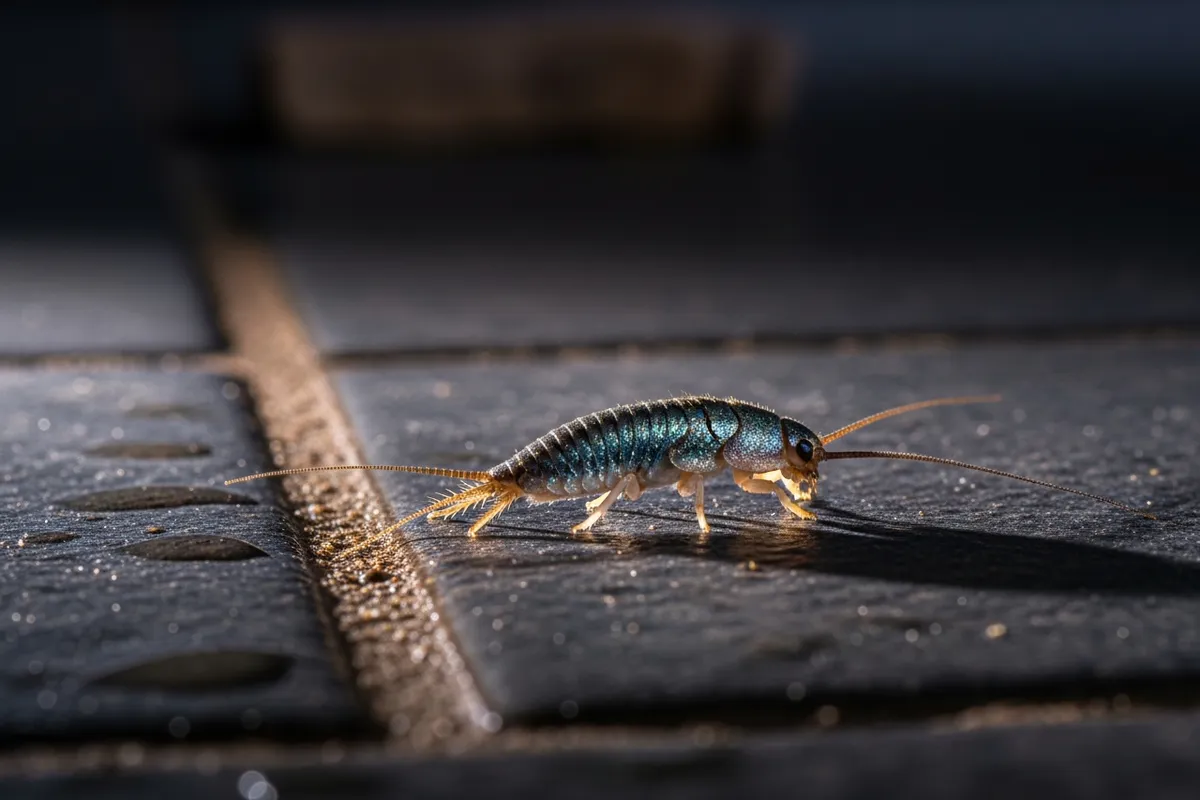
Silverfish are small, wingless, silvery-gray insects with a fish-like wiggle and three long tail filaments. They love damp, dark spaces – basements, bathrooms, under sinks, and inside cardboard boxes – where they feed on paper, glue, starches, and stored fabrics. They’re harmless to people but can quietly damage books, photos, and stored keepsakes over time.
Identification
The common silverfish (Lepisma saccharina) is about a half-inch to three-quarters of an inch long as an adult, with a tapered, carrot-shaped body covered in fine, metallic silver scales. Three long bristle-like appendages extend from the rear, with two longer antennae sweeping from the head – giving them an unmistakable look. They run with a quick, side-to-side wiggle that resembles a tiny fish on land. People sometimes confuse them with firebrats, which prefer hot environments like attics and look slightly more mottled brown. Both belong to a primitive order of insects that have been around essentially unchanged for millions of years. Silverfish are wingless, can’t jump, and rely on speed and tight crevices to escape.
Where Silverfish Live in Utah and Florida
Silverfish thrive wherever it’s humid and dark, which gives Central Florida especially favorable conditions year-round. In Utah, drier outdoor air keeps overall populations smaller, but they still settle in microclimates that hold moisture – bathrooms, basements, laundry rooms, kitchen sink cabinets, and crawl spaces. They’re most often found in undisturbed storage areas: cardboard boxes of old books, photo albums, paper records, holiday decorations, and stored linens. Roof leaks, plumbing condensation, and poorly ventilated bathrooms create exactly the pockets they need. Outdoors, they may shelter under mulch, stones, or wood debris, but they tend to stay close to structures.
Why They Get Into Homes
Silverfish are drawn in by humidity and held there by food. They feed on starches and polysaccharides, which is a fancy way of saying they eat paper, book bindings, wallpaper paste, cardboard, dried pasta, cereal residue, photographs, and even some natural fibers like cotton and silk. Glue on book spines and the backs of postage stamps is a known favorite. They prefer to feed undisturbed, so storage areas that don’t get touched for months are ideal. Many infestations actually arrive when silverfish hitchhike in on cardboard boxes or stored paper goods from a previous home, garage, or storage unit, then settle in wherever the humidity stays high enough.
Signs You Have a Silverfish Problem
Because silverfish are nocturnal and quick to hide, the evidence is often easier to find than the bugs:
- Live silverfish darting away when you move a stored box or turn on a bathroom light
- Tiny pepper-like droppings on shelves, in drawers, or inside boxes
- Yellowish stains, holes, or notched edges on paper, photos, or wallpaper
- Damaged book bindings, especially around the glued spine
- Shed skins – pale, papery, and translucent – in storage areas
- Chewed cardboard boxes and frayed natural-fiber fabrics
- Activity concentrated in humid rooms like bathrooms, laundry rooms, and basements
What’s the Damage?
Silverfish don’t bite, sting, or transmit disease, and they aren’t a meaningful health threat. The real cost is to stored belongings. A long-running silverfish population can quietly damage old books, family photos, important documents, vintage wallpaper, and stored fabrics – items that often can’t be replaced. They can also contaminate dry pantry goods like flour, oats, and cereal if those are stored in flimsy packaging. Most damage builds up slowly over months or years, which is why people often don’t notice the problem until they pull out a long-stored box and find chewed pages or a thriving population inside.
How to Prevent Silverfish Around Your Home
Silverfish prevention is mostly about removing the humidity they depend on:
- Run a dehumidifier in basements, crawl spaces, and chronically damp rooms
- Use bathroom exhaust fans during and after showers
- Repair roof leaks, plumbing drips, and condensation issues quickly
- Store books, photos, and important papers in sealed plastic bins instead of cardboard
- Keep pantry staples like flour, cereal, and pet food in airtight containers
- Seal cracks along baseboards, around pipes, and behind cabinets
- Vacuum and rotate stored items periodically so harborage doesn’t sit undisturbed
- Improve ventilation in attics and crawl spaces to keep humidity down
When to Call a Professional
Light silverfish activity often responds well to dehumidifying and decluttering, but persistent populations – especially in finished basements, multi-room sightings, or homes with chronic moisture issues – usually need help. A professional treatment targets harborage areas with appropriate products and helps identify the moisture conditions feeding the problem. Learn more about our pest control services. Request a free quote.