
If you see one scorpion, are there more? Often there are, though not always. One Arizona bark scorpion in the house can be a stray wanderer or the first sign of a scorpion infestation, and a few quick checks will tell you which. Homeowners across Washington County can also get help from Scorpion Control in St. George.
By Green Defense Pest Team
If You See One Scorpion, Are There More?
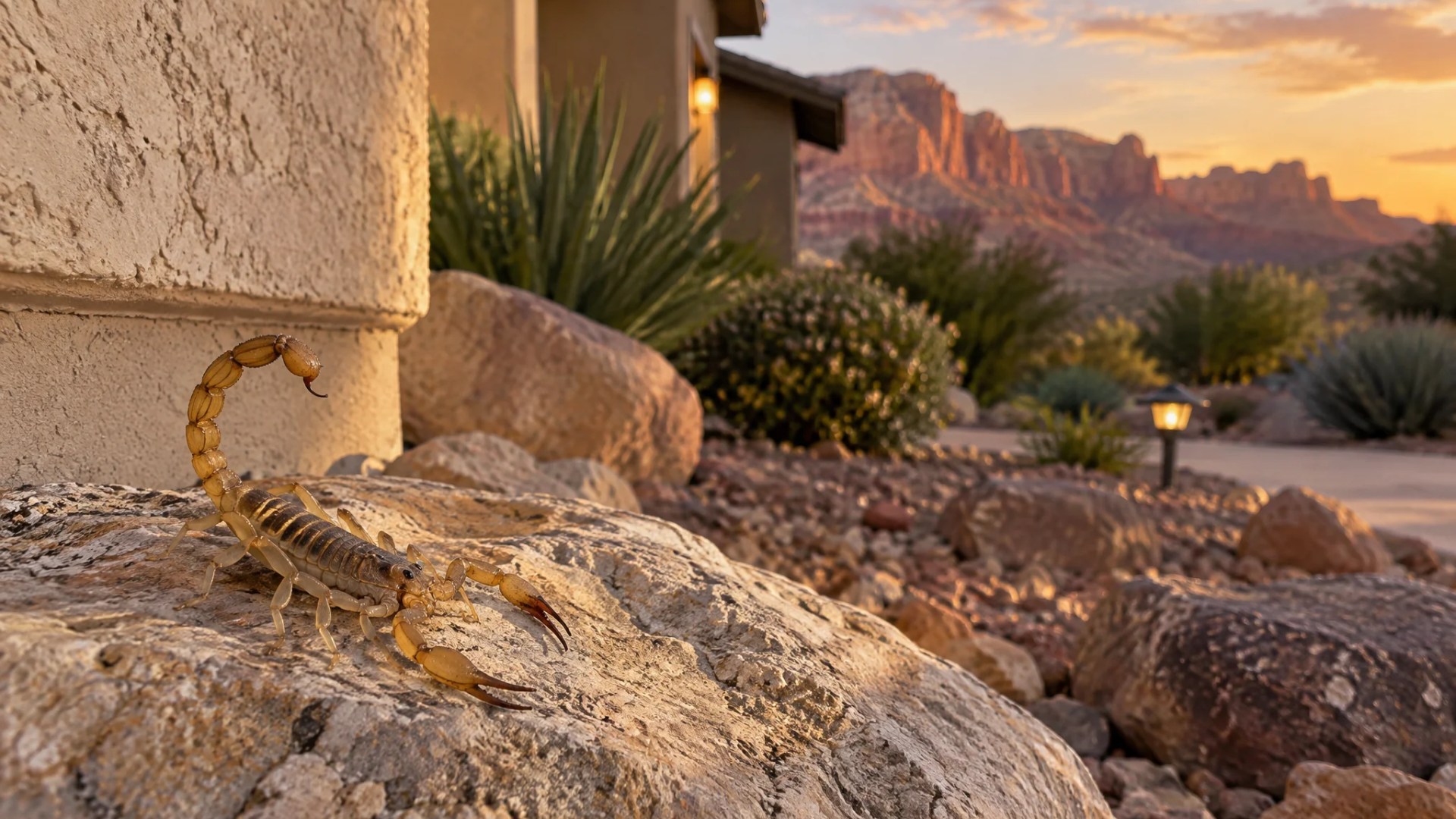
It is the question behind every call that starts with “I found a scorpion in my house, are there more?” The honest answer is maybe. Scorpions hunt at night and hide in cracks by day, so the one you spotted was simply caught out in the open. The Arizona bark scorpion is the species we focus on in Washington County, and it is the most venomous scorpion in the United States. Take a sighting seriously, but do not panic.
Where there is one scorpion, are there usually more nearby?
Often, yes. A yard with rock landscaping, block walls, wood piles or stucco gaps that sheltered one scorpion usually shelters a few more. Bark scorpions are also more social than most scorpion types, so finding one can mean others are sharing a hiding spot close by.
Can one scorpion in the house just be a fluke?
Yes. A single scorpion can follow a cricket through a gap under the garage door, ride in on firewood or a potted plant, or wander in after yard work stirs up its hiding place. If you see one scorpion, are there more? In a true fluke the answer is no, and the proof is a quiet month afterward with no second sighting and no wave of roaches or crickets.
Does One Scorpion Mean You Have an Infestation?
By itself, no. If you see one scorpion, are there more? Only repeat sightings can answer that. A scorpion infestation means a breeding population lives on your property or in the home, and it shows up as repeat sightings over days or weeks. Two or more scorpions in a month, scorpions in different rooms, or scorpions of clearly different sizes all point toward a population. A single scorpion in the garage that you never see again does not.
Do scorpions live in groups or nests?
Scorpions do not build nests. They use hiding spots such as crevices, burrows, the underside of rocks and bark, gaps in block walls and, indoors, wall voids, attics and garages. Most scorpion species live alone, but the Arizona bark scorpion is known to gather, with several sharing one crevice, especially in cooler weather.
Are scorpions usually alone or in groups?
Most scorpions hunt and live alone. Bark scorpions break that pattern more often, so one bark scorpion is a weaker all-clear than a single scorpion of another species.
How many scorpions is an infestation?
There is no fixed number. Homes that see a scorpion once or twice a year are usually dealing with strays. Homes where scorpions show up every week or two often have a scorpion infestation living in the walls, attic, garage or landscaping along the foundation.
Does finding a baby scorpion mean there is a nest inside?
There is no nest, but a baby is a stronger signal than a lone adult. Female scorpions give birth to live young, and baby scorpions ride on her back for a short time, so a baby means an adult female and her litter have been living close by.
What Are Scorpions Attracted to in the House?
Scorpions come in for three reasons: food, shelter and easy access.
Food sources. Scorpions eat crickets, roaches, spiders and other insects, and a house with steady bugs is a buffet of easy prey. Cutting down bugs with regular pest control matters as much as sealing gaps, and when roaches are the draw, Cockroach Control in St. George removes that food source.
Shelter. Decorative rock, mulch, wood piles, block walls, stacked pots and clutter along the foundation all give scorpions daytime cover. Indoors, scorpions look for moisture around bathrooms, kitchens and laundry rooms, where leaky pipes and damp cabinets attract the insects they hunt.
Entry points. Bark scorpions can squeeze through very narrow gaps and climb rough surfaces like stucco. Common entry points include:
- Gaps under exterior doors and garage doors
- Worn weatherstripping around doors and windows
- Openings around plumbing, AC lines and utility penetrations
- Cracks in stucco and gaps at the foundation line
- Dryer, attic and crawlspace vents with torn or missing screens
To prevent scorpions, start by working to seal entry points: close gaps, replace worn weatherstripping and repair torn screens. Then move wood piles and debris away from the walls and cut down on insects.

How Can I Tell How Many Scorpions Are on My Property?
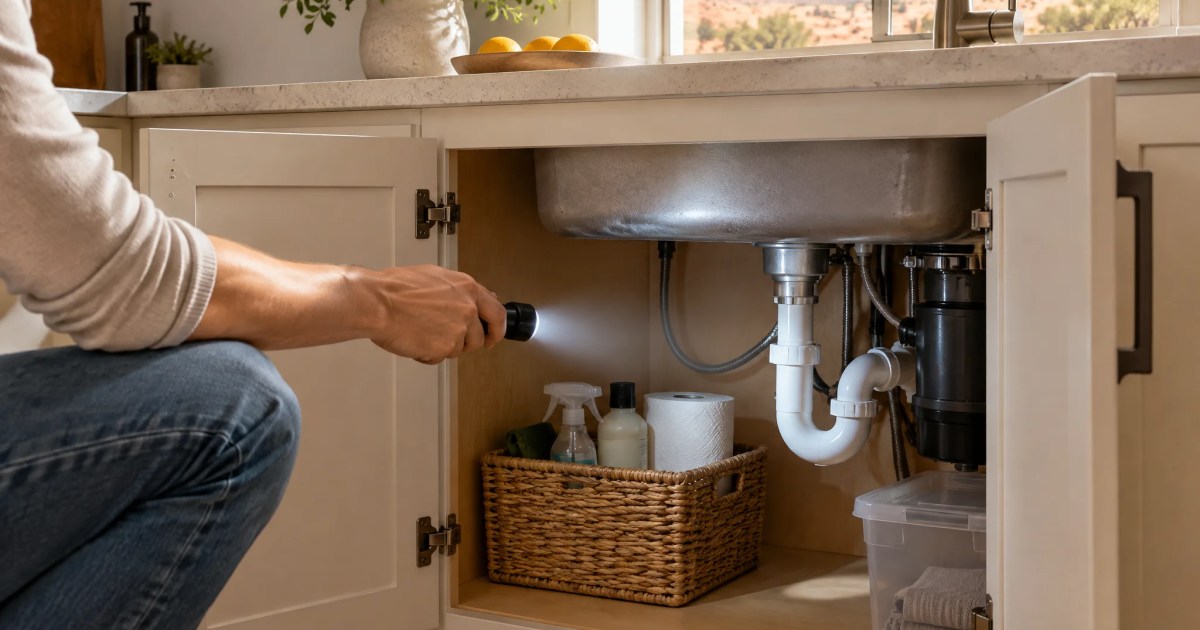
You cannot get an exact count, but you can get a useful read in a few evenings. Scorpions glow under ultraviolet (UV) light because their exoskeletons fluoresce, so a UV flashlight, often called a blacklight, makes them easy to spot in the dark.
- After dark, walk the outside of the house slowly with a UV flashlight. Check the foundation line, block walls, door thresholds and the edges of landscape rock. Wear closed shoes and keep your hands out of crevices.
- Scan the garage, baseboards, window sills, closets, bathrooms and kitchens the same way.
- Place sticky traps along garage walls and near exterior doors. Traps show where scorpions travel, though they will not solve the problem.
- Keep a simple log for two weeks: date, room or yard spot, size, and which traps caught anything.
Zero or one scorpion over those two weeks usually means a stray. Several scorpions in different spots, or repeat catches in the same place, mean a population is nearby. So if you see one scorpion, are there more? The log answers that with evidence instead of guesses.
What to Do After You Find a Scorpion in Your Home
What should I do right after I find a scorpion in my house?
Move fast, but stay calm.
- Keep kids and pets back, and never grab it with bare hands.
- Cover it with a glass jar, slide stiff paper underneath and seal it in, so it can be identified later.
- Check shoes, towels, bedding and laundry piles before using them for the next few days.
- Write down where and when you found it.
- If someone is stung, call Poison Control at 1-800-222-1222 right away.
When should I call a pest control company for scorpions?
Call professionals if any of these are true:
- You have seen a second scorpion within a few weeks
- You found a baby scorpion
- A scorpion turned up in a bedroom or a child’s room
- Your UV walk turned up more than one
- Your sticky traps keep catching scorpions
- You also have roaches, crickets or other insects inside the home
A good pest control plan for scorpions looks at the outside of the property, the entry points and the food sources, since those decide whether scorpions keep coming back. At Green Defense Pest Control, treatments are family and pet safe and eco-friendly, and the re-service guarantee reads: “If pests come back between visits, so do we, free.” Our professionals are licensed and insured in Utah (UT #4000-2553).
FAQ
Is it normal to find a scorpion in the house in Southern Utah?
It is common. Desert yards, rock landscaping and warm weather give scorpions plenty of places to live, and a few wander indoors now and then. A single sighting is normal. Repeated sightings in the same week or the same room point to a bigger problem worth checking.
Can scorpions climb walls and get into beds?
Bark scorpions are strong climbers and can scale rough surfaces like stucco, block walls and brick. They can reach a bed if the sheets hang to the floor or the frame touches a wall. Keeping bedding off the floor, pulling beds slightly away from walls and shaking out shoes and towels lowers the odds of a surprise.
How dangerous is a scorpion sting to kids and pets?
Most scorpion stings cause pain, numbness or tingling and pass without lasting harm, but the Arizona bark scorpion’s sting can be serious for small children and older adults. Pets can be stung too, often on the nose or paws. Call Poison Control at 1-800-222-1222 after any sting, and call 911 for trouble breathing, muscle twitching or severe symptoms.
Does seeing a scorpion during the day mean there is a nest?
Not necessarily. Scorpions do not build nests, and a daytime sighting usually means one was disturbed from its hiding spot or wandered into the open. Still, check the area after dark with a UV flashlight to see whether others are around.
Can you kill a scorpion with a shoe?
You can, but it is not the safest move. Bark scorpions are small and quick, and swatting at one puts your hands and feet close to a sting. Covering it with a glass jar is safer, and it lets you identify the scorpion afterward.
Does killing a scorpion attract more?
Not that we know of. What draws more scorpions is the same food, shelter and entry points that drew the first one, so a dead scorpion does not fix the cause. Cutting down insects, sealing gaps and clearing debris from the foundation do.
Get Scorpion Sightings Checked at Your Home
If scorpions are showing up in your home, call (385) 349-0945 and we can often offer same-week service across Southern Utah. You can also reach our Hurricane office through the Contact Us page.