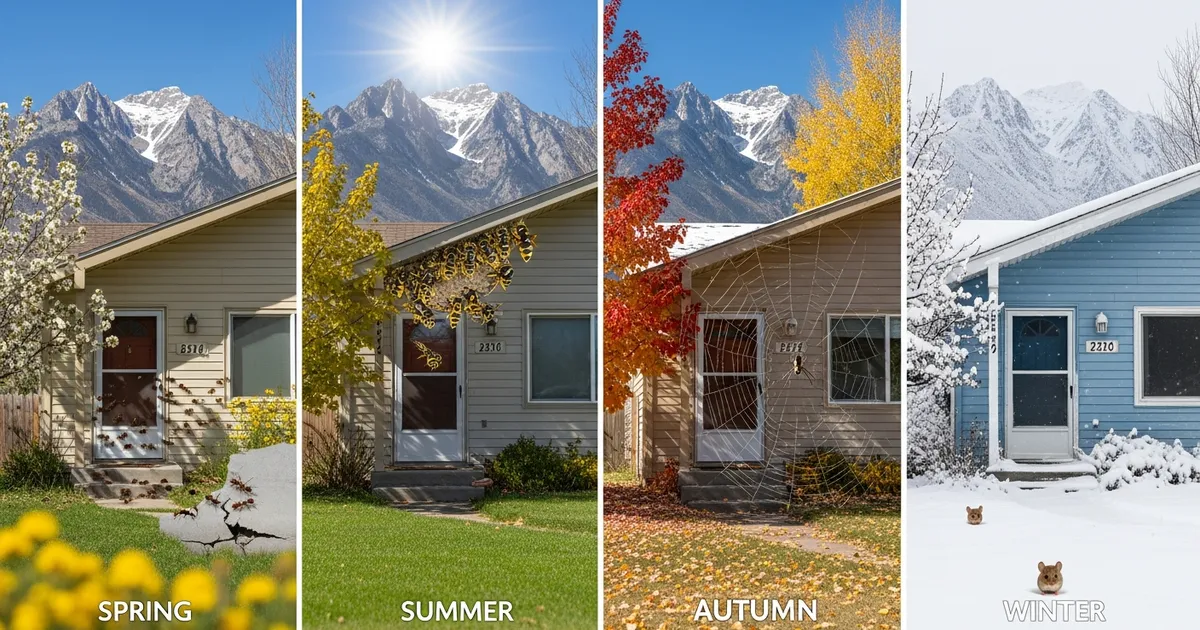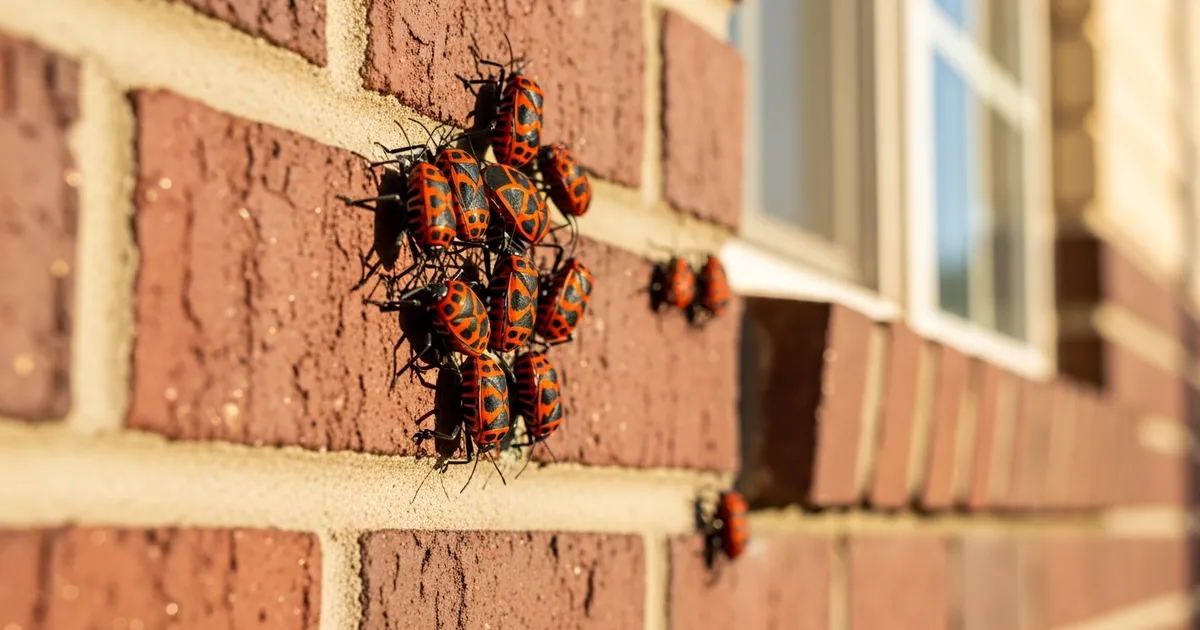

Box elder bugs are those black-and-red insects that pile up on sunny walls every fall across Northern and Central Utah. They don’t bite, sting, or damage homes, but when hundreds gather on siding or sneak indoors through window gaps, they become a real nuisance. A professional pest control treatment timed before fall clustering keeps them from turning your warm, south-facing wall into their winter resort.
Identification
Adult box elder bugs (Boisea trivittata) are about a half-inch long, flat, and elongated, with charcoal-black bodies marked by three distinct red or orange stripes behind the head and red lines outlining the wings. Nymphs are bright red with darker legs and develop wing pads as they mature. The combination of black wings folded over a red abdomen is unmistakable up close. People sometimes confuse them with the smaller western conifer seed bug or the milkweed bug, but neither shows the same three-stripe pattern on the thorax. You’ll often see a mix of bright red juveniles and dark adults clustered together on the same sunny wall, which is a giveaway you’re dealing with box elders rather than a look-alike.
Where Box Elder Bugs Live in Utah
Box elder bugs thrive across Northern and Central Utah, particularly along the Wasatch Front and in valleys with established box elder, maple, and ash trees. They feed on the seeds of female box elder trees in summer, then migrate toward homes as nights cool down. South- and west-facing walls catch the most afternoon sun, and that’s where you’ll find the heaviest clusters. They squeeze into siding seams, under shingles, around window frames, and into attic vents, where they spend the winter in a sluggish, semi-dormant state. Warm winter days can stir them back into the living spaces of a home, which is when most homeowners first notice them indoors.
Why They Get Into Homes
Two things drive box elder bugs toward houses: warmth and shelter. Once temperatures start dropping in September, they leave host trees in search of insulated overwintering spots, and a sun-baked wall is irresistible. Homes near female box elder trees, silver maples, or ash trees see the heaviest pressure, since those are the seed sources they feed on through summer. Light-colored siding, stone, and stucco hold heat well and tend to attract larger gatherings. Once a few bugs find a gap under flashing or around a window, their scent trail draws more in. They’re not feeding on anything inside the home – they’re just looking for a quiet place to wait out winter.
Signs You Have a Box Elder Bug Problem
Box elder bugs are easy to spot once you know what to look for:
- Clusters of black-and-red insects on sunny exterior walls in fall
- Bugs gathering around window frames, door trim, and soffits
- Reddish-brown stains on siding, curtains, or light-colored fabric where they’ve been crushed
- Live bugs wandering across windowsills indoors on warm winter days
- Dead bugs accumulating in attics, light fixtures, and window tracks
- A faint, unpleasant odor when large numbers are disturbed
- Repeat appearances in the same rooms each spring as overwintering bugs wake up
What’s the Damage?
Box elder bugs don’t bite people, don’t sting, and don’t reproduce indoors. They won’t chew through wood, fabric, or wiring, and they don’t carry disease. The real damage is cosmetic and aesthetic: their droppings leave reddish-brown stains on siding, curtains, and upholstered furniture, and crushed bugs leave the same staining behind. Large indoor populations can also produce a musty smell. For most homeowners, the main complaint is simply how many of them show up at once and how persistently they return year after year if entry points aren’t sealed.
How to Prevent Box Elder Bugs Around Your Home
Prevention is mostly about sealing the home before fall clustering begins:
- Seal cracks and gaps on south- and west-facing walls before September
- Caulk around window frames, door trim, utility penetrations, and pipe entries
- Replace damaged or torn window screens and add screens to attic and gable vents
- Install door sweeps on exterior doors, including the garage
- Consider removing female box elder trees within 50 feet of the home – only female trees produce the seeds the bugs feed on
- Vacuum up indoor invaders rather than crushing them, since crushing releases stains and odor
- Schedule an exterior perimeter treatment in late summer to break the clustering cycle before it starts
When to Call a Professional
If you’re seeing dozens or hundreds of box elder bugs on the same wall every fall, or if they’re showing up indoors all winter, it’s time to bring in a pro. Sealing alone often isn’t enough once a home has been a known overwintering site for a few seasons. Green Defense uses targeted, eco-friendly exterior treatments timed to the fall migration so the bugs are intercepted before they ever reach your walls. Request a free quote and we’ll build a plan around your home’s exposure.