
Living in Orlando means enjoying beautiful weather year-round. It also means dealing with mosquitoes that never truly go away. Unlike northern states where cold winters kill mosquito populations, Central Florida’s subtropical climate allows these pests to breed continuously throughout the year.
The good news? You don’t have to surrender your backyard to buzzing swarms. With the right prevention strategies and understanding of local mosquito behavior, you can reclaim your outdoor spaces and protect your family from these disease-carrying pests.
Understanding Orlando’s Mosquito Population
Central Florida hosts over 80 different mosquito species, making it one of the most mosquito-dense regions in the United States. The warm, humid climate combined with frequent afternoon thunderstorms creates perfect breeding conditions year-round.
The most problematic species in the Orlando area include:
- Aedes aegypti (Yellow Fever Mosquito) – Active during daylight hours, breeds in small containers, carries Zika and dengue
- Aedes albopictus (Asian Tiger Mosquito) – Aggressive biters, breeds in artificial containers, active day and night
- Culex quinquefasciatus (Southern House Mosquito) – Primary West Nile virus carrier, most active at dusk and dawn
- Anopheles quadrimaculatus (Common Malaria Mosquito) – Breeds in permanent water sources, historically carried malaria
- Psorophora columbiae (Dark Rice Field Mosquito) – Painful bites, breeds in flooded areas after heavy rains
Each species has different breeding habits and peak activity times. Understanding which species you’re dealing with helps target your prevention efforts more effectively.
Download a mosquito identification app or keep a photo guide handy. Different species require different control approaches. Aedes mosquitoes breed in tiny amounts of water (bottle caps, plant saucers), while Culex prefer larger, stagnant pools.
Peak Mosquito Season in Central Florida
While mosquitoes remain active year-round in Orlando, population peaks occur during specific seasons. Understanding these patterns helps you time your prevention efforts for maximum effectiveness.
Peak Season: April through October
This period sees the highest mosquito activity due to:
- Increased rainfall and humidity
- Warmer temperatures accelerating breeding cycles
- Longer daylight hours extending activity periods
- More outdoor human activity providing blood meal opportunities
Moderate Season: November through March
Cooler temperatures slow mosquito development but don’t eliminate them entirely. Many species enter a state called diapause, similar to hibernation, but can become active again during warm spells.
| Month | Activity Level | Key Species | Prevention Focus |
|---|---|---|---|
| January-February | Low | Culex species | Maintain existing controls |
| March-April | Increasing | All species | Begin intensive prevention |
| May-July | Peak | Aedes, Culex | Maximum prevention efforts |
| August-October | High | All species | Continue all methods |
| November-December | Decreasing | Culex species | Reduce but maintain basics |
Eliminating Standing Water: Your First Line of Defense
Standing water elimination is the most critical mosquito prevention strategy for Orlando homeowners. Mosquitoes can complete their entire life cycle in as little as 7-10 days in Florida’s warm climate, making regular water source removal essential.
Weekly Water Source Inspection Checklist
Perform this inspection every 7 days without exception:
- Gutters and downspouts – Clean out leaves and debris that create water-holding pockets
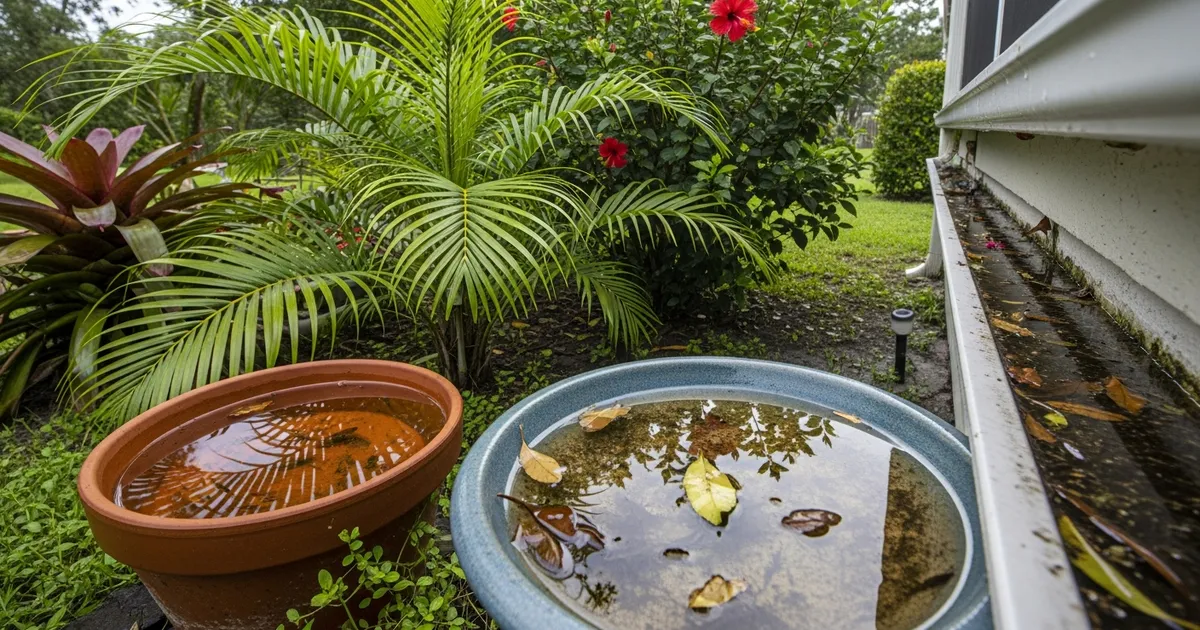
- Plant saucers and pot bases – Empty or drill drainage holes in decorative containers
- Birdbaths – Change water every 3-4 days, scrub sides to remove eggs
- Pet water bowls – Refresh daily, especially outdoor bowls
- Wheelbarrows and tools – Store upside down or empty after each use
- Pool covers and tarps – Remove standing water pockets, ensure proper drainage
- Air conditioning condensation – Direct drain lines away from foundation
- Trash can lids – Store upside down or drill small drainage holes
Hidden Water Sources Around Orlando Homes
Orlando’s frequent afternoon thunderstorms create temporary breeding sites that many homeowners overlook:
- Tree holes and stumps that collect rainwater
- Clogged storm drains in neighborhoods like Baldwin Park or Windermere
- Irrigation system catch basins and valve boxes
- Decorative fountains that aren’t properly maintained
- Boat covers and RV storage areas common in lake communities
- Swimming pool equipment covers and filter housings
Never use household bleach or chemicals in natural water features. These can harm beneficial wildlife and may not be effective against mosquito larvae. Instead, use mosquito dunks containing Bacillus thuringiensis israelensis (BTI), which is safe for pets, wildlife, and humans.
Landscaping and Yard Maintenance for Mosquito Control
Your landscaping choices significantly impact mosquito populations around your Orlando home. Strategic plant selection and maintenance practices create an environment less favorable to mosquitoes while maintaining the tropical beauty Central Florida is known for.
Mosquito-Repelling Plants for Florida Gardens
These plants naturally produce compounds that mosquitoes find unpleasant:
- Citronella grass (Cymbopogon nardus) – Thrives in Florida humidity, plant in large clusters for effectiveness
- Marigolds (Tagetes species) – Annual flowers that contain pyrethrum, plant borders around patios
- Lavender (Lavandula species) – Choose heat-tolerant varieties, requires well-draining soil
- Peppermint (Mentha piperita) – Aggressive spreader, contain in pots or designated areas
- Rosemary (Rosmarinus officinalis) – Drought-tolerant once established, works well in xeriscaped areas
- Catnip (Nepeta cataria) – More effective than DEET according to some studies, but attracts cats
Yard Maintenance Practices
Weekly Tasks (Peak Season):
- Mow grass to 3-inch height maximum – shorter grass reduces resting areas
- Trim shrubs and bushes to improve air circulation
- Remove fallen leaves and organic debris where moisture collects
- Clean pool and spa filters, maintain proper chlorine levels
Monthly Tasks:
- Prune overhanging branches that create shaded, humid microclimates
- Apply fresh mulch to prevent water pooling on soil surface
- Inspect and clean outdoor lighting fixtures that may collect water
- Check irrigation systems for leaks or overwatering issues
Install motion-activated fans on patios and decks. Mosquitoes are weak fliers and struggle in air currents over 1-2 mph. A simple oscillating fan can make outdoor dining areas virtually mosquito-free during peak activity hours.
Physical Barriers and Home Modifications
Creating physical barriers between mosquitoes and your family provides immediate protection while other control methods take effect. These modifications are particularly important for Orlando homes with screened porches and outdoor living areas.
Screen Installation and Maintenance
Proper screening is crucial for Florida homes:
- Mesh size: Use 18×14 mesh or finer (18 holes per inch horizontally, 14 vertically)
- Screen doors: Install self-closing mechanisms and door sweeps to eliminate gaps
- Pool cages: Inspect for tears monthly, patch immediately with screen repair kits
- Vent screens: Install over attic vents, exhaust fans, and foundation vents
Monthly Screen Inspection Points:
- Check corners and edges where screens meet frames
- Look for tears from storm damage or wildlife
- Ensure screens fit tightly with no gaps larger than 1/8 inch
- Replace worn weatherstripping around screen doors
Door and Window Modifications
Small gaps around doors and windows provide entry points for mosquitoes:
- Install door sweeps on all exterior doors
- Apply weatherstripping around window frames
- Consider storm doors with built-in screens for frequently used entrances
Professional Barrier Treatments: When and Why
Professional barrier treatments provide comprehensive mosquito control that goes beyond what homeowners can achieve with DIY methods. These treatments target mosquito resting and breeding areas with precision applications that last 30-45 days.
Barrier treatments work by applying EPA-approved insecticides to vegetation, structures, and other surfaces where adult mosquitoes rest during the day. When mosquitoes land on treated surfaces, they absorb the active ingredient and die within hours.
How Professional Treatments Work
Treatment Process:
- Property inspection (15-20 minutes) – Identify breeding sources, resting areas, and high-activity zones
- Source reduction consultation – Point out overlooked water sources and provide elimination guidance
- Perimeter application (30-45 minutes) – Treat vegetation, structures, and hardscapes where mosquitoes rest
- Follow-up scheduling – Plan return visits every 30-45 days during peak season
Target Application Areas:
- Under decks and covered patios
- Dense vegetation and shrub borders
- Fence lines and property perimeters
- Around air conditioning units and utility areas
- Tree canopies and overhanging branches
Schedule your first professional treatment in early April, before mosquito populations peak. Starting early in the season provides better long-term control and reduces the overall mosquito population in your immediate area.
Timing Professional Treatments
Optimal treatment timing for Orlando area:
- April-May: Begin monthly treatments as temperatures consistently reach 80°F+
- June-September: Continue monthly applications during peak season
- October: Final treatment of the year, may extend protection into November
- November-March: Spot treatments only if needed during warm spells
DIY Mosquito Control Methods
While professional treatments provide the most comprehensive control, several DIY methods can supplement your mosquito prevention efforts between professional visits.
Natural and Organic Options
Essential Oil Sprays:
- Peppermint oil: Mix 10-15 drops per cup of water, spray around entry points
- Eucalyptus oil: Effective for 2-3 hours, reapply frequently
- Tea tree oil: Natural antiseptic properties, use sparingly (strong scent)
Homemade Traps:
- Sugar and yeast trap: Mix 1 cup warm water, 1/4 cup brown sugar, 1 gram yeast in 2-liter bottle
- Soapy water trap: Place shallow dishes of soapy water near breeding areas
- Beer trap: Stale beer in shallow containers attracts and drowns mosquitoes
Avoid bug zappers and propane-powered mosquito traps in residential areas. These devices often kill beneficial insects like butterflies and bees while having minimal impact on mosquito populations. They may even attract more mosquitoes to your property.
Commercially Available Products
Mosquito Dunks and Granules:
- BTI-based products safe for pets and wildlife
- Effective for 30 days in standing water
- Use in rain barrels, ornamental ponds, and bird baths
Perimeter Granules:
- Apply around foundation and landscape beds
- Activated by moisture from rain or irrigation
- Reapply every 30 days during peak season
Personal Protection Strategies
Even with excellent property-wide mosquito control, personal protection remains important during peak activity periods and when venturing into areas with higher mosquito populations.
Effective Repellents for Florida Mosquitoes
| Active Ingredient | Protection Duration | Effective Against | Best Use |
|---|---|---|---|
| DEET (20-30%) | 4-6 hours | All mosquito species | Extended outdoor activities |
| Picaridin (20%) | 8-12 hours | All mosquito species | Long-term protection, less odor |
| IR3535 (20%) | 4-6 hours | Most species | Sensitive skin, children over 2 |
| Oil of lemon eucalyptus | 2-4 hours | Most species | Natural option, frequent reapplication |
Clothing and Activity Modifications
Peak Activity Times to Avoid:
- Dawn (5:30-7:30 AM): Culex species most active
- Mid-morning (9:00 AM-12:00 PM): Aedes species peak activity
- Dusk (6:00-8:30 PM): Highest overall mosquito activity
Protective Clothing Choices:
- Long sleeves and pants in light colors
- Loose-fitting clothing reduces skin contact
- Avoid dark colors and floral patterns
- Treat clothing with permethrin-based products
Special Considerations for Orlando Neighborhoods
Different Orlando area neighborhoods face unique mosquito challenges based on geography, development patterns, and proximity to water sources.
Lake Communities (Windermere, Dr. Phillips, Bay Hill)
Homes near lakes face additional challenges:
- Higher humidity creates more breeding opportunities
- Natural water sources support larger mosquito populations
- Lake effect weather patterns increase afternoon storm frequency
- Waterfront vegetation provides ideal resting areas
Additional strategies for lake homes:
- Install fans on waterfront decks and docks
- Maintain 10-foot vegetation-free zone around water access points
- Consider professional treatments every 21 days instead of monthly
- Use BTI products in decorative water features and rain gardens
Suburban Developments (Baldwin Park, Celebration, Winter Garden)
Planned communities with retention ponds and extensive landscaping:
- Community retention ponds can become breeding sources
- Irrigation systems may create temporary standing water
- Dense landscaping provides numerous resting areas
- HOA restrictions may limit some control options
Community-focused approaches:
- Work with HOA to implement community-wide mosquito management
- Coordinate with neighbors on treatment timing
- Report retention pond issues to community management
- Advocate for mosquito-conscious landscaping in common areas
How Green Defense Handles Orlando Mosquito Control
Green Defense Pest Control takes a comprehensive, science-based approach to mosquito management in Central Florida. Our Orlando-area technicians understand the unique challenges posed by Florida’s year-round breeding season and diverse mosquito species.
Our Complete Mosquito Protection Process:
Step 1: Comprehensive Property Assessment
Our licensed technicians conduct a thorough 20-point inspection of your property, identifying current and potential breeding sources. We document problem areas with photos and provide a detailed elimination plan for standing water sources you can address yourself.
Step 2: Customized Treatment Plan
Based on your property’s specific challenges, mosquito species present, and family lifestyle, we develop a targeted treatment strategy. This includes identifying optimal treatment zones, scheduling recommendations, and integrated prevention strategies.
Step 3: Professional Barrier Application
We apply EPA-approved barrier treatments to vegetation, structures, and surfaces where mosquitoes rest during daylight hours. Our treatments target the undersides of leaves, fence lines, deck areas, and other mosquito harboring spots that DIY methods typically miss.
Step 4: Ongoing Monitoring and Adjustment
Mosquito populations change throughout the season. We monitor treatment effectiveness and adjust our approach based on weather patterns, mosquito activity levels, and new breeding sources that may develop on your property.
Pricing and Service Options:
- Monthly Service (April-October): $89-129 per treatment depending on property size
- Bi-weekly Service (Peak Season): Available for properties with severe infestations
- One-time Treatment: $149-199 for special events or immediate relief
- Annual Service Plans: Save 15% with prepaid seasonal packages
Our treatments typically provide 30-45 days of effective mosquito reduction, with many customers reporting 80-90% fewer mosquitoes in treated areas. We guarantee our work and will return at no charge if mosquito activity returns within 30 days of treatment.
Combine professional barrier treatments with consistent standing water elimination for best results. Customers who maintain weekly water source inspections see 40-50% better long-term control than those who rely on treatments alone.
Monitoring and Measuring Success
Effective mosquito control requires ongoing monitoring to assess the success of your prevention efforts and identify areas needing improvement.
DIY Monitoring Methods
Weekly Activity Assessments:
- Count mosquitoes during 5-minute dawn or dusk observations
- Note areas of highest activity around your property
- Track bite frequency during outdoor activities
- Monitor for new species or unusual activity patterns
Breeding Source Tracking:
- Photograph problem areas before and after treatments
- Keep a log of water source elimination activities
- Note which areas reaccumulate water most quickly
- Track correlation between rainfall and mosquito increases
Professional Monitoring Tools
Green Defense uses several professional monitoring methods:
- Mosquito surveillance traps: Monitor species composition and population trends
- Larvae sampling: Identify active breeding sources requiring treatment
- Adult landing counts: Measure treatment effectiveness in specific zones
- Customer feedback tracking: Document real-world bite reduction and satisfaction
Long-term Mosquito Management Strategy
Successful mosquito control in Orlando requires a long-term, integrated approach that adapts to seasonal changes, weather patterns, and evolving mosquito populations.
Year-Round Strategy Calendar:
January-February: Plan and prepare for upcoming season, address structural improvements, service equipment
March: Begin intensive water source elimination, schedule first professional treatment
April-June: Implement full prevention program, monitor and adjust strategies
July-September: Peak intensity period, maximum prevention efforts
October-November: Gradual reduction in frequency, focus on persistent problem areas
December: Evaluate season’s success, plan improvements for following year
Investment in Long-term Control:
- Professional treatments: $600-900 annually for average Orlando home
- Landscape modifications: $200-500 one-time investment
- Screen improvements: $150-400 one-time investment
- Personal protection products: $50-100 annually
When you consider that Orlando-area homeowners spend an average of $2,000-3,000 annually on outdoor entertaining and recreation, investing 20-30% of that amount in mosquito control provides significant quality of life returns.
The health benefits extend beyond comfort. With West Nile virus, Eastern Equine Encephalitis, and other mosquito-borne diseases present in Florida, effective mosquito control is a health insurance policy for your family.
Remember that mosquito control is most effective when neighbors coordinate their efforts. Consider organizing a neighborhood-wide approach to mosquito management, sharing costs for professional treatments and working together on community-wide breeding source elimination.
With consistent effort and the right combination of prevention strategies, you can significantly reduce mosquito populations around your Orlando home and reclaim your outdoor living spaces for year-round enjoyment.