
Brown widows have quietly become one of the most common widow spiders in central Florida, often replacing the southern black widow in residential yards. They’re less aggressive and their bite is usually less severe than a black widow’s, but they’re still medically significant and worth taking seriously. You’ll find them tucked under outdoor furniture, inside grills, and around pool equipment.
Identification
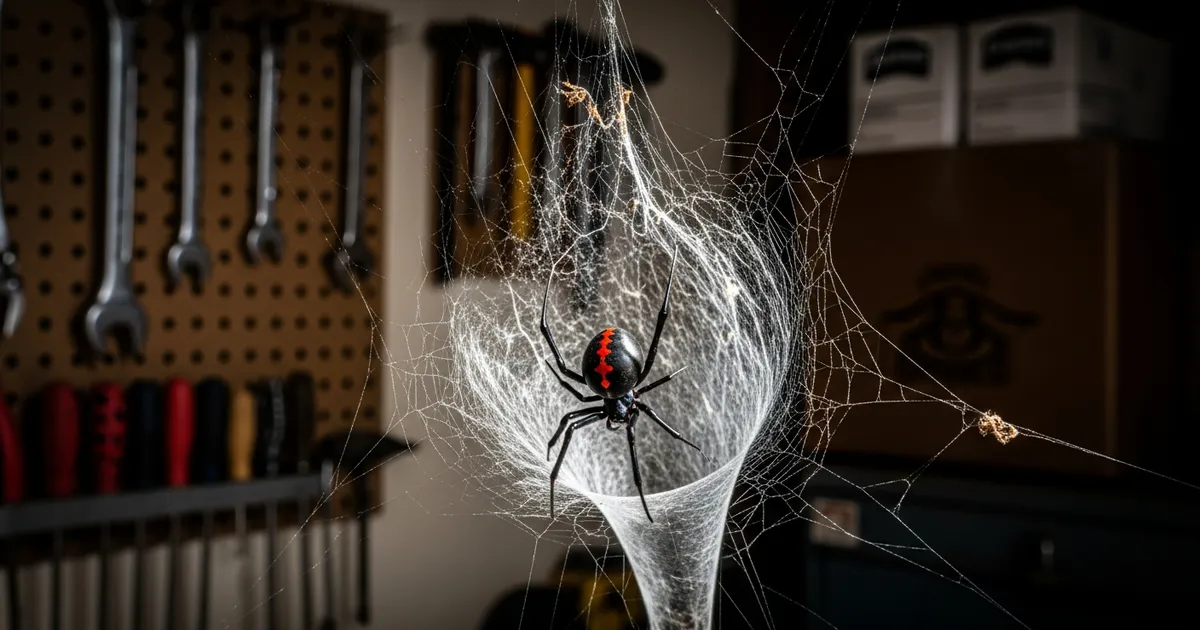
The brown widow (Latrodectus geometricus) has a tan-to-dark-brown body with mottled patterns of black, white, orange, and yellow on the abdomen. Like all widows, females have an hourglass marking on the underside of the abdomen, but on a brown widow it’s typically orange to yellow-orange rather than the vivid red of a black widow. Adult females are about a half-inch long, not counting the legs. Their webs are messy, irregular tangles, similar to a black widow’s but often a bit smaller. The most distinctive identifier is the egg sac: brown widow egg sacs are tan, round, and covered in spiky little projections, almost like a tiny pollen ball or sea urchin. Black widow egg sacs are smooth. If you see those spiky sacs, you’ve got brown widows.
Where Brown Widows Live in Central Florida
Brown widows are well established across central Florida and most of the southeastern United States. They prefer protected, dry, sheltered outdoor spots rather than open habitat. Common hiding places include the underside of patio chairs, the lip beneath outdoor tables, inside empty flowerpots, behind storage bin lids, in mailboxes, under children’s playsets, inside grills that haven’t been opened in a while, around pool pump enclosures, and inside the recessed handles of cars and garage doors. Florida’s warm, humid climate means they’re active year-round, with population peaks in the warmer months when females are laying multiple egg sacs.
Why They Get Around Your Home
Brown widows aren’t seeking food inside your house the way ants or roaches do. They’re looking for tight, undisturbed spaces to build webs and lay eggs, and the exterior of a typical Florida home offers dozens of perfect spots. They eat small flying and crawling insects that get caught in their tangled webs, so any property with active insect populations and lots of clutter is attractive habitat. Outdoor lights that draw insects to the patio also concentrate brown widow prey, which is why so many of them set up under porch furniture and around door frames.
Signs You Have a Brown Widow Problem
Brown widows are secretive, but they leave clear evidence once you know what to look for:
- Spiky, tan-colored egg sacs in tangled webs under furniture or in storage areas
- Messy, irregular webs in the corners of patios, sheds, or pool equipment areas
- Tan-brown spiders hanging upside down in webs, especially in the evening
- Small insect carcasses wrapped in silk under outdoor seating
- Webs in the recessed lip of trash cans, mailboxes, or grills
- Multiple sightings in the same area, since females often cluster
- Webs returning quickly after you knock them down
Health Risks: Honest Assessment
Brown widow venom is chemically similar to black widow venom, but brown widows inject far less of it, and bites are usually milder. Most bites cause localized pain, redness, and swelling that resolves within a day or two. More severe reactions, including muscle cramps, nausea, and elevated blood pressure, can happen, especially in small children, elderly adults, or anyone with underlying health conditions. Brown widows are also less likely to bite than black widows and tend to drop or play dead when disturbed. If you’re bitten and develop spreading pain, abdominal cramping, or systemic symptoms, get medical attention. For most healthy adults, a brown widow bite is unpleasant but not dangerous.
How to Prevent Brown Widows Around Your Home
Brown widows are best controlled by removing the protected spaces they love:
- Shake out and inspect outdoor cushions, chair undersides, and umbrella folds before use
- Knock down webs around the patio, eaves, and outdoor light fixtures regularly
- Store pool equipment, toys, and tools off the ground and check before grabbing
- Empty and stack flowerpots upside down when not in use
- Seal cracks in exterior walls, garage door frames, and around utility penetrations
- Wear gloves when reaching into mailboxes, grills, or storage bins
- Reduce clutter on porches, in sheds, and around pool decks
- Switch porch lights to yellow bulbs to reduce insect prey
When to Call a Professional
If you’re finding spiky egg sacs or seeing brown widows regularly around your patio, pool deck, or playground, professional treatment is the right call, especially if children or pets use the area. A trained tech can identify hot spots, remove webs and egg sacs, and apply targeted residuals where the spiders harbor. Request a free quote and we’ll inspect the typical hiding spots. You can also learn more about our Orlando service area or related pests like the wolf spider.