
Earwigs are the dark, pincered insects you uncover under flowerpots, in mulch, and behind garden hoses. They look alarming, but the urban myth that they crawl into ears at night is exactly that – a myth. They don’t burrow into ears, don’t lay eggs in your brain, and rarely bother people at all. Reducing moisture and harborage handles most cases, and a professional pest control perimeter treatment closes the loop on heavy infestations.
Identification
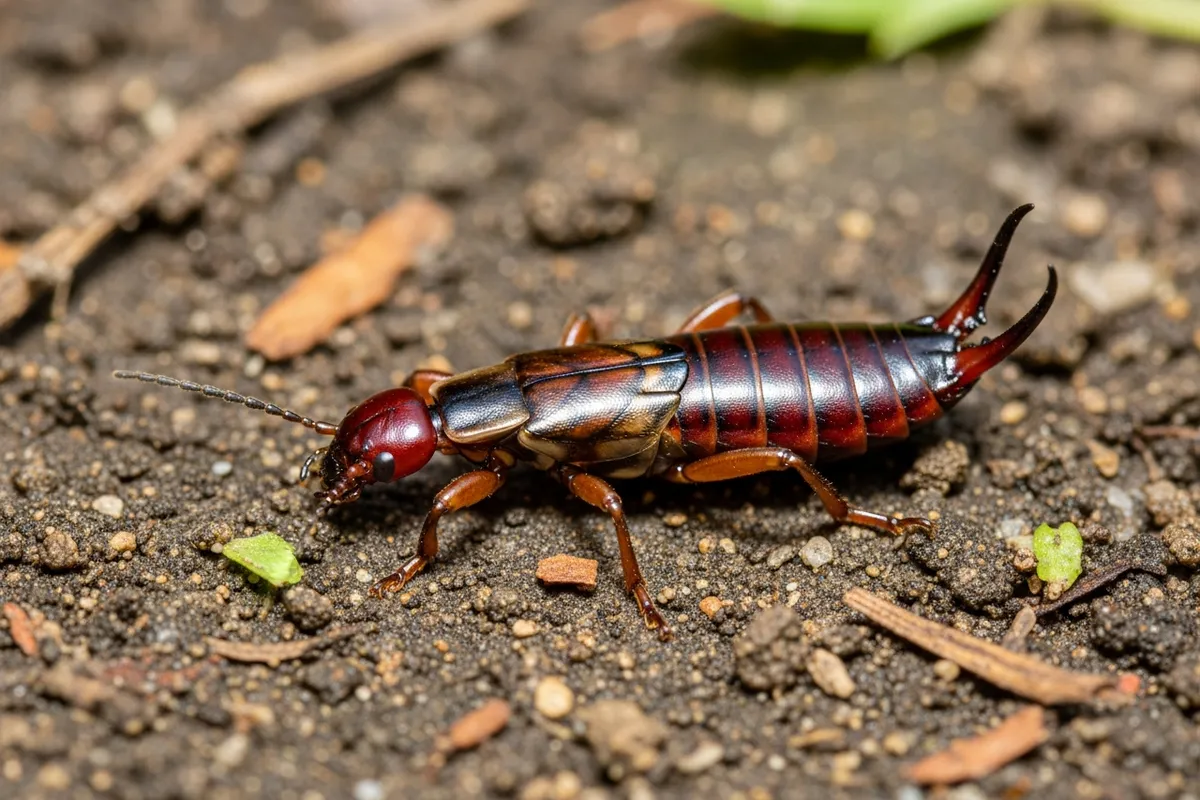
The European earwig (Forficula auricularia) is the species most commonly seen in Utah yards – about a half-inch long, with a flattened, reddish-brown to dark-brown body and the unmistakable pair of pincers (called cerci) at the rear. Males have curved, robust pincers; females have straighter, slimmer ones. They have small wings folded compactly under short wing covers but rarely fly. Nymphs look like miniature, paler adults with proportionally smaller pincers. People sometimes mistake earwigs for rove beetles or small cockroaches, but no other common Utah insect carries those distinctive rear-end pincers, and that single feature is enough for a confident ID at any life stage.
Where Earwigs Live in Utah
Earwigs are common across both Northern and Southern Utah and thrive anywhere there’s moisture and shelter. Their favorite spots include damp mulch beds, under flowerpots, beneath stepping stones, in compost piles, around the base of garden plants, and inside leaf litter. They’re also drawn to irrigation boxes, sprinkler valve covers, and the soil under sod. During the day they hide in tight, dark crevices, then emerge at night to feed on plants, decaying matter, and small insects. In Hurricane and the broader Southern Utah desert, populations cluster heavily around irrigated landscaping and drip systems, since the surrounding arid terrain doesn’t support them as well.
Why They Get Into Homes / What Attracts Them
Earwigs come indoors chasing two things: moisture and refuge. When summer heat dries out the yard, or when irrigation patterns shift, they migrate toward damp foundations, basement window wells, and the cool concrete of garages. Heavy mulch beds touching the foundation are a classic entry route – they essentially lead earwigs straight to the wall. Once at the structure, gaps under doors, around utility penetrations, and through foundation cracks deliver them inside. They’re not feeding on anything in the home and don’t reproduce indoors, but they’ll wander into bathrooms, basements, kitchens, and laundry rooms looking for the same damp conditions they prefer outside.
Signs You Have an Earwig Problem
Earwigs are easy to confirm once you know where to look:
- Earwigs scattering when you lift flowerpots, stepping stones, or mulch
- Live earwigs in bathrooms, basements, laundry rooms, or near sinks
- Irregular, ragged holes chewed into leaves, flower petals, and seedling plants overnight
- Damaged corn silks, soft fruit, and tender vegetable shoots in the garden
- Dark, pellet-like droppings near hiding spots
- Earwigs dropping out of folded patio umbrellas, towels, or outdoor cushions
- Heavy populations in irrigation valve boxes and around drip lines
What’s the Damage?
Despite their fearsome look, earwigs cause limited problems. Those pincers can deliver a tiny pinch if you handle one roughly, but they don’t break skin and aren’t venomous. The myth that they crawl into ears and burrow into the brain is exactly that – a myth, with no factual basis. The actual nuisances are real but mild: chewed seedlings and ornamental plants in the garden, occasional damage to soft fruit like strawberries and apricots, and the simple unpleasantness of finding them in damp corners indoors. They don’t damage structures, don’t eat fabric or stored food in any meaningful way, and don’t carry disease.
How to Prevent Earwigs Around Your Home
Earwig control is mostly about drying out their preferred habitat:
- Reduce moisture around the foundation – fix irrigation overspray and adjust sprinkler heads aimed at the house
- Move mulch, ground cover, and decorative rock back at least a foot from the foundation
- Replace heavy organic mulch directly against the home with a strip of bare gravel or rock
- Try a newspaper trap: roll up damp newspaper, leave it in the garden overnight, and dispose of it in the morning
- Seal gaps under exterior doors with door sweeps and caulk foundation cracks
- Remove leaf litter, woodpiles, and decaying vegetation from around the foundation
- Trim shrubs and ground cover so air circulates and the soil dries between waterings
- Run a dehumidifier in damp basements and crawl spaces
When to Call a Professional
If you’re seeing earwigs in living spaces regularly, or if heavy outdoor populations are damaging gardens and ornamental plants every season, a perimeter treatment is the most efficient fix. Green Defense uses eco-friendly products applied at foundation level, around irrigation boxes, and in mulch beds where earwigs harbor – knocking down current activity and creating a barrier that keeps them out of the home. Request a free quote and we’ll take care of it.