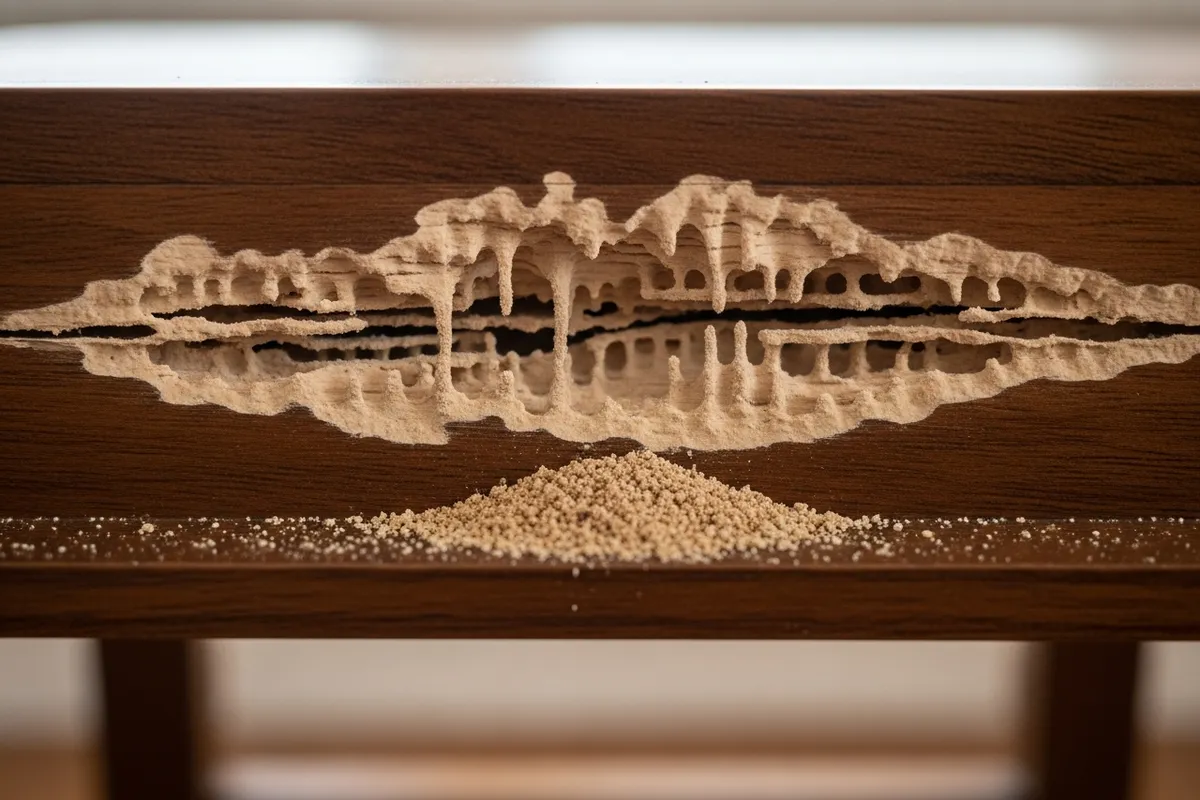

Drywood termites live entirely inside the wood they eat – no soil contact required. They quietly hollow out framing, furniture, and trim from the inside, and the first sign is often a small pile of pellet-like droppings on a windowsill or floor. Because they’re hidden, infestations are usually well established by the time they’re noticed.
Identification
Drywood termites are pale, soft-bodied insects with straight, bead-like antennae and short legs. The species most often encountered are Incisitermes minor in the western U.S. and Incisitermes snyderi in the Southeast. Workers are creamy white and rarely seen unless wood is opened up. Soldiers have darker, oversized heads and prominent mandibles. The life stage homeowners actually notice is the swarmer – a winged reproductive about a half-inch long with a dark body and four equal-sized, smoky wings. Swarmers are easy to confuse with flying ants, but termites have straight waists, straight antennae, and wings of equal length, while ants have pinched waists and bent antennae. Drywood colonies are smaller than subterranean ones, often numbering in the hundreds or low thousands.
Where Drywood Termites Live in Utah and Florida
Drywood termites are far more common in Central Florida than in Utah. Florida’s warmth and humidity allow them to thrive in attic rafters, eaves, fascia boards, hardwood floors, antique furniture, and structural framing throughout the year. In southern Utah, the western drywood termite shows up in older homes, outbuildings, and exposed wood around the St. George area, where the warmer climate supports them. They’re not typically found in northern Utah. Unlike subterranean termites, they don’t build mud tubes or need contact with the ground, which is why you’ll find them in second-story window frames, attic beams, and other places that surprise people.
Why They Get Into Homes
Drywood termites enter homes during their seasonal swarms, when winged reproductives leave a parent colony, pair off, and look for a small crack or knothole in exposed wood to start a new colony. Late summer and early fall are typical swarm times in Utah, while Florida swarms can happen across a longer window. They don’t need moisture from soil – they extract what they need from the wood itself, which means dry attic lumber, fence posts, eaves, and wood-shingle roofs are all viable nest sites. Untreated, exposed, or weathered wood is the main draw, especially anywhere paint or sealant has cracked.
Signs You Have a Drywood Termite Problem
The colony lives sealed inside the wood, so the clues are subtle:
- Small piles of hard, six-sided pellets (frass) that look like coarse sand or coffee grounds
- Tiny round “kick-out” holes in wood, often plugged and reopened
- Discarded wings on windowsills, around light fixtures, or in spider webs
- Blistered or rippled paint on trim and baseboards
- Wood that sounds hollow or papery when tapped
- Live swarmers indoors in late summer or early fall
- Sagging floors, sticky doors, or warped window frames in older infestations
Health Risks: Honest Assessment
Drywood termites don’t bite, sting, or transmit disease, so they’re not a health threat in the traditional sense. The risk is structural and financial. A colony can spend years quietly hollowing out rafters, headers, and floor joists before any visible damage appears, and repair costs can climb quickly once framing is involved. Because the insects live entirely inside the wood, over-the-counter sprays don’t reach them, and spot treatments only help if every gallery is found. That’s why established infestations frequently require fumigation or another whole-structure approach to fully eliminate.
How to Prevent Drywood Termites Around Your Home
Prevention is mostly about denying them an entry point into wood:
- Keep all exterior wood – trim, fascia, eaves, fences – painted or sealed
- Caulk cracks, knotholes, and gaps where bare wood is exposed
- Install fine-mesh screens on attic and crawl space vents
- Inspect and seal around roof eaves, dormers, and gable vents
- Avoid stacking firewood, lumber, or untreated wood against the house
- Inspect used or antique furniture before bringing it indoors
- Replace any cracked or weathered wood trim and shingles
- Schedule a professional termite inspection at least once a year
When to Call a Professional
If you’re seeing frass piles, kick-out holes, or swarmers indoors, the colony is already inside the wood – and DIY products aren’t going to reach it. A trained inspector can map the extent of the activity, identify the species, and recommend the right treatment, whether that’s localized injection or whole-structure fumigation. Learn more about our pest control services or related concerns like carpenter ants. Request a free quote.