
The palmetto bug is Florida’s polite name for the American cockroach, the giant reddish-brown roach that occasionally turns up in homes, especially after rain or cold snaps. They mostly live outside, but they’ll happily move indoors looking for water and shelter. They’re not aggressive, but they’re a real allergen concern and a sign your home’s exterior has gaps worth sealing.
Identification
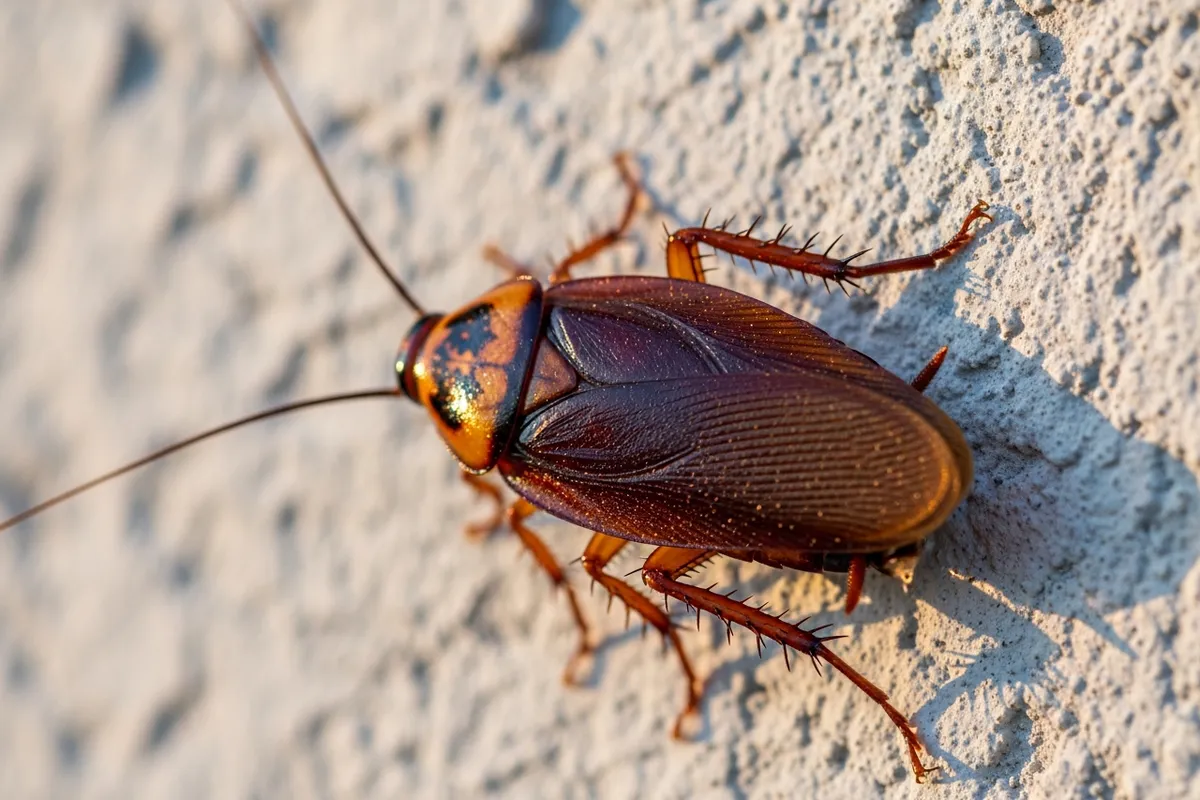
The palmetto bug is the American cockroach (Periplaneta americana), the largest cockroach commonly found in U.S. homes. Adults are reddish-brown, glossy, and grow to between an inch and a half and two inches long, with a pale yellow figure-eight pattern behind the head. They have long antennae and fully developed wings, and yes, they can fly, though they do it poorly and usually only glide downward from height. They’re often confused with the smoky brown cockroach, which is darker and slightly smaller, and with the German cockroach, which is much smaller (about half an inch) and tan with two dark stripes behind the head. German roaches are the indoor-breeding species and are a much more serious infestation problem when present, so correctly identifying which roach you’re dealing with matters.
Where Palmetto Bugs Live in Central Florida
Palmetto bugs are everywhere in Florida. They thrive in warm, moist environments and live primarily outdoors in mulch beds, leaf litter, palm fronds, sewer systems, storm drains, tree hollows, and woodpiles. Florida’s climate keeps them active year-round. They’re strong fliers compared to most roaches and can cover surprising distances at night. Indoors, they tend to show up in basements, crawl spaces, garages, laundry rooms, kitchens, and bathrooms, anywhere with moisture and a connection to the outdoors. Heavy rain, flooding, and cold fronts often push large numbers of them toward homes seeking dry shelter.
Why They Get Into Homes
Palmetto bugs aren’t trying to live in your house long-term. They’re outdoor insects that wander in for water, food scraps, or temperature regulation. Common entry points include gaps under exterior doors, unsealed plumbing penetrations, attic vents, dryer vents, weep holes in brick, and cracks in the foundation. Sewer-connected drains are a huge highway, since palmetto bugs travel freely through storm drains and septic systems. Once inside, they’re drawn to leaky pipes, pet water bowls, dirty dishes, and pet food. They can survive on tiny amounts of organic matter, including paper, soap residue, and crumbs.
Signs You Have a Palmetto Bug Problem
Most palmetto bug encounters are isolated, but consistent signs point to harborage on or near your property:
- Large reddish-brown roaches running across floors at night when lights come on
- Dark, cylindrical droppings about the size of a grain of rice in cabinets, garages, or attics
- Small egg cases (oothecae), dark brown and about three-eighths of an inch long
- Shed exoskeletons in basements, water heater closets, or behind appliances
- A musty, oily odor in heavily infested areas
- Roaches emerging from drains, especially in laundry rooms and bathrooms
- Increased indoor activity after rain or temperature drops
Health Risks: Honest Assessment
Palmetto bugs don’t bite, sting, or carry the kind of dramatic disease risk people sometimes associate with them. The real concern is allergens. Cockroach proteins from droppings, saliva, and shed skins are a recognized trigger for asthma and allergic reactions, especially in children. Palmetto bugs also walk through sewers, decaying organic matter, and pet waste before walking across kitchen surfaces, so they can mechanically transfer bacteria like salmonella and E. coli. For most healthy households, an occasional palmetto bug isn’t a health emergency, but consistent indoor activity is worth addressing for air-quality and hygiene reasons.
How to Prevent Palmetto Bugs Around Your Home
Most palmetto bug control happens outside the home before they ever get in:
- Move mulch, leaf litter, and woodpiles away from the foundation
- Trim palm fronds, ivy, and dense shrubs back from exterior walls
- Seal cracks in the foundation, around windows, and at utility penetrations
- Install door sweeps and check garage door seals
- Cover dryer vents, attic vents, and weep holes with appropriate screening
- Fix plumbing leaks and reduce condensation around AC units
- Keep kitchen surfaces clean and store pet food in sealed containers
- Pour water into rarely used drains weekly to keep traps full
When to Call a Professional
One palmetto bug a month after heavy rain is normal in Florida. Multiple sightings per week, daytime activity, droppings, or roaches coming out of drains all point to harborage you’ll struggle to address with DIY products. Professional service treats exterior harborage zones, sewer access points, and entry gaps with products that last through Florida’s rain cycles, and we adjust by season. Request a free quote and we’ll inspect the exterior for hot spots. You can also learn more about our Orlando service area or related Florida pests like ghost ants.